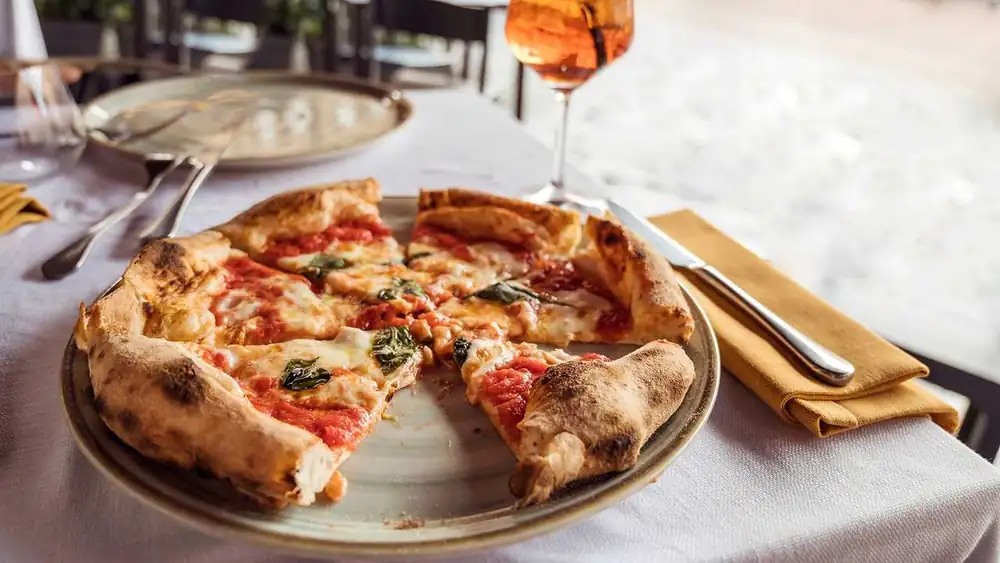
“Una pizza y una bebida” son cada vez más caras, especialmente en Palermo y Nápoles
En la imaginación de los italianos, una pizza y un refresco siempre han sido un elemento esencial de comer fuera, casi un servicio social a la par con un café en el bar.
A pizza and a soft drink have always been, in the Italians' imagination, an essential element of eating out, almost a social service on a par with a coffee at the bar. An opportunity to meet and socialize without much commitment, especially financial, but unfortunately, in these turbulent times, no institution is sacred, and this simple menu, a true economic indicator far more than many items in the ISTAT basket, has also been swept away by the storm.
This is what emerges from the report that Altroconsumo based on data collected by the Prices and Tariffs Observatory of the Ministry of Business and Made in Italy, a survey conducted in thirty Italian cities, in which it is clear that the habit of ordering pizza and a drink has become significantly more expensive.
Bolzano is the most expensive city, but Southern Italy is the one where prices are rising the most
The numbers collected in Altroconsumo's latest report speak clearly: the national average cost for this meal has now reached 12 euros, up 4.4% over the past year and a staggering 26% compared to 2021. In this new economic geography, Bolzano stands as the most expensive city, with an average of 15.04 euros, followed by Palermo and Sassari, both exceeding the 14.50 mark. This trend is making it increasingly rare for places where you can still dine for less than 10 euros, an achievement that today seems to be achieved only by a few cities like Reggio Calabria and Livorno.
The situation in Southern Italy is particularly surprising and, in some ways, unfortunate. Palermo is not only among the most expensive cities in the sample analyzed, but it is also the one that has seen the most drastic price increases in the last five years, with a dizzying 60% increase. Following this trend is Naples, where prices have risen 51% since 2021, a figure that strikes at the heart of a city where affordable pizza has always been a point of honor and a cultural source of pride. However, it's not just the average price that's striking, but the extreme price variability found within the same municipal boundaries.
In a city like Palermo, for example, the difference between the cheapest and most expensive restaurants has become almost unbelievable, rising from €9 to €28 for the same type of meal. This polarization is also strongly reflected in Milan and Florence, where the price gap clearly distinguishes the traditional neighborhood pizzeria from the new gourmet offerings targeting high-end locations. Pizza, therefore, is no longer simply a popular product but is becoming a reflection of the differences in quality, focus, and ambition of local restaurants.
Of course, as a food publication, we have to ask ourselves this question. Which pizzerias could they have visited to reach €28 for a pizza and a drink? Granted, high-end pizzerias are now an integral part of the menu, but touching €30 means either throwing away patanegra and culatello or considering Champagne a drink—in both cases, a non-representative sample.
This growth trend isn't limited to pizzerias, however, but also extends to other everyday staples like the sandwich at the bar. Even what was once considered a frugal and quick lunchtime meal is morphing into a small luxury with an average price of around €4. Cities like Verona have seen the price of a sandwich nearly double in five years, with increases exceeding 88%.
Behind these changes lie supply chain challenges, from rising energy prices to raw materials, which are forcing the neighborhood pizzeria to reimagine itself, jeopardizing one of the few habits Italians had always considered safe from the storms of the economic cycle. In this scenario, the ritual of eating pizza away from home now requires ever greater attention to Italian families' budgets.