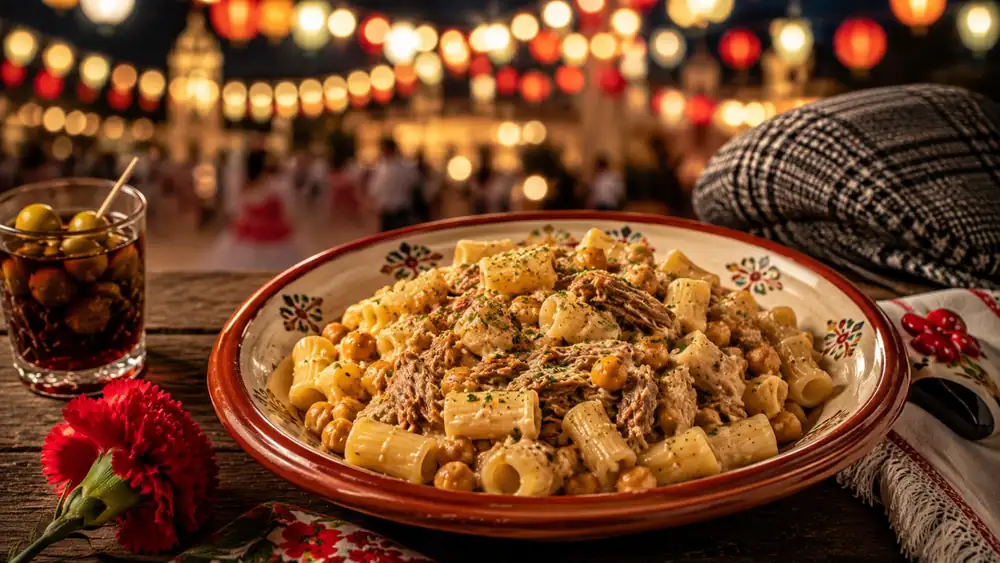
Even Italian chefs didn't dare go that far: pasta made from leftover stew in 20 minutes
Madrid is already filled with the scent of carnations, freshly baked doughnuts, and perfectly poured vermouth.
The idea couldn't be more original: using the broth, chickpeas, and meat from the stew to transform them into a creamy, flavorful sauce that envelops the pasta as if it's been doing so forever. The result is a comforting, rich, and characterful dish, capable of winning over both traditionalists and those seeking viral recipes with a down-to-earth feel.
Madrid stew reinvented as a creamy pasta dish
For years, Madrid stew (cocido madrileño) has been one of the most representative dishes of traditional Spanish cuisine. A symbol of Sunday family meals and classic taverns. But in 2026, recipes evolve, and social media turns any reinterpretation into a viral phenomenon. That's precisely what has happened with this pasta inspired by the stew.
The preparation maintains all the traditional essence. First, a good broth is prepared with chickpeas, meats, and vegetables, respecting the slow cooking times that make the stew a unique dish. This is the step you've already completed in previous days. Then comes the modern twist: part of that broth is transformed into a creamy and flavorful sauce. Furthermore, you use the cooked ingredients to create a spectacular combination.
The chickpeas add texture and substance, while the shredded meat elevates the dish to another level. The key is achieving a smooth, well-blended sauce with that deep flavor that only a well-made stew can provide. When combined with al dente pasta, the result evokes classic Italian recipes, but with a distinctly Madrid soul.
Furthermore, this recipe perfectly aligns with an increasingly popular culinary trend: using all ingredients and avoiding waste. Nothing goes to waste here. The broth becomes liquid gold, and the leftovers from the stew find an even more surprising second life.
The perfect recipe to celebrate San Isidro
If there's an ideal time to prepare this recipe, it's during the San Isidro festivities. Madrid is filled with impromptu gatherings, packed terraces, and shared meals where any excuse is a good one to raise a glass. This traditional pasta fits perfectly into that festive and relaxed atmosphere.
The best part is that it works equally well for a family meal or for impressing friends at a gathering. It has that classic flavor, but with a modern and distinctive presentation that grabs attention from the first bite. And in the age of TikTok, Instagram, and Google Discover, that's practically a guarantee of success.
Another great appeal of this recipe is its ability to unite generations. Older people immediately recognize the flavor of traditional cocido, while younger generations find in this version a more modern and fun way to enjoy it. It's neighborhood cooking with a viral spirit.
To serve it properly, a few essential details are needed: good bread for dipping in the sauce, some olives as an appetizer, and, of course, a nice cold vermouth. If a barrel organ plays in the background and someone appears dressed as a chulapo (a traditional Madrid dandy), the experience becomes truly authentically Madrileño.
At a time when traditional recipes are experiencing a resurgence thanks to social media, this classic Madrid pasta has become one of the most talked-about dishes of San Isidro 2026. An unexpected blend of Italian and Madrid flavors, it proves that popular cuisine still has much to reinvent.
Because sometimes the best recipes aren't born in fancy restaurants, but from the simple idea of taking a good stew and giving it a touch of traditional flair. And that, in Madrid, always works.