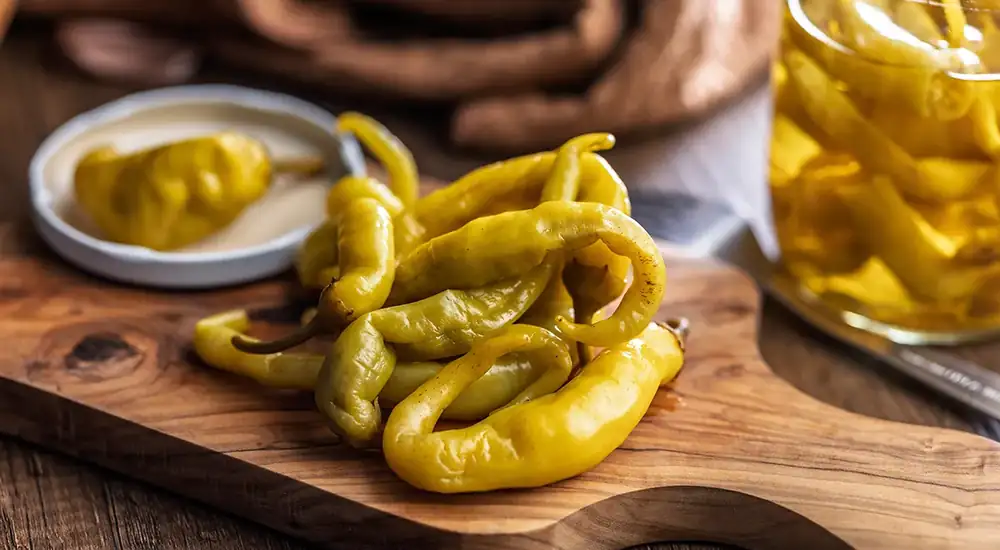
Pickled tsitsak peppers for the winter
Pickled tsitsak peppers for the winter are a traditional, moderately spicy appetizer, a staple at any Caucasus feast.
Step 1
Prepare the tsitsak peppers and carefully sort them to make sure there are no blemishes. Rinse the peppers thoroughly in cold water. Trim the stems.
Step 2
Prick each pepper with a knife to ensure the inside marinates quickly and thoroughly. Coarsely chop the peeled garlic cloves with a knife.
Step 3
Before pickling or marinating tsitsak peppers for the winter, prepare two sterilized 1-liter jars and two lids, boiled for 5 minutes.
Step 4
Place half a chopped garlic clove in the bottom of each jar, then pack the cicak very tightly onto the top, filling it to the very top of the jar. Then add 1 level tablespoon and 1 heaping teaspoon of sugar to each jar.
Step 5
Add a knife-tip of citric acid to each jar and pour in 70 ml of 6% apple cider vinegar. Then, very carefully pour boiling water over the jars, filling them to the very top. Use a knife to remove any air bubbles and add more boiling water. Screw the lids on tightly, turn them upside down, cover with a towel, and let them cool.
Step 6
The next day, store the pickled tsitsak peppers in a dark place for the winter. They'll be ready in a week, but it's best to wait a month before serving.
Marinated hot peppers with honey are a delicious treat for those who like it hot. They make a savory appetizer on their own, or a "secret ingredient" for salads, sauces, kharcho, and borscht; even dumplings drenched in the pepper marinade become a delicacy. The flavor of these peppers is simply incomparable: the honey softens the heat of the vegetables and counteracts the sourness of the vinegar, while the seasonings impart a distinctive aroma. And if you combine peppers of different colors in a jar, the elegant preparation will become a unique decoration for the kitchen or dining room, as they don't require cool, dark storage. Any variety of hot pepper is suitable for this pickling recipe: miniature peppers (jalapenos or Ogonyok) and thin, elegant peppers (cayenne or dragon's tongue) can be placed whole in the jars; larger peppers can be cut into pieces. Prepare at least one jar of hot peppers in honey sauce in just 20 minutes without boiling or sterilizing, and when you try it, you'll say: "We need more!"
Preserving hot peppers means stocking up on a delicious seasoning and a cheerful mood for the winter. You don't need much hot pepper to be happy, but fresh ones spoil fairly quickly, while dried ones are best suited for hot dishes. The solution is canning. It's best to do this in small jars appropriate for the size of the peppers. Small Thai chili peppers can be placed in very small ones, while Caucasian tsitsak hot peppers require a liter-sized jar. Importantly, our recipe will work with any hot pepper. One more thing: before handling hot peppers, put on gloves. Capsaicin, the substance that makes peppers hot, leaves a long-lasting mark on the skin and is difficult to wash off with water. What if you scratch your eye?
Hot peppers for the winter are essential for anyone looking to add variety to their menu and stay healthy during cold and flu season. Today, cuisines around the world feature dishes with either mild or very pronounced spiciness, and the same pepper may be very hot for some, while others won't even flinch. Whether you enjoy Pan-Asian or Caucasian cuisine, or want to prepare traditional Indian or Jamaican dishes, you can't do without peppers. Therefore, during the canning season, when vegetables are at their juiciest and most affordable, it's time to stock up on hot peppers for the winter.
Hot peppers in oil for the winter are an unusual cold appetizer, as they make you feel incredibly hot! Just what you need from a winter meal—this preparation will definitely warm you up as well as a hot shower! It's best to serve hot peppers in oil in small jars no larger than 200 ml—it's unlikely anyone would finish a large portion in one sitting. For this fiery appetizer, you can use refined sunflower or olive oil, and the peppers themselves can be either green or red, although red peppers look the most appetizing on a plate.
Peppers marinated with gooseberries are an unusual homemade preparation. Sweet peppers are halved, placed in a jar, and topped with gooseberries, filling every gap. The gooseberries aren't just a coloring agent, but a full-fledged participant: their tartness contrasts with the peppers' sweetness, adding complexity to the appetizer. The marinade is simple: water, vinegar, sugar, and salt, without any spices or herbs. The jar is then filled with the hot marinade and left to cool—without sterilization or pasteurization. Marinated peppers with gooseberries are served as an appetizer or a side dish with meat—an unexpected and vibrant addition.
Pickled peppers for the winter are a serious contender for traditional cucumbers and tomatoes. This homemade preparation makes a great addition to meat dishes, salads, and appetizers. You can even eat them straight from the jar—it's delicious! This collection features our best, tested recipes. And not only with sweet bell peppers, but also with hot ones!