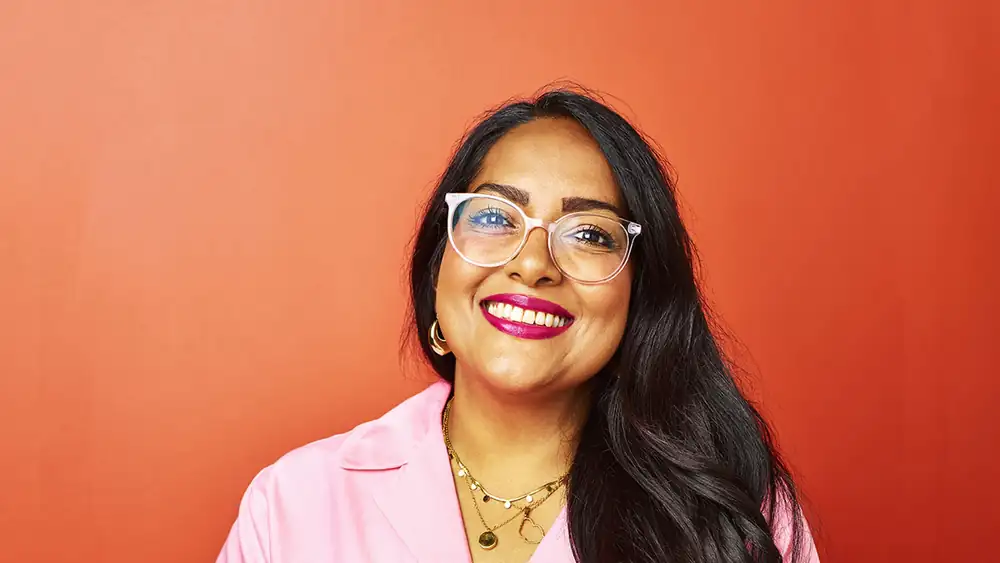
Where the Chefs Eat: Shelina Permalloo on the secret beach gate that leads to Rome’s best pasta
Where the Chefs Eat asks your favourite chefs for their top restaurants in cities across the world. For this edition, we sit down with Shelina Permalloo.
“creative brain just came back. I wanted to write a book that is relevant for people like me – people trying to find solutions that are flavour-based, but which don’t take 100 hours to prepare.”
“Fusion is confusion.” Or so went some silly old adage. But, as chef Shelina Permalloo makes clear, fusion food can be utterly fabulous.
“I was the first woman of colour to win MasterChef in 2012,” she tells me proudly when we sit down to chat. During that season she wowed the judges with “African flavours that also had Indian influences, Chinese influences, French and European. It could be confusing,” she admits laughingly. Born in Britain to Mauritian parents, she grew up with food that showcased the multiethnic makeup of Mauritius ’ cuisine, and since selling her restaurant in 2023, she has courted legions of followers who adore her flavoursome food.
While her new book, What to Cook when Everyone’s Hungry, may sound simple enough, it doesn’t really portray the beautiful recipes that bubble away inside. Within lie dishes that are bold, unique and fully loaded with fusion and flavour. They reflect Shelina's life today, as a single mother busy with recipe development and a slot on the new season of Cooking with the Stars.
After selling her restaurant, Shelina tells me that her “creative brain just came back. I wanted to write a book that is relevant for people like me – people trying to find solutions that are flavour-based, but which don’t take 100 hours to prepare.”
So, Shelina tells me, she used her “culinary experience as a professional chef for 15 years, being a single mum and being someone who is also ethnically diverse. I wanted to be able to whip up what feels like a nostalgic traditional meal in 20 minutes, so [the book] stemmed from my passions for world cuisine, for eating well at home and for not taking too many shortcuts.”
The resulting recipes include Korean tofu Jjigae, chicken jollof, Mauritian noodles and pan-fried plantain amongst many, many others and, of course, her Mauritian heritage belies almost everything. “Both my parents are Mauritian, and they came over here in the Seventies; they were invited over by the Commonwealth. I was born and bred in Southampton, but we have African, French, Indian and Chinese heritage, with all those cultures influencing who we are. The food, the religion, the language spoken: it makes us quite unique. And I think when I first did MasterChef, at that moment in time, African food wasn't showcased at all.”
Shelina tries to go back to Mauritius every couple of years. "For anyone who loves food, you want to go to a restaurant at that moment where you understand the people, the culture, the place and its identity through hospitality. That's why I'm a chef. That's why we, as Mauritians, are considered incredibly hospitable. It's like part of our DNA.” With that, Shelina shares five restaurants that, for her, embodied the places where they reside, all of which clearly gave her immense joy and, for some, inspired bits of her new book.
Chef Andre Bernard is a fine-dining chef and the owner of Dre Flavours. One of the things that he wanted to do was to introduce people – both tourists and locals – to Grenadian foods and flavours by stripping them all the way back to the flavours of home. He is deeply passionate about Grenada's spices. Bernard's grandfather was Indian, so there's this really interesting mix of ethnic diversity, and his food feels really personal. We had breadfruit literally hanging from the trees above a lovely, flowing river, and this absolutely incredible pumpkin-coconut soup, almost like a velouté. It takes great skill to get that emulsion right, that blending of the fat from the coconut. In Grenada, they have nutmeg on their flag – it’s known as the Isle of Spice. Nutmeg, mace, cinnamon and pimento; those four were prevalent in every one of Bernard's dishes. He also made a tomato stew that reminded me of our Creole ragi, an African-inspired dish. And it was rich, salty, sweet, sour and tangy with all the same spice mix in it.
Morocco is really close to my heart. I've travelled abundantly across the land, and my daughter is half Moroccan. When you think about Morocco, how do you get a taste of that vast land in a way that encompasses Berber traditions, North Africa, the Sahara and the whole array of ethnic diversity there? So again, it's about seeking that opening into the culture. I think Al Fassia really gives you that. I've been three times, and the direct translation of the name is “women of Fez”. It’s a female-run restaurant. In Moroccan restaurants, you would not normally find women cooking in senior roles. We ate slow-roasted lamb, which you have to pre-order about 24 hours ahead. The standout dish for me, though, was a tapas-style starter on beautiful little Moroccan plates. About 18 things are put on the table. We had olives and preserved lemons; another plate might be local orange blossom salad, and another one with carrots. Their carrot salad had me in a choke hold.
When you go to Rome, the closest seaside town is Ostia. My first husband was very romantic, and I practically lived in Rome for about seven years, on and off. When you're in Rome, you have lots of tourist traps. But this particular seaside restaurant is called Cancella Numero 7, which means “gate number seven”. There are loads of different gates that open onto different restaurants, which all look the same, but if you’re a local Roman, you only go to number seven. This is where you get the very best vongole; it's my favourite. There is no other way to eat it but with your feet in the sand, you know, slightly heady from a sunset or a sunrise. You’ve got that misty view of the sea. It’s not fancy. Expect classic Roman hospitality, which is bare-minimum hospitality. But it doesn't really matter because then the vongole arrives and it's all about the pasta. All is forgiven. If you like wine, they've got an excellent wine list, although it's not massive. You’ll sit there waiting for your food, hear the chef shouting and a staff member moaning about their sister-in-law, and somehow it all sounds amazing; I just loved it.
Chez Tino is on the east coast of the island in Trou d'Eau Douce, and it means small watering hole. And for me, no trip to Mauritius is complete without heading over there. It’s a family-run business, so whenever you go, they basically welcome you home. You can either eat inside or on the roof terrace, which offers panoramic views of the bay. But because you're quite high up, you see all the lush greenness of Mauritius, which is the part of the land that people forget about because you're always looking for the sea. It's absolutely stunning. And again, this is a gateway if you're looking to try and taste all different types of food. Mauritius is African, French, Indian and Chinese. My recommendation is the fried noodles with the garlic water and a crushed chilli paste. And get the Creole prawns to go on the side. Oh, and an octopus curry. The restaurant is generous with amazing hospitality. Everyone is smiling – it reminds me of why I'm so passionate about Mauritius. The people are full of spirit; if you ask anyone in Mauritius for directions, they'll actually walk with you, probably via their house to give you a drink and a snack.
I would never normally recommend a buffet, but Lancaster Accra is my exception. I've been immersed in British Ghanaian culture for so long, but the first time I went to Ghana with a Ghanaian family, I went here. One of my best friends from university lives there, and she said, “I want you to taste the flavours of the country.” She said she wanted to take me for a variety of reasons, but the main thing is they do a local buffet. So, we went there with her children, and everyone was dressed up because it was a Sunday. I normally hate buffets, so I was a bit nervous, but this was a whole different thing; it knocked my socks off. It was loaded with things like the plantain, and the cassava [tropical root vegetable] was being freshly pounded right there. Then you see the grilled meats being cooked and the stews being fried off. Everything smells fresh; everything is delicious. And in terms of standout dishes, they had this goat soup and the best fufu. I always say now that the fufu in Ghana is the fufu that all other fufu's will be judged by because I've never eaten fufu like it. And the goat soup - it was light with onions and chilli and these really incredible spices, which are very unique to Ghana. It was just amazing.
What to Cook when Everyone’s Hungry by Shelina Permalloo, £25 (Ebury Press).