Investigadores japoneses prueban botellas de vino de papel y plástico como alternativa más ecológica al vidrio
KOFU – El Instituto de Enología y Viticultura de la Universidad de Yamanashi y sus colaboradores están probando una botella de vino de papel y plástico como alternativa ecológica al vidrio.
KOFU -- The Institute of Enology and Viticulture at the University of Yamanashi and its partners are testing a paper-and-plastic wine bottle as an environmentally friendly alternative to glass. The lightweight container is easy to sort for disposal, and it is hoped it could reduce the environmental impact of transportation.
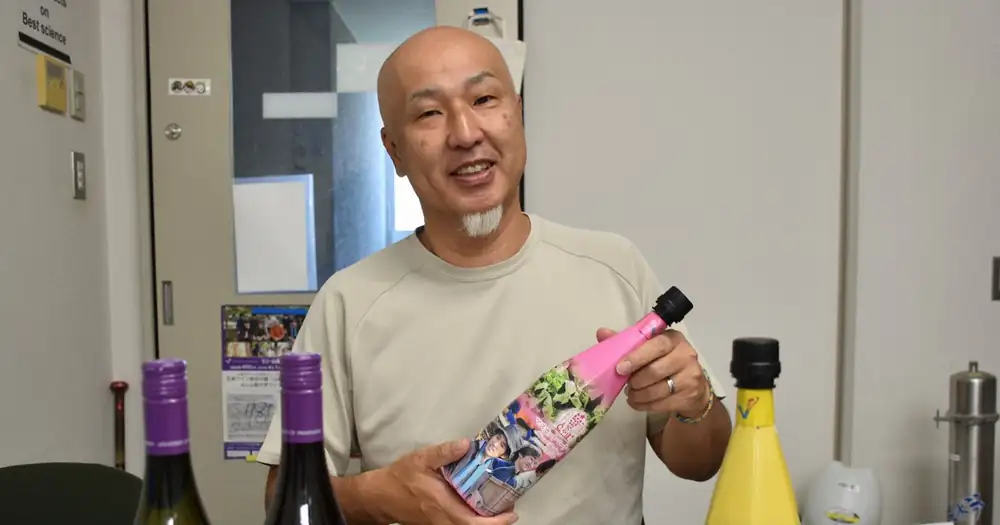
The "efbottle" was developed by several companies, including Fuji Tokushu Shigyo Co., a food packaging manufacturer based in the city of Seto, Aichi Prefecture. Designed to resemble a conventional wine bottle, the efbottle is made of water-resistant paper and a plastic pouch fitted with a resealable cap that enables long-term storage. Sensory evaluations of attributes such as flavor have already confirmed that the bottle does not affect wine quality compared with glass bottles. Researchers plan to conduct further testing over approximately one year to determine whether any issues arise during storage or consumption.
According to professor Shunji Suzuki, director of the institute, a conventional 750-milliliter wine bottle weighs about 1.14 kilograms, while an equivalent efbottle weighs about 0.78 kilograms, making it more than 30% lighter. Suzuki said that significant carbon dioxide (CO2) emissions are currently generated during the distribution of wine and that reducing container weight could help lower transportation-related CO2 emissions. As the bottle is lightweight and easy to sort, researchers believe it is well suited for outdoor leisure activities and could provide more opportunities to drink wine. The entire surface of the bottle can also be printed on, enabling new design possibilities that are difficult to achieve with traditional glass bottles. The institute launched the "Shin University of Yamanashi Wine Project" in 2024. Its goals include "proposing winemaking that will remain sustainable 100 years from now." The project covers everything from developing grape varieties adapted to climate change and research on winemaking to bottling, label design and sales. Testing of the efbottle is being conducted as part of this initiative.
"We hope the efbottle will become one option for promoting environmental sustainability. To preserve Yamanashi's wine culture, we will continue to support it through science and propose new technologies," Suzuki said.