Guacamole casero. Una receta mexicana fácil y auténtica
Para 4 1,2€/persona. 182kcal/100g
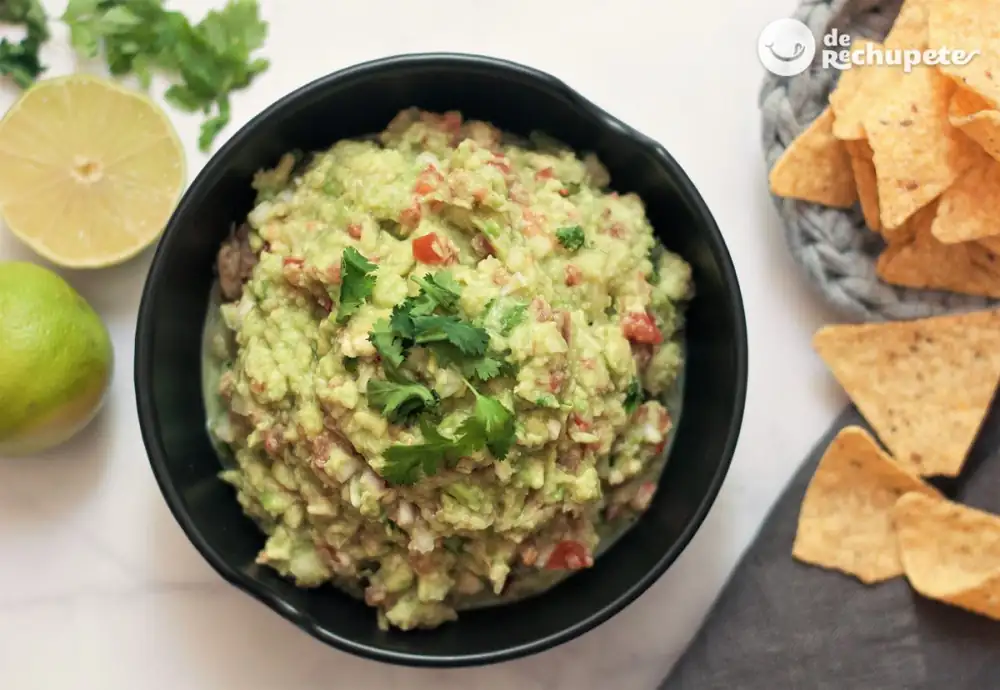
- 6 aguacates medianos o 4 grandes maduros (aconsejo los medianos por su sabor)
- 100 g. de tomate (2 tomates pequeños)
- 100 g. de cebolla (1 cebolla mediana aproximadamente)
- 1 lima entera
- 2 cucharaditas de hojas de cilantro fresco (sin tallo)
- Sal (al gusto de casa)
- Para acompañar: Totopos o triángulos de maíz (nachos o frituritas)
- Opcional si te gusta el picante: 1 chile serrano (si no lo encuentras puedes utilizar jalapeños en conserva, guindilla o cayena)
- Pelamos la cebolla y lavamos el tomate. Los picamos muy finos, lo más posible, que se vean pero que se note lo justo.
- Elegimos unos aguacates maduros que no estén demasiados duros para aplastarlos, además el sabor del aguacate maduro es mucho mejor. Debe estar maduro pero no blando, la piel debe estar firme y al apretar con el dedo se hundirá ligeramente. Si los habéis comprado muy verdes, los podéis envolver en papel de periódico y dejarlos en un bol a temperatura ambiente para que maduren. Nunca en la nevera.
- Cortamos los aguacates por la mitad hasta el hueso y giramos cada parte separando las dos mitades. Nos ayudamos de una cuchara para vaciar las dos partes. Reservamos en un plato o fuente.
- Me comentaba mi primo Bruno que en México se trituran los ingredientes con un molcajete o mortero de piedra. Aunque en España es complicado conseguirlo. Yo lo hago con un tenedor de plástico o madera y en un bol de plástico. De esta forma evitamos la oxidación y conseguimos una pasta más o menos irregular con tropezones. Añadimos el zumo de la lima directamente sobre el aguacate y empezamos a aplastar con el tenedor.
- Echamos dos cucharadas de hojas de cilantro. Si son muy grandes las troceamos directamente con las manos. Mezclamos todo con el tomate y la cebolla que tenemos reservados y una pizca de sal.
- Picamos el chile serrano muy fino, este ingrediente lo pondría como opcional pues aunque me apasiona el punto picante en casa, a algunos no os va. Yo me suelo poner guantes porque el picante puede ser peligroso si luego te frotas los ojos. Lo añadimos a la mezcla y juntamos todo con una cuchara de madera con movimientos envolventes para no variar la textura irregular de nuestra salsa.
- Probamos por si es necesario añadir un poco más de picante y sal. Recordad que lo vamos a tomar con totopos o triángulos de maíz, también llamados nachos o frituritas.
- En México también se suele acompañar con chicharrones de cerdo o cortezas. Todo esto lleva sal y lo vamos a usar como cucharas, así que no os paséis de salados. Presentamos en un bol con todos los nachos alrededor, pico de gallo al gusto y una buena michelada.
- Propiedades y beneficios del aguacate
- Las mejores recetas con aguacate
- Utiliza aguacates maduros, pero no pasados. Al presionarlos suavemente con los dedos deben ceder ligeramente, sin estar blandos ni presentar zonas hundidas. Si están duros será imposible conseguir una buena textura y, además, tendrán bastante menos sabor.
- No utilices batidora. El guacamole tradicional tiene textura, no debe convertirse en una crema completamente lisa. Lo mejor es machacar el aguacate con un tenedor o, si tenéis uno en casa, con un molcajete.
- Pica muy fino la cebolla, el tomate y el chile. Así se reparten mejor por todo el guacamole y no encontraremos trozos demasiado grandes en cada bocado.
- Añade la lima poco a poco. Debe aportar frescor y acidez, pero sin tapar el sabor del aguacate. Es mejor empezar con menos cantidad, probar y corregir al final.
- Controla el picante. El chile serrano es el más tradicional, pero podéis empezar con poca cantidad y añadir más después. Quitar las semillas y las membranas interiores también reduce bastante el picante.
- Prueba antes de servir. La sal, la lima, el cilantro y el chile son precisamente los ingredientes que podéis ajustar al final hasta dejarlo a vuestro gusto.
- Si te sobra, para guardarlo debemos poner uno o dos huesos de aguacate en el guacamole. Lo tapamos con film transparente para que no esté en contacto con el aire. El papel transparente debe quedar en contacto directo con la salsa. De esta forma y con la ayuda del zumo de lima que lleva se conservará mejor en la nevera. Evitaremos que se oxide y pille ese color oscuro que queda tan feo y le da mal sabor.
- Bien guardado aguanta sin problema uno o dos días en la nevera.
- La lima ayuda a que las reacciones enzimáticas que causan la decoloración se ralenticen por su contenido en ácido ascórbico o vitamina C. El cilantro también contiene este ácido. De modo que incorporarlo a la elaboración contribuye a ese color verde precioso del guacamole.
- Tenemos una versión de guacamole para bebes o niños, adaptada para disfrutar del mismo con toda la familia.
- En México podemos encontrar dos clases de guacamole, si el aguacate está completamente molido se llama aguamole y suele servirse en taquerías populares o puestos ambulantes de comida. La versión con trocitos de aguacate que se suele preparar en casa es el guacamole propiamente dicho. Incluso guacamoles (versiones) hechos al estilo guacamole, pero con otra verdura, por ejemplo, el brocomole, hecho con brócoli.
- Es un plato que triunfa en las reuniones con amigos. Así tal cual, o como relleno de burritos o con tus tacos preferidos.
- El guacamole es perfecto como base para muchas otras recetas como unos burritos. También unas tortitas de queso o simplemente untado en un bocadillo con un poco de queso y pollo, simplemente delicioso.
- Otro consejo útil es añadir la sal en el último momento, justo antes de servirlo. Ya que si se añade al principio, el estrés osmótico destruye las paredes de las células del aguacate y se libera más enzima oxidante. Este consejo para los más puristas del color verde.
- Si queréis un guacamole más ligero y refrescante podéis añadir más tomate (casi el doble). Es para que sea más cremoso hay gente que le añade una cucharadita de mayonesa.
- En México tienen varios tipos de nachos que mezclan con infinidad de ingredientes. Por ejemplo, los nachos con guacamole y chicharrones de cerdo, que están deliciosos.
- El guacamole auténtico se hace con chile serrano, pero pica un montón. Si no os atrevéis con ellos podéis utilizar chiles jalapeños, que tiene otro tipo de picante o incluso con un chorrito de salsa Tabasco. Pero si se lo preparas a un mexicano debe tener chile serrano con pepitas y todo.
- Si vas a usar aguacates a menudo en tus recetas (y deberías) no dejes de consultar nuestros trucos para sacarles el máximo partido.
Ingredients
- 6 medium or 4 large ripe avocados (I recommend medium ones for their flavor)
- 100 g of tomato (2 small tomatoes)
- 100 g of onion (approximately 1 medium onion)
- 1 whole lime
- 2 teaspoons of fresh cilantro leaves (without stems)
- Salt (to taste)
- To accompany: Tortilla chips or corn triangles (nachos or fritters)
- Optional if you like it spicy: 1 serrano pepper (if you can't find one you can use canned jalapeños, chili pepper or cayenne pepper)
Homemade guacamole is one of the easiest Mexican recipes to prepare: ripe avocado, tomato, onion, cilantro, lime and, if you like it spicy, a little serrano chili.
In just 10 minutes you can have a creamy, fresh guacamole with small chunks of avocado, perfect for tortilla chips, tacos, burritos, or fajitas. A delicious way to enjoy raw avocado, with all its properties and nutrients.
As with many traditional recipes, there's no single way to prepare Mexican guacamole. There are versions with tomatoes and others without, some with more cilantro, others with more chili, and each household eventually finds its own favorite proportions.
The recipe I make at home was given to me by my cousin Bruno, who learned to make it from his Mexican family and served it for years at his café, Bekas, in Ourense. The secret isn't rocket science: perfectly ripe avocados, fresh ingredients, and don't over-blend it. Because a good guacamole shouldn't be a completely smooth cream.
Ideally, you should mash the avocado, leaving small chunks, and then add the onion, tomato, cilantro, and lime. Some friends have told me they love the store-bought kind, but I always tell them the same thing: "You haven't tried homemade guacamole."
Once you take the plunge and do it at home, you won't go back. The difference is worth those ten minutes of work.
Preparing Mexican Guacamole
- Peel the onion and wash the tomato. Chop them very finely, as finely as possible, so they are visible but not noticeable.
- We choose ripe avocados that aren't too hard to mash; ripe avocados taste much better. They should be ripe but not mushy, with a firm skin that yields slightly to gentle pressure. If you buy very green avocados, you can wrap them in newspaper and leave them in a bowl at room temperature to ripen. Never put them in the refrigerator.
- Cut the avocados in half lengthwise, down to the pit, and twist each half to separate them. Use a spoon to scoop out the flesh from both halves. Set aside on a plate or platter.
How to mix avocado
- My cousin Bruno told me that in Mexico, they mash the ingredients with a molcajete, or stone mortar. Although it's hard to find one in Spain. I do it with a plastic or wooden fork in a plastic bowl. This way, we avoid oxidation and get a somewhat chunky paste. We add the lime juice directly to the avocado and start mashing with the fork.
- Add two tablespoons of cilantro leaves. If they are very large, tear them into pieces with your hands. Mix everything with the reserved tomato and onion, and a pinch of salt.
- Finely chop the serrano chile. I'd list this ingredient as optional, because although I love a bit of spice at home, some of you might not like it that way. I usually wear gloves because the heat can be dangerous if you rub your eyes afterward. Add it to the mixture and combine everything with a wooden spoon using gentle folding motions to avoid altering the texture of our salsa.
Final presentation of the guacamole
- We taste it to see if it needs a little more spice and salt. Remember that we're going to have it with tortilla chips, also called nachos or corn chips.
- In Mexico, it's also often served with pork rinds or cracklings. All of these are salted, and we'll be using them as spoons, so don't overdo it with the salt. Serve in a bowl with all the nachos around it, pico de gallo to taste, and a good michelada.
No Mexican food lover can resist nachos spread with guacamole, an avocado sauce, chopped onion and tomatoes, and a few drops of Tabasco or chili.
Enjoy it and make it at home, you'll tell me the result, I'm sure it will be delicious.
The keys to making good homemade guacamole
Although preparing guacamole is very easy, there are a few things that make the difference between a good one and one that disappears from the bowl in five minutes.
- Use ripe, but not overripe, avocados. When you gently press them with your fingers, they should yield slightly, without being soft or having any indentations. If they are hard, it will be impossible to achieve a good texture, and they will also have considerably less flavor.
- Don't use a blender. Traditional guacamole has a texture; it shouldn't become a completely smooth cream. It's best to mash the avocado with a fork or, if you have one at home, with a molcajete (mortar and pestle).
- Finely chop the onion, tomato, and chili. This way, they'll be evenly distributed throughout the guacamole, and you won't find large chunks in each bite.
- Add the lime juice gradually. It should add freshness and acidity, but without overpowering the avocado flavor. It's best to start with a smaller amount, taste, and adjust at the end.
- Control the spiciness. The serrano pepper is the most traditional, but you can start with a small amount and add more later. Removing the seeds and inner membranes also significantly reduces the heat.
- Taste before serving. The salt, lime, cilantro, and chili are precisely the ingredients you can adjust at the end to your liking.
Tips for a delicious guacamole
- If you have any leftover guacamole, to store it you should put one or two avocado pits into it. Cover it with plastic wrap so it's not exposed to air. The plastic wrap should be in direct contact with the guacamole. This way, and with the help of the lime juice, it will keep better in the refrigerator. This will prevent it from oxidizing and turning that unappealing dark color that gives it a bad taste.
- If stored properly, it will keep for one or two days in the refrigerator without any problem.
- Lime helps slow down the enzymatic reactions that cause discoloration due to its ascorbic acid, or vitamin C, content. Cilantro also contains this acid, so adding it to the preparation contributes to the guacamole's beautiful green color.
- We have a version of guacamole for babies or children, adapted to be enjoyed by the whole family.
- In Mexico, you can find two types of guacamole. If the avocado is completely mashed, it's called aguamole and is usually served in popular taquerias or street food stalls. The version with chunks of avocado, which is usually prepared at home, is guacamole proper. There are even variations made in the guacamole style but with other vegetables, for example, brocomole, made with broccoli.
- It's a dish that's a hit at gatherings with friends. Enjoy it on its own, as a burrito filling, or with your favorite tacos.
If you want to do it in a more traditional way, I recommend you watch this video.
Your tips for making guacamole
- Guacamole is perfect as a base for many other recipes, like burritos. It's also great on cheese tortillas or simply spread on a sandwich with some cheese and chicken—simply delicious.
- Another helpful tip is to add the salt at the very last minute, just before serving. If you add it at the beginning, the osmotic stress destroys the avocado's cell walls and releases more oxidizing enzymes. This tip is for those who are purists about the color green.
- If you want a lighter, more refreshing guacamole, you can add more tomato (almost double). To make it creamier, some people add a teaspoon of mayonnaise.
- In Mexico, they have several types of nachos that they mix with countless ingredients. For example, nachos with guacamole and pork rinds are delicious.
- Authentic guacamole is made with serrano peppers, but they're incredibly spicy. If you're not comfortable with them, you can use jalapeño peppers, which have a different kind of heat, or even a dash of Tabasco sauce. But if you're making it for a Mexican, it absolutely must have serrano peppers, seeds and all.
- If you're going to use avocados often in your recipes (and you should), be sure to check out our tips for getting the most out of them.
Your frequently asked questions about guacamole
How can you tell if an avocado is ripe enough to make guacamole?
It should yield slightly when pressed with your fingers, but not be soft. If it's completely hard, let it ripen for a few days at room temperature.
Can you make guacamole without cilantro? Yes.
The flavor will be different, but you can leave it out if you don't like it. Can you make guacamole without tomatoes?
Perfect. There are numerous Mexican versions that don't include it.
What chili pepper is used to make guacamole? The serrano chili pepper is one of the most common options.
If you can't find it, you can use jalapeño and adjust the amount to your liking. Why does guacamole turn black?
Because avocados oxidize when they come into contact with air. Covering them, preventing contact with oxygen, helps delay this color change.
How long does homemade guacamole last in the refrigerator? It's best consumed freshly made, although if well protected and refrigerated it can be kept until the next day.
Can I prepare the guacamole in advance? Yes, although I recommend doing it as close as possible to serving time.
If you need to get ahead, you can chop the tomato, onion, cilantro, and chili beforehand and mash the avocado at the end. What else can you serve with guacamole besides nachos?
It goes great with tacos, burritos, fajitas, quesadillas, grilled meats, tostadas, or even as a side dish for salads.
Last revision: September 4, 2026
We have worked 4 hours and 02 minutes so that you can enjoy this recipe.
How is it calculated? 12 min. cooking, 30 min. to take and edit the photos, 120 min. to record and edit the video, 45 min. to write and 35 min. to organize and publish everything on the web and on social media.
😊 Not counting the time we spend researching how to make the best recipe, buying the ingredients, eating it (and repeating it if it didn't turn out perfectly), reading your comments and answering your questions.