Baked Fish: 40 Easy and Unconventional Recipes
Lots of ideas for cooking fish in the oven and bringing simple and always different recipes to the table
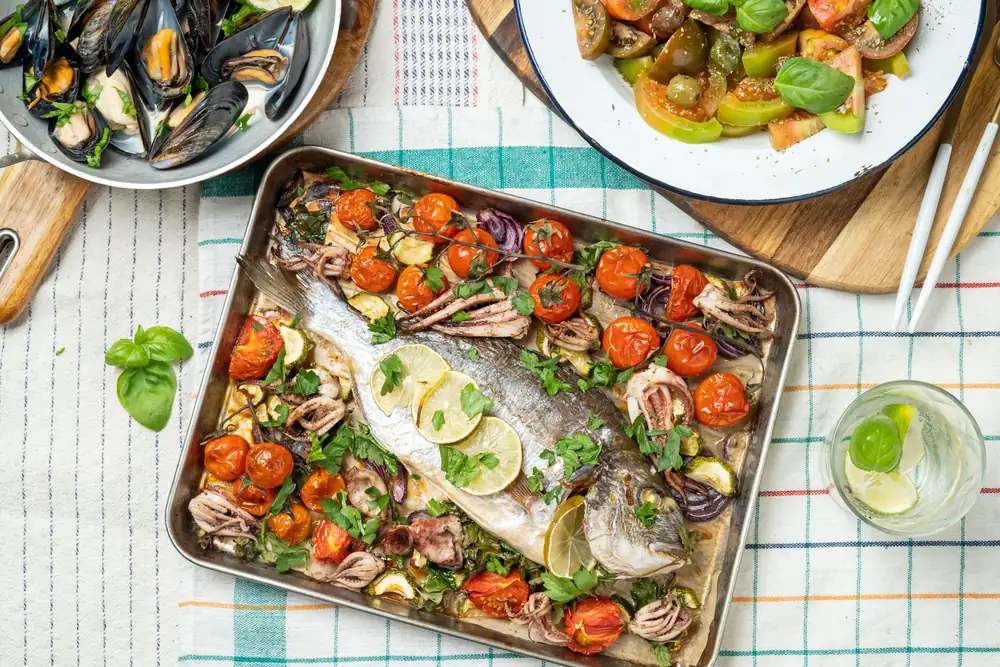
Baking fish is one of the simplest ways to serve a tasty, versatile main course, suitable for many occasions. From sea bream to sea bass, salmon to red mullet, there are many varieties that lend themselves to this method.
Just choose the right seasonings to obtain a different dish every time, from the most delicate flavors to the most original combinations.
Which fish to choose for baking?
Baking is suitable for many types of fish, both whole and filleted.
Among the most suitable are snapper, sea bass, red porgy, salmon, grouper, sea bream, and many other varieties. For whole fish, it's best to choose a size that's not too small, so as to ensure even cooking and tender, not overly dry flesh.
Size also affects cooking times: a larger fish will naturally require more time than a fillet. Therefore, it's important to always evaluate the size and follow the recipe's specific instructions.
The minimum recommended fish size is 600-700 g. Larger fish are also not recommended because they cook unevenly.
At what temperature should you cook fish in the oven?
Generally, baked fish cooks between 180 and 200°C, but temperatures and times may vary depending on the type of fish, its size, and how it is prepared.
A whole fish may take longer to cook than a fillet, while foil allows for better moisture and tenderness. To facilitate cooking larger whole fish, you can make a few incisions on the sides.
This allows the heat to penetrate more easily and cooks more evenly. Generally, allow 25 minutes for every 500g of fish. To facilitate cooking, especially with large fish, it's advisable to make small incisions on both sides.
Fish cooked in foil
Baking offers a variety of techniques, depending on the type of fish you're purchasing, your personal taste, and the desired texture. To minimize seasoning, baking in foil is recommended, combining the benefits of steaming and baking, preserving the food's natural moisture and nutrients.
To try this technique, the recipes for baked fish are recommended: perch in aromatic foil, fish curry in transparent foil and monkfish in foil.
Baked fish in a crust
To try the salt-in-a-crust technique instead, you can prepare sea bream with pink salt and sea bream in a salt crust with celery leaves.
Lovers of crunchy textures will appreciate peanut-crusted prawns with eggplant, salmon and cod strudel, scabbardfish chops with shortbread, and crispy sea bass fillets with fried zucchini. These preparations are the most caloric of the options, but they remain an excellent alternative to fried foods.
How to clean a whole fish
First, check the freshness of the fish by checking that the eyes are bright and shiny and the gills are a nice bright red.
Using fish scissors, cut off all the fins: this will prevent them from burning during cooking and you won't risk scratching yourself during cleaning and preparation. Scale the fish, working from tail to head, against the direction of the scales.
Since they will come off in a messy manner, it's best to do this in the sink. Finally, rinse them off under running water. If the recipe calls for stuffing the fish, cut open the belly from the anus toward the head; remove the innards and rinse the fish again (you can ask your fishmonger to clean it for you).
Dry the inside of the belly with kitchen paper before adding the stuffing or herbs.
Here are some of our baked fish recipes
Among these you can find: hake in pancetta, onions and peas, John Dory fillet and baby carrots in cardamom sauce, swordfish rolls with spring onions, artichokes and olives, stuffed red mullet and white asparagus, baked sea bream with potatoes and pecorino cheese, amberjack, leeks and plums pan, char stuffed with artichokes, swordfish, potato and pepper flan, grey mullet with potatoes and hazelnuts,
sea bream stuffed with mixed vegetables and roast cod.