Los Angeles Dining Fractures Into Four Highly Specific Outposts
The city’s dining scene has abandoned a single center, replacing it with a coastal legacy room and three hyper-specific inland and northern kitchens.
The weekend dining guide published today outlines four distinct locations that illustrate a deeply fractured Los Angeles table. The city no longer operates from a single culinary center, relying instead on a coastal legacy room and three highly specific outposts in Chinatown, East Hollywood, and Carpinteria.
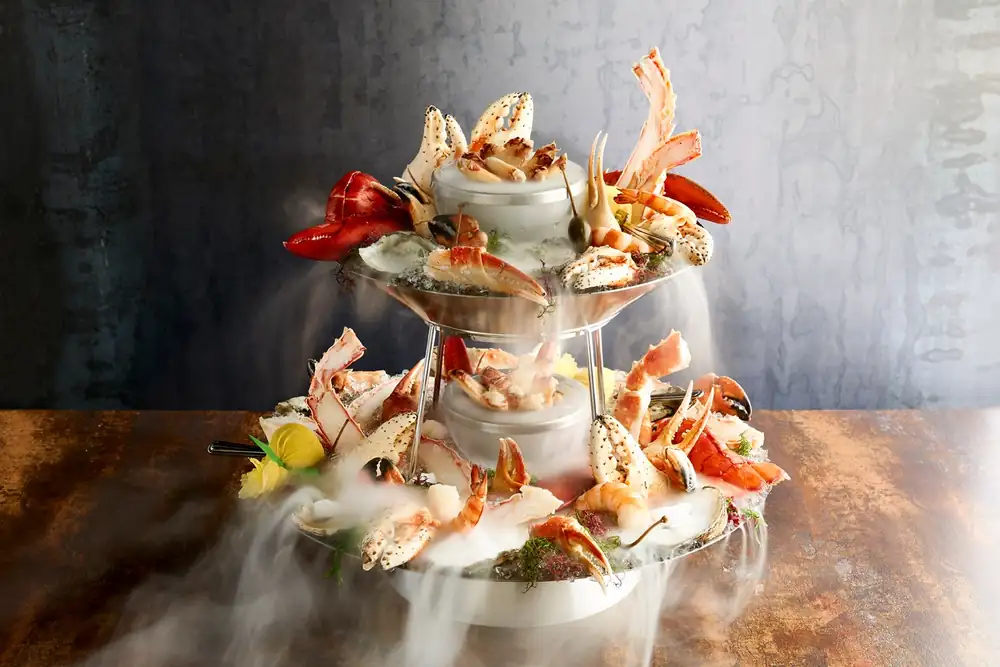
At 18412 Pacific Coast Highway in Malibu, Mastro’s Ocean Club maintains the old model of the celebration dinner. Perched over the beach, the room functions like an old-school yacht and serves a dry-ice seafood tower, steaks, and mercilessly rich lobster mashed potatoes. It operates as a theater of effort, where the strawberry sauce-laden butter cake arrives as a final, heavy curtain.
The precise culinary work has moved inland to smaller rooms. At 1725 Naud Street in Chinatown, Majordomo serves a weekend brunch built on the contrast of sweet corn pancakes with warm date syrup against a crispy rice steak and egg riff. Further east at 906 North Normandie Avenue, Ronnie Muñoz’s Camello pop-up executes a much tighter focus.
Camello blends Lebanese and Mexican traditions using heirloom corn pitas stained in soft shades of pink and purple. The kitchen stuffs these pockets with black garlic carne asada and mushroom barbacoa. A tangy cotija cheesecake finishes the meal and balances the heavy, complex fillings.
North of the city, Little Dom’s Seafood at 686 Linden Ave in Carpinteria strips the menu down to the Pacific coast. The kitchen pairs delicate local Santa Barbara uni with soft scrambled eggs on toasted brioche. Smoked trout roe and a douse of housemade hot sauce cut the richness.
For the diner who travels specifically for the cooking, the value is no longer found in the panoramic window of a Malibu steakhouse. The journey to these outposts is justified entirely by the tight, focused execution of the food rather than the scale of the room.
The modern Los Angeles table no longer relies on a sprawling, compromised menu to justify a reservation. The city now sustains four distinct rooms, each executing a narrow, specific vision with absolute precision.