Pan Fried Japanese Teriyaki Salmon
I have tried so many different teriyaki recipes and this one was 1000000/10! So delicious, simple and fast.
- 100 g Oriental spinach (or baby spinach)
- 100 g asparagus (pencil asparagus, or green beans)
- 1 tbsp unsalted butter
- salt and pepper
- 1 ½ tbsp Japanese soy sauce (koikuchi shoyu)
- 1 ½ tbsp mirin
- 1 ½ tbsp sake
- 1 tsp sugar
- 2-4 salmon fillets (skin-on, boneless, about 2 cm / ¾ in thick)
- 1 tbsp potato starch (katakuriko) (or cornstarch)
- 1 tbsp cooking oil (neutral)
- 2 portions cooked Japanese short-grain rice (or Calrose)
- toasted white sesame seeds (optional garnish)
- finely chopped green onions (optional garnish)
- Wash 100 g Oriental spinach with cold water and cut it into 3 parts, the stems, the middle and the leaves. Tie each bundle together with butcher's string. (If you're only using the spinach leaves you can skip these steps.)Bring a small pot of water to a boil and add a pinch of salt. Prepare a bowl of ice-cold water next to it.
- Add the thickest spinach stems to the water and set a timer for 1 minute.
- After 1 minute, add the middle part and set a timer for 45 seconds.
- After 45 seconds, add the leaves and blanch together for 30 seconds.
- Transfer each bundle to the ice cold water and cool for 1-2 minutes. Gently squeeze each bundle and place them on a few pieces of kitchen paper to absorb the excess.
- In a small bowl, mix the 1 ½ tbsp Japanese soy sauce (koikuchi shoyu), 1 ½ tbsp mirin, 1 ½ tbsp sake and 1 tsp sugar until the sugar is dissolved to make the teriyaki sauce. Set aside for later.
- Heat a frying pan on medium. Pat 2-4 salmon fillets thoroughly dry with kitchen paper and sprinkle salt and pepper on each side.
- Dust the surface of the salmon fillets with 1 tbsp potato starch (katakuriko), rub or brush to create a thin, even layer, then gently tap off any excess.
- Once the pan is hot, add 1 tbsp cooking oil and place the salmon fillets skin side down. Fry for approximately 4 minutes or until the skin is crispy and golden.
- While you wait, heat another pan on medium and melt 1 tbsp unsalted butter.Add 100 g asparagus to the pan along with a pinch of salt and pepper. Stir fry for 2-3 minutes (up to 4-5 minutes for thicker asparagus). Once tender crisp, add the blanched spinach and fry together for another 1-2 minutes before taking the pan off the heat.
- Flip the salmon fillets and fry on the other side for 2 minutes.
- Pour the teriyaki sauce over the salmon. Move the salmon around the pan so that the sauce sticks to the bottom and spoon it over the top to coat the skin side.Once the sauce is thick and glossy, remove the pan from the heat.
- Dish up 2 portions cooked Japanese short-grain rice and top with a bed of buttery spinach.
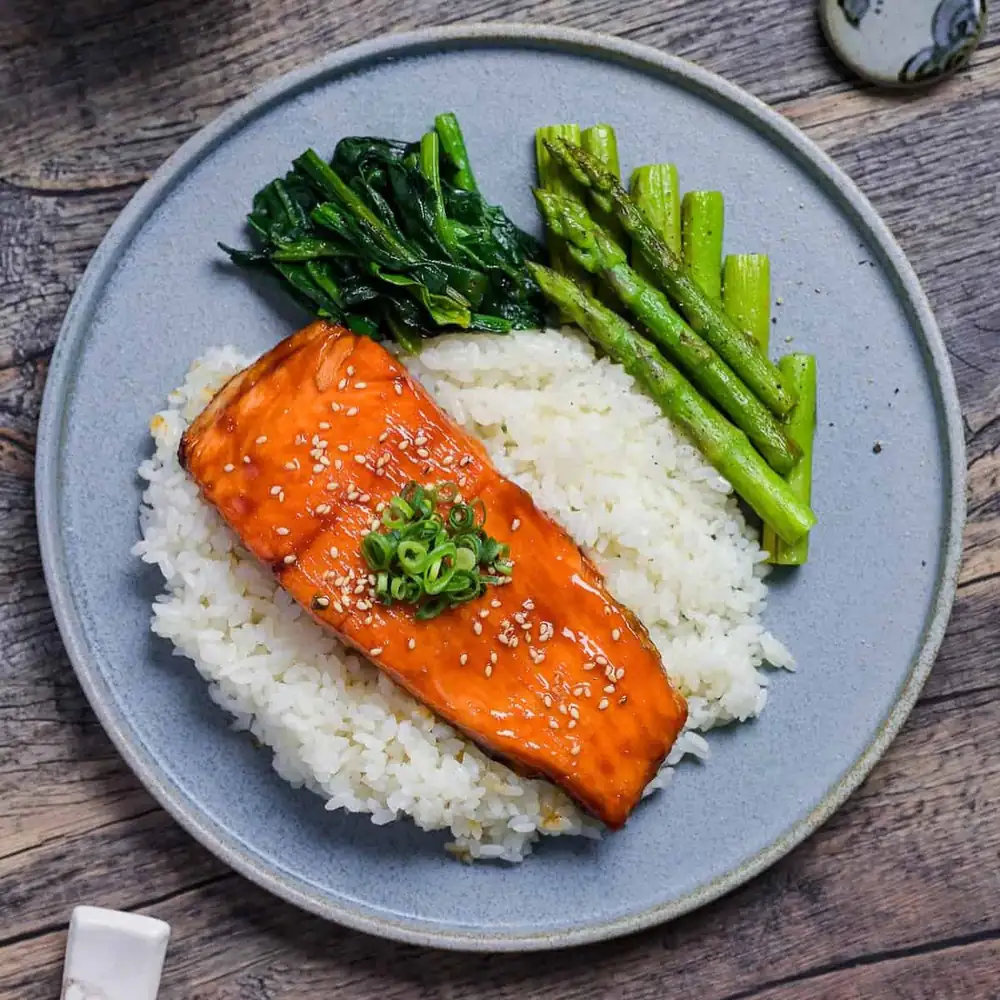
- Place the salmon fillets on top and arrange the asparagus next to them. Pour the leftover sauce from the pan over the salmon and garnish with toasted white sesame seeds and finely chopped green onions. Enjoy
Featured Comment
I have tried so many different teriyaki recipes and this one was 1000000/10! So delicious, simple and fast.
Ticks all the boxes.
YouTube)
Love teriyaki chicken but craving something with that same glossy magic on a different protein?
Or maybe you’ve made shiozake and salmon onigiri and want a Japanese salmon recipes that hits harder? Make this teriyaki salmon!
This recipe gives you the ultimate one-plate salmon teriyaki. Crispy skin, sticky glaze, buttery vegetables, and rice.
One simple starch trick makes all the difference.
Japanese Teriyaki Salmon
- What is it? Crispy-skinned, glossy-glazed teriyaki salmon over fluffy Japanese rice and buttery greens.
- Flavor profile: A rich sweet-savory glaze with deep umami from real soy sauce and mirin, finished with a caramelized shine you can’t get from a bottle.
- Why you’ll love this recipe: It’s a Tuesday-night win that looks like a chef cooked it! Juicy, flaky salmon + a shiny glaze you spoon over at the end for instant wow.
- Must-haves: Skin-on salmon fillets, Japanese soy sauce + mirin + sake for a from-scratch teriyaki glaze, and potato starch (or cornstarch) for a flawless sear.
- Skill Level: Easy
Summarize & Save this content on: Teriyaki salmon (鮭の照り焼き) is a Japanese glazed fish dish made using the teriyaki cooking technique.
The word “teriyaki” comes from teri (照り), meaning shine or gloss, and yaki (焼き), meaning grilled or broiled. Salmon fillets are pan-seared or grilled, then coated with a sweet-salty tare (sauce) made from soy sauce, mirin, sake, and sugar.
The sauce is applied and reduced directly on the fish, building up a sticky, glossy layer through repeated basting and concentration. In Japan, the most traditional teriyaki fish is actually yellowtail (buri), and yellowtail teriyaki remains one of the most iconic examples of this cooking style.
Salmon is a more accessible alternative that takes beautifully to the same method, with its rich, fatty flesh absorbing the glaze and developing a caramelized surface.
- Salmon Fillets: Go for skin-on, boneless fillets about 2 cm (¾ in) thick. This thickness lets you build a glossy glaze without overcooking the inside. Leaner varieties like sockeye or coho work especially well here, while very fatty cuts can feel heavy under a sweet-salty sauce.
- Spinach: It cook in minutes with a little butter, salt, and pepper, giving you a complete plate without a second recipe. Chinese spinach (or any tender leafy green like regular baby spinach) wilts beautifully and soaks up the buttery pan juices.
- Potato Starch: Potato starch (katakuriko) is a fine white starch made from potatoes. It’s my can’t-skip trick in teriyaki salmon: it helps prevent sticking, boosts crisping, and gives the sauce something to grab onto so you get that thick, glossy glaze fast. Look for it at Japanese/Asian markets.
- Japanese soy sauce (koikuchi shoyu) → Tamari is your best swap and keeps things gluten-free. It’s a bit richer in umami and slightly thicker, so your teriyaki glaze may darken faster.
- Potato starch (katakuriko) → Cornstarch is the easiest one-to-one swap and gives you a very similar crispy coating and glossy sauce cling
- Oriental spinach → Regular baby spinach is a great stand-in. Just skip the blanching steps and simply sauté it in the butter since it wilts quickly. Broccolini or sugar snap peas also pair beautifully if you want a bit more crunch alongside the salmon.
- Asparagus → Green beans or broccolini are easy swaps that hold up well in a quick butter sauté and still feel right next to teriyaki salmon. Adjust the cook time slightly since thinner vegetables will be done faster.
- Japanese short-grain rice → Calrose are the easiest substitutes and still give you that slightly sticky, chopstick-friendly texture. Long-grain rice works in a pinch, but it won’t “hold” the sauce the same way.
Have trouble finding Japanese ingredients? Check out my ultimate guide to Japanese ingredient substitutes!
If you prefer to watch the process in action, check out my YouTube video of this teriyaki salmon recipe! i.
In Japan, spinach arrives at the market with its full stems and roots still attached. If you’ve picked up bagged spinach leaves, feel free to skip ahead to blanching.
Otherwise, give the bunch a thorough rinse under cold water to flush out any grit hiding in the root end. ii. Divide the spinach into three sections: the thick lower stems, the middle stalks, and the leafy tops.
Each part cooks at a different rate, so staggering them in the pot ensures the leaves stay vibrant while the stems turn tender. iii. Bring a small pot of water to a rolling boil and drop in a pinch of salt (that tiny hit of sodium helps the spinach hold its electric-green color by stabilizing chlorophyll).
Prepare a bowl of ice water and place it next to the stove. Lower the stem bundles in first and let them boil for 1 minute. Tip: Tying them in bundles with butchers twine makes it easy and efficient to lift them out the pot quickly, but it’s not essential.
Another technique I often use is placing the whole bunch in the water root-first with leaves hanging over the edge, then lower them each time the timer sounds. iv.
Next, add the middle sections and continue boiling for 45 seconds, keeping the stems right where they are. v.
Finally, slip in the leafy tops and cook everything together for just 30 seconds more. vi.
The moment the timer is up, use tongs to transfer each bundle straight into the ice bath. This shock halts cooking instantly, locking in that bright color and a slight, satisfying bite. Gently squeeze out the water, place on paper towels and set aside for later.
i. Lay the fillets on a sheet of kitchen paper and press firmly on both sides, patting until the paper comes away nearly dry. ii.
Once the fillets are dry, season both sides with a light pinch of salt and pepper, then dust with a thin, even coat of potato starch. The starch does double duty: it creates an ultra-crisp shell on the skin and gives the teriyaki sauce a tacky surface to grab onto.
Potato starch fries up lighter and crispier than wheat flour, and it doesn’t add a floury taste that can muddy the clean soy-and-mirin flavor of teriyaki. i.
Heat a frying pan over medium until it’s properly hot, then add a drizzle of neutral oil and swirl to coat the surface evenly. Lay the salmon fillets in skin-side down.
ii. Fry for 4 minutes without moving the fillets.
If you have two burners free, start the vegetables about halfway through searing the salmon. That way everything lands on the plate hot at the same time, and you shave a few minutes off total cook time.
i. Set another pan over medium heat and add a knob of butter.
Once the butter has melted and starts to foam, add the asparagus, sprinkle with salt and pepper, and fry for 2-3 minutes. I used pencil asparagus for speed, but thicker asparagus can take up to 4-7 minutes.
ii. Add the spinach and continue to fry for another minute or two, just until the asparagus softens slightly while keeping a bit of snap and the spinach edges pick up a faint golden tinge from the butter.
iii. Remove the pan from the heat and set the vegetables aside. i.
Flip the fillets and cook the flesh side for 2 minutes. The salmon will still look slightly translucent in the very center, and that’s exactly right.
Residual heat will carry it the rest of the way once you pull the pan off the burner, keeping the interior silky rather than chalky. Look at the side of each fillet: you’ll see the color shift from translucent ruby to opaque pink, climbing from the bottom up.
When that opaque line reaches about three-quarters of the way through, you’re in the sweet spot. Poking the thickest part with a fingertip should feel like pressing the fleshy pad below your thumb, a gentle, springy give rather than firm resistance.
ii. Pour the pre-mixed teriyaki sauce around the salmon while it’s still in the pan. Now grab a spoon and begin basting continuously.
Scoop the bubbling sauce from the edges of the pan and drizzle it over the skin side of each fillet. This constant spooning serves two purposes: it coats the fish in an even, building layer of glaze, and it keeps lifting the sauce off the hottest part of the pan so the sugars concentrate without burning. ii.
Continue basting until the sauce thickens into a syrupy, glossy lacquer that clings to the spoon in a slow ribbon. Then pull the pan off the heat immediately.
If the sauce still seems runny after a minute of basting, lift the salmon out onto a plate and let the sauce reduce alone in the pan for another 30 to 60 seconds. It thickens fast once the fish’s moisture is out of the equation. Remember that the glaze will continue to set as it cools, so pull it just slightly thinner than your ideal.
i. Build each plate from the bottom up: start with a mound of steamed rice, then nestle the buttery spinach on top, creating a vibrant green bed for the salmon.
ii. Set a glazed fillet over the spinach, skin side up to show off that lacquered crust, and tuck the asparagus alongside.
iii. Spoon any sauce remaining in the pan directly over the salmon.
If you follow the default recipe, it will yield 2-3 main servings.
- Pat the salmon very dry (and keep starch dusting thin) so surface moisture can evaporate and the skin can sear crisp.
- Add the teriyaki sauce late, after the salmon is nearly cooked through. Pouring it in too early means the fish is still releasing water and rendered fat, which thins the sauce and forces sugars to sit on high heat far too long. The result is a watery coat with bitter burnt patches instead of the thick, lacquered reduction you’re after.
- Sear skin-side down for a full four minutes without moving the fillet.
- Pull the salmon off heat when the opaque line reaches about three-quarters up the side. Carryover heat will finish cooking the center to a silky, flaky doneness, and waiting until the fillet looks fully cooked through guarantees dry, chalky fish every time.
With these simple tips in mind, you’re set for success every time you make teriyaki salmon. Fridge: Store leftover teriyaki salmon in an airtight container for up to 3-4 days.
The glaze will thicken and the skin will lose its crispness as moisture redistributes, so quality is best within the first day or two. Freezer: Not recommended. Meal Prep: You can blanch/squeeze-dry the spinach, trim asparagus, and mix the teriyaki sauce (fully dissolving the sugar) up to 1-2 days ahead, then cook the salmon fresh for best crispness.
Reheating: Reheat in a skillet on low to medium-low with a small splash of water (or sake) to loosen the glaze, then warm just until steaming hot. Avoid high heat or the sugar can scorch and turn bitter.
Why did my teriyaki sauce burn instead of forming a glossy glaze? Sugar crosses from caramel to bitter char in seconds on a hot pan, especially when the sauce is added too early while the fish is still releasing moisture and oil.
The fix is adding the tare late (once the salmon is nearly cooked through) and basting continuously so the sauce keeps moving off the hottest surface. If you cook on an induction hob, use a thicker or multi-layer pan, as induction can produce larger hot spots that scorch sweet glazes faster than gas. Why is my teriyaki glaze watery and not glossy?
A watery glaze usually means the pan is too wet. Salmon surface moisture (or released water) dilutes the sauce so it can’t reduce into a lacquer.
Pat the fish very dry and wait until the salmon is mostly cooked before adding the sauce, then simmer just until it clings and looks shiny. If it still won’t thicken, keep reducing over a gentle heat. Gloss comes from evaporation, concentration, and patience.
What is the white stuff on salmon, did I ruin it? That white liquid is albumin, a protein that gets pushed out when the salmon’s proteins tighten under higher heat.
It’s safe to eat, but it’s a sign the heat was a bit aggressive and the fish may skew drier. Next time, use steadier medium heat and pull the fish as soon as it hits your target temp, letting carryover finish the center.
- Teriyaki Tofu Donburi (Vegan Rice Bowl)
- Pork-Wrapped Rice Balls
- Teriyaki Chicken Donburi
- Teriyaki Meatballs
Hungry for more? Explore my easy teriyaki recipe collection to find your next favorite dishes!
The ingredient brands and tools I trust are in my Japanese pantry guide and my cooking tools guide. Can’t find certain Japanese ingredients?
See my substitution guide here.