The olive oil that choked (and educated) me. Just as it should
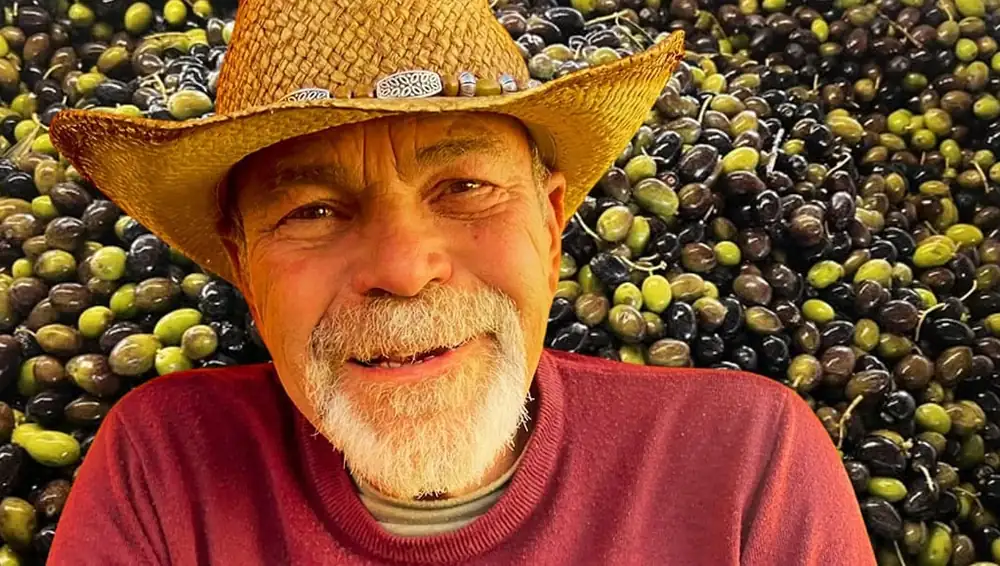
Fabio Fernandez of the Straight Law Office (more about that on another occasion), aviation-expert-turned-olive-oil-farmer-and-miller Haim Merkado, and me who, having downed that first tablespoon of olive oil, lost my voice. Weeks earlier, I attempted an online interview with Haim about his fascinating background in avi…
This was what happens after a lifetime of innocently consumed, poor quality oil, that I imagined was the signature of all olive oils – easy-going and nice to cook with, or in a salad dressing. And when I say “lifetime”, I mean “half lifetime” since, as an Englishman, I only experienced olive oil in the 1980s and even then it was still sold in chemists as a medicine, as it got under way to show up on UK supermarket shelves.
Eyes shut down for the big moment – trying Haim’s early gathering first press – the peppery assault on the back of my throat got me reaching, involuntarily and with some dignity lost, for a beer, as you can hear in the resulting audio. Begging for “mais um!” and my mummy, the miller was in no way surprised, knowing that this first pressing piquancy was the first step in my oily education. He looked on with the patient demeanour and occasional giggle of someone who has seen this many times before.
He had, as it turned out, witnessed exactly this reaction from a great many people who believed – as I did – that olive oil was a gentle, inoffensive thing that one drizzled and moved on from. Stilled, and brought into the marvellous moment by the olive-oriented ordeal, I started – once settled – to realise a great depth. Diversity of savour and a most wonderful glow from the oil in front of me and in the videos that Haim pointed to me captured on his farm in the Alentejo hills near Colos, where 300 ancient Galega olive trees grow on land that until in recent weeks nobody much wanted. Its founder is an aerobatic pilot, a man who spent years making aircraft do things that most passengers prefer not to think about, where split-second decisions and absolute technical discipline were not optional extras but the literal difference between life and … the other thing.
The result is an olive oil business run with what its website calls “aviation-grade precision”. The process I was shown, and have learned about from the website, and Senhor Merkado’s engaging presence, is genuinely extraordinary.
This matters enormously, and the reason it matters is the first thing I learned that afternoon. What I did not know – what most blissfully ignorant buyers do not know – is that at 27 degrees Celsius, a chemical breakdown occurs within the olive that destroys the polyphenols: the active compounds that give real olive oil its peppery kick, its health benefits, its medicinal properties, its entire reason for being something other than a cookery fat. The choking sensation that felt like it was finishing me was not a defect.
The industrial alternative – what fills most supermarket shelves, including much of what calls itself extra virgin olive oil – is extracted chemically, at temperatures of 30 degrees and above, from the pulp that remains after the first pressing. As my host put it, with the weary authority of a man who has spent years challenging corrupt orthodoxy: the moment you understand the trade, the wool-pulling becomes mind-numbing.
The trees at Merkado were abandoned for years, choked by undergrowth, until someone with a pilot’s eye for what is salvageable decided they were worth four years of clearance, pruning and restorative care. Again, and not for the first time in Portugal, another notable case of concealing the most extraordinary things in plain sight.
Three hundred ancient trees on a hill near a village most people have never heard of, producing around 1,000 litres of oil per year, run with the obsessive discipline of someone who used to trust his life to precision instruments. You can book a farm visit, pull up a stool at the tasting bar, and discover what olive oil actually tastes like when nobody has removed all the interesting and arguably useful parts.
- Figures: 1,000 litres