Moroccan Chicken Rfissa
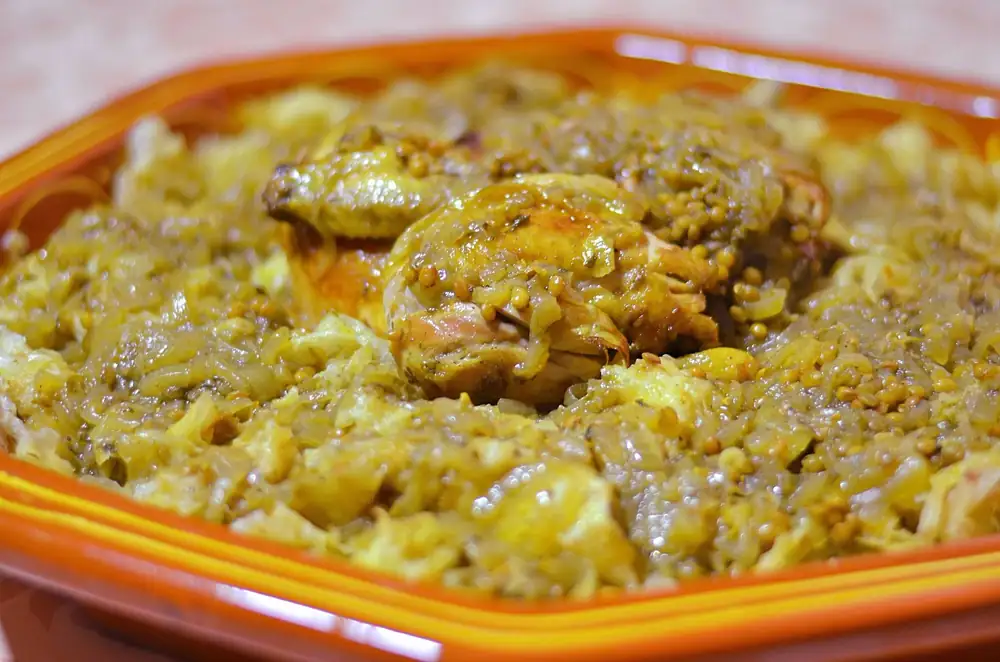
A delicious Moroccan dish of chicken, lentils and onions served with broth on a bed of shredded pastry, msemen, or bread. Plan ahead to allow all day or overnight marinating of the chicken.
- 1 large chicken, (quartered or left whole)
- 3 large onions, (thinly sliced)
- 1/2 cup olive oil
- 1 tbsp salt
- 1 tbsp pepper
- 1 1/2 tbsp ginger
- 1 tbsp Ras el Hanout ((or 1 1/2 tbsp msakhen))
- 1 1/2 tsp turmeric
- 1/2 cup uncooked lentils, green or brown
- 4 tbsp fenugreek seeds, (soaked overnight and drained)
- 1 1/2 tsp saffron threads, (heated gently and then crumbled)
- 1 handful fresh cilantro, (finely chopped)
- 1 handful fresh parsley, (finely chopped)
- 4 1/2 cups water
- 1 1/2 tsp smen ((Moroccan preserved butter))
- 1 1/2 batches msemen, shredded ((or trid pastry))
- Making and shredding msemen is best done ahead of time. Tear the msemen into bite-size pieces while hot off the griddle. When cool, store in a plastic bag. If prepared more than a day in advance, freeze the shredded msemen until needed.
- The night before (or at least six hours before cooking), soak the fenugreek seeds and lentils in separate bowls of cold water. (If you forget to do this, you can do a quick soak by pouring boiling water over the fenugreek and lentils and letting them sit an hour or two.) Drain when ready to use. If desired, the soaked, drained fenugreek seeds can be tied in a cheesecloth to keep them separate from other ingredients in the pot.
- The night before (or at least six hours before cooking), mix the chicken with the onions, olive oil, salt, pepper, ginger, turmeric, saffron and Ras el Hanout spices in a heavy-bottomed pot. Stir to coat the chicken well, cover, and leave in the fridge to marinate.
- Place the pot with the chicken on the stove over medium heat and cook, covered, stirring occasionally, for about 15 to 20 minutes, until a rich sauce has formed.
- If using a free range (beldi) chicken: Add the drained fenugreek seeds, parsley, cilantro and the water. Cover and simmer over medium-low to medium heat for about 1 hour. Add the drained lentils and continue cooking, covered, for another hour, or until the chicken and lentils are quite tender. Add water as needed during cooking to ensure that ample broth remains in the pot, and correct seasoning if necessary.
- If using a regular, factory-raised (roumi) chicken: Add the drained lentils, drained fenugreek seeds, parsley, cilantro and the water. Simmer, covered, over medium-low to medium heat for about 1 hour, or until the lentils are tender and the chicken is well-cooked. There should be rich, ample broth in the pot. (If there's not, add a little water during cooking, tasting to be sure that the seasoning is not diluted.)
- Taste the broth for salt, then add the smen, swirling the pot to incorporate it into the broth. If desired, remove the chicken from the pot and place it under a broiler for a few minutes to brown and crisp the skin.
- Steam the shredded msemen in a couscoussier for about 10 minutes, or until steaming hot and tender. Spread or mound the hot, shredded msemen on a large serving dish. Add the chicken to the bed of msemen, and distribute the lentils, onions and most of the broth over all. Reserve a bowlful or two of broth to offer on the side. (If you tied the fenugreek in cheesecloth, empty it into a bowl to offer on the side as well.)
- Rfissa is traditionally enjoyed communally from the serving dish, with each person eating from his own side of the plate by hand or with a spoon.
The trid pastry or msemen can be made ahead of time or while the chicken and lentils are stewing. You can eliminate the prep work of making pastry or msemen by using leftover bread or even store-bought paratha bread. If prepared more than a day in advance, freeze the shredded msemen until needed.
The night before (or at least six hours before preparation), soak the fenugreek seeds and lentils in separate bowls of cold water. (If you forget to do this, you can do a quick soak by pouring boiling water over the fenugreek and lentils and letting them sit an hour or two.) Drain when ready to use. If desired, the soaked, drained fenugreek seeds can be tied in a cheesecloth to keep them separate from other ingredients in the pot.
The night before (or at least six hours before preparation), mix the chicken with the onions, olive oil, salt, pepper, ginger, turmeric, saffron and Ras el Hanout spices in a heavy-bottomed pot. Stir to coat the chicken well, cover, and leave in the fridge to marinate.
Place the pot with the chicken on the stove over medium heat and cook, covered, stirring occasionally, for about 15 to 20 minutes, until a rich sauce has formed. If using a free range (beldi) chicken: Add the drained fenugreek seeds, parsley, cilantro and the water.
Cover and simmer over medium-low to medium heat for about 1 hour. Add the drained lentils and continue cookery, covered, for another hour, or until the chicken and lentils are quite tender.
Add water as needed during cookery to ensure that ample broth remains in the pot, and correct seasoning if necessary. If using a regular, factory-raised (roumi) chicken: Add the drained lentils, drained fenugreek seeds, parsley, cilantro and the water.
Simmer, covered, over medium-low to medium heat for about 1 hour, or until the lentils are tender and the chicken is well-cooked. There should be rich, ample broth in the pot. (If there's not, add a little water during cookery, tasting to be sure that the seasoning is not diluted.) Taste the broth for salt, then add the smen, swirling the pot to incorporate it into the broth.
If desired, remove the chicken from the pot and place it under a broiler for a few minutes to brown and crisp the skin. Steam the shredded msemen in a couscoussier for about 10 minutes, or until steaming hot and tender.
Spread or mound the hot, shredded msemen on a large serving dish. Add the chicken to the bed of msemen, and distribute the lentils, onions and most of the broth over all.
Reserve a bowlful or two of broth to offer on the side. (If you tied the fenugreek in cheesecloth, empty it into a bowl to offer on the side as well.) Rfissa is traditionally enjoyed communally from the serving dish, with each person eating from his own side of the plate by hand or with a spoon.