Thai Shrimp Paste Fried Rice is My #1 Rice Dish!
Kao kluk gapi ข้าวคลุกกะปิ or shrimp paste fried rice is my #1 favourite rice dish and one of my favourite Thai dishes in general. I love it so much that if you asked me what my "last meal" is, shrimp paste fried rice is a strong contender. It's a unique dish that's part fried rice part salad: Thai jasmine rice is frie…
- 2 Tbsp (30 ml) neutral oil
- 2 Tbsp (30 ml) Thai fermented shrimp paste (see note 1)
- 500 g cooked jasmine rice, about 3 cups
- 1 Tbsp (15 ml) neutral oil
- ½ cup shallots, thinly sliced
- 350 g pork butt or pork belly, cut into 2 x 1 cm pieces
- 100 g palm sugar, finely chopped
- 1 Tbsp (15 ml) fish sauce
- 2 tsp (10 ml) soy sauce
- 1 tsp (5 ml) Thai black soy sauce or Chinese dark soy sauce (see note 2)
- 2 eggs (for omelette strips)
- ¼ cup shallot, julienned
- 1 Lime, cut into wedges for serving
- 2-3 Thai chilies, minced, to taste
- 2 long beans, cut into 1/4" pieces
- 1 cup julienned julienned carrots marinated in lime juice or julienned sour green mango (see note 3)
- 1/2 cup quartered-and-sliced cucumber (see note 4)
- 1/4 cup medium sized dried shrimp (optional)
- 1 link Chinese sausage, small diced (optional)
- In a medium saucepan, heat the oil over medium heat and sauté the shallots until they start to caramelize.
- Add the palm sugar and stir until it is melted and starts to turn an amber colour. Immediately add the pork, soy sauce, fish sauce, black soy sauce, and just enough water to cover the pork. Stir to mix and dissolve the sugar.
- Let simmer gently, stirring occasionally, for about 30 minutes or until the syrup has reduced until thick and shiny. Top it up with more water as needed if it becomes too dry.
- Pre-heated a non-stick, 10- or 12-inch frying pan over medium heat with just enough oil to lightly coat the bottom. (If using a 10-inch pan, cook 1 egg at a time; if using 12-inch pan you can cook both eggs together.) Swirl until the egg is evenly distributed, and turn the heat to low. Cook until the other side is a light golden colour, and the top is dry enough to flip.
- Flip the omelette and cook the other side for a few seconds just to set it. Remove from the pan onto a plate. Repeat with the other egg if needed.
- Once cool enough to handle, cut the omelette crepe in half, then stack the halves and slice each half into 1-cm wide strips.
- Add dried shrimp to a wok or a small pot, then add just enough oil to cover. Turn the heat on medium high, and once the shrimp are bubbling, turn the heat down to medium low and fry for another 1-2 minutes, or until the bubbling starts to slow down. Remove with a slotted spoon and let cool in a small bowl.
- In the same oil, over medium heat, add the Chinese sausage pieces and fry just until the outside is slightly browned. Remove with a slotted spoon and let cool in a small bowl.
- Important: Open windows where possible and turn the hood fan on high!
- In a wok, add the oil and the shrimp paste, then turn the heat on medium. Try to break up the shrimp paste as much as possible with your spatula. Once the paste is sizzling and the aroma starts to spread, add a splash of water, just enough to loosen the shrimp paste into a sauce consistency. Mash the shrimp paste until there are no more clumps.
- Turn the heat up to high, add the rice and toss until the rice is thoroughly mixed and there are no more clumps. Turn off the heat.
It explodes with flavours and textures in ways you probably have never experienced. This is a dish you likely won't find offered in Thai restaurants overseas, so if you're ready to experience something new and delicious, this is the one for you!
What is Kao Kluk Gapi? Some Cultural Context
Kao means rice (sometimes written as khao), kluk means to mix, and gapi (sometimes written as kapi) is fermented shrimp paste.
Traditionally, cooked rice is mixed with shrimp paste and then served with a variety of toppings. Everything is then tossed together like a rice salad. In Thailand, kao kluk gapi is considered an ahaan jaan diew or a "one-dish meal," which means it is a complete meal in itself, and it is not meant to be shared family style like most of our other dishes.
It's widely available in Thailand both in casual restaurants and also as ready-made meals sold at markets for people to take home. Traditionally the rice is mixed with the shrimp paste off-heat in a mixing bowl, and the dish is served room temp or lukewarm, so this is not technically considered a fried rice.
But many people, myself included, prefer to cook the rice with the shrimp paste in a wok like a fried rice so the rice is nice and hot, but more importantly because it is easier to get the shrimp paste to mix with the rice that way.
Ingredients and Important Notes
Here are all the ingredients you need and important notes about them. For amounts, see the full recipe card below.
Shrimp Paste Rice Ingredients
- Fermented shrimp paste. This is a thick paste made from fermented small shrimp or krill. It is salty, umami, and while many people might describe the smell as "funky," for many Thais we absolutely adore this smell as it represents so many delicious dishes! If you open it for the first time, it will taste much better than it smells, I promise! I use Trachang brand which is from Thailand (pictured above), but you can also use Indonesian terasi or Malaysian belacan for this recipe.
- Cooked jasmine rice. Use jasmine rice from Thailand as it is the most fragrant, soft, and slightly sweet. It's important that your rice is not too moist for this, or it may become mushy once with mix it with the shrimp paste. So when you cook the rice, add slightly less water than you normally do, and once cooked, spread it out on to a large plate to let the steam escape and dry the rice out further. If you have leftover rice that has been sitting in the fridge, that will also be a little drier and will work well. Read more about how to cook rice perfectly here.
Caramel Pork Ingredients
Caramel pork or moo waan is small pieces of pork slowly braised in a sweet-salty sauce made with caramelized palm sugar. This is the most important topping of the dish as it provides the sweetness to help balance the saltiness of the rice.
If you have extra, serve with alongside tom yum goong and it's my favourite combo!
- Pork belly or pork butt, cut into 2 x 1 cm pieces. Traditionally we use pork belly, but I prefer more meat and less fat so I prefer using pork butt (aka pork shoulder). Either one works fine.
- Palm sugar. You can also substitute an equal weight of light brown sugar if palm sugar is not available. Read more about palm sugar here.
- Shallots, thinly sliced
- Fish sauce.
- Soy sauce. I use Thai soy sauce, but any kind of regular or light soy sauce will work. Read more about types of soy sauces here.
- Black soy sauce. Thai black soy sauce is added to give the pork the iconic dark colour and a richer flavour. You can also substitute Chinese dark soy sauce, but because it is saltier than Thai black soy sauce, you will need to reduce the amount of regular soy sauce slightly. You can also omit it altogether.
The Fixins
These make up the "salad" portion of the dish and they provide the variety of texture and flavour kao kluk gapi is known for.
- Eggs. For making omelette strips
- Fresh shallots, julienned. You can also sub red onions.
- Lime wedges. Each person needs a big juicy wedge for squeezing over their rice.
- Thai chilies, finely chopped, to taste. or you can sub chili flakes or powder, just something to make it spicy.
- Long beans, or green beans. Cut into ¼ inch pieces. Can also sub other crunchy vegetables.
- Julienned carrots marinated in lime or lemon juice. This is my hack to replace sour green mango traditionally used in Thailand. Sour green mangoes are crunchy and tart, so by marinating julienned carrots in lime or lemon juice, we get similar effect.
- Cucumber, cut into small pieces.
- Dried shrimp (Optional). Choose dried shrimp that are medium size - so not the papery thin ones that come with the eyes still intact, but also not huge ones as they can be a bit chewy.
- Chinese sausage (optional). I don't usually add Chinese sausage when I make it at home because it is sweet-salty-chewy and so serves a similar purpose as the caramel pork. But it is very commonly added in Thailand, so if you want or already have it, add it to the mix!
Step By Step
Here's a bird's eye view of the process so you get an idea of what to do.
If it's your first time I highly recommend watching the video tutorial to ensure success. The full instructions is in the recipe card below.
- For the caramel pork. Saute the shallots in oil until they start to caramelize.
- Add the palm sugar and cook until it is melted and darkens into a caramel colour.
- Add the pork, water, soy sauce, fish sauce and black soy sauce. Bring to a simmer.
- Simmer gently for 30 minutes until the sauce is thick and syrupy. While the pork cooks, make other components.
- Beat the egg and spread it on a pan to create a crepe-like omelette. Flip and cook the other side briefly just to set it. Tip: if using a stainless steel pan, to prevent sticking, heat the pan until sprinkled water beads up into balls upon contact. Then grease it lightly and add the egg.
- Cut the omelette in half and then cut into thin strips.
- If using dried shrimp: fry them in a small amount of oil until the bubbling subsides.
- Remove them when they are browned slightly and are crunchy once cool.
- Marinate julienned carrots in plenty of lime juice.
- Fry the shrimp paste in oil, breaking it up into smaller chunks, untilt he shrimp paste sizzles in the oil and is aromatic.
- Add a splash of water and stir to dissolve the shrimp paste.
- Add the rice and toss until the rice is evenly coated.
- The rice should have an even colour with no clumps of shrimp paste.
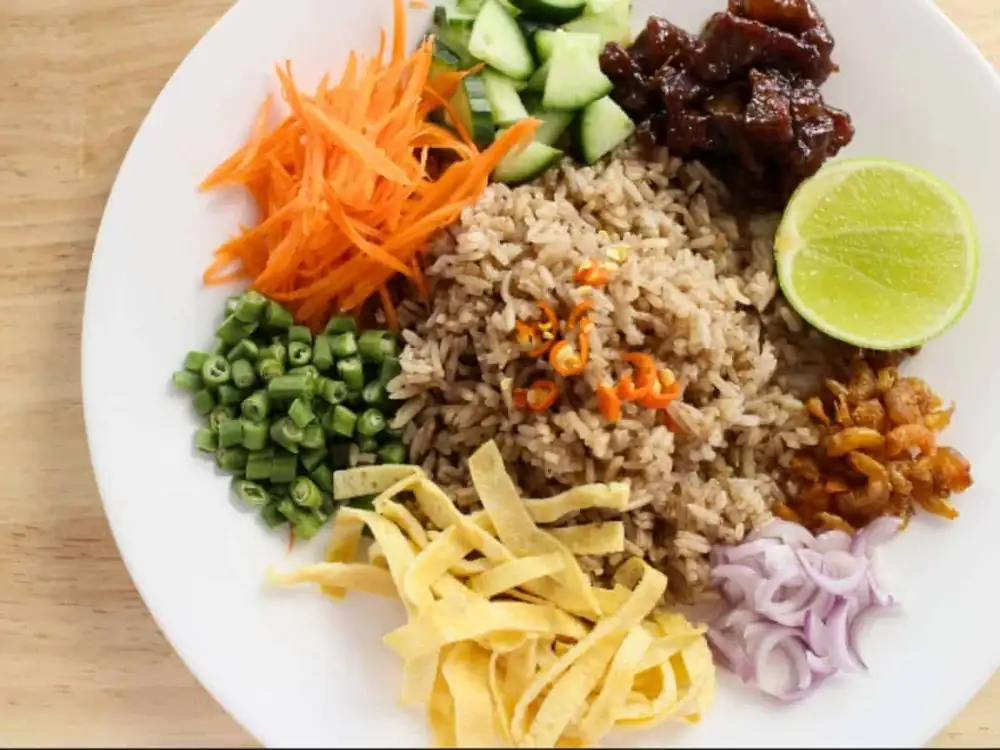
- Serve the rice with a little bit of all the fixins (just a small amount of caramel pork as i is very sweet). If you don't have fresh chilies you can add chili powder to the rice to make it spicy. Don't forget to squeeze the lime over before tossing everything together!
Watch The Full Video Tutorial! Thank you!
- Pro tip: The shrimp paste makes this dish absolutely delicious, but it does have a funky smell. So when you make the fried rice, open all the windows and turn the hood fan to high so your place doesn't smell like shrimp paste for days! Ask me how I know, lol.
Description
This half-fried-rice-half-salad dish is one of my absolute favourite Thai dishes ever.
Loaded with umami and exploding with flavours and textures, this dish really is Thailand on a plate!
For the omelette strips
For the crispy dried shrimp and Chinese sausage (optional):
For the shrimp paste rice:
To assemble: Serve the rice in the middle and arrange a small amount of the caramel pork and all the other fixings around the rice. When ready to eat, squeeze the lime over the rice and toss everything together!
Enjoy!
Notes
- If you're new to shrimp paste and are a little bit afraid to use too much of it, start with 1 tablespoon of shrimp paste, and then add a little bit of fish sauce or salt to make up for the saltiness.
- If using Chinese dark soy sauce, reduce regular soy sauce by 1 teaspoon.
- Use sour green mangoes if you can source it, otherwise simply squeeze some fresh lime or lemon juice over julienned carrots until they are thoroughly wet. Mix well and let them sit for at least 5 minutes.
- Quarter the cucumber first lengthwise, then slice each baton into thin slices.