Producers are increasingly scrutinising every stage of coffee processing
Estimated reading time: 7 minutes
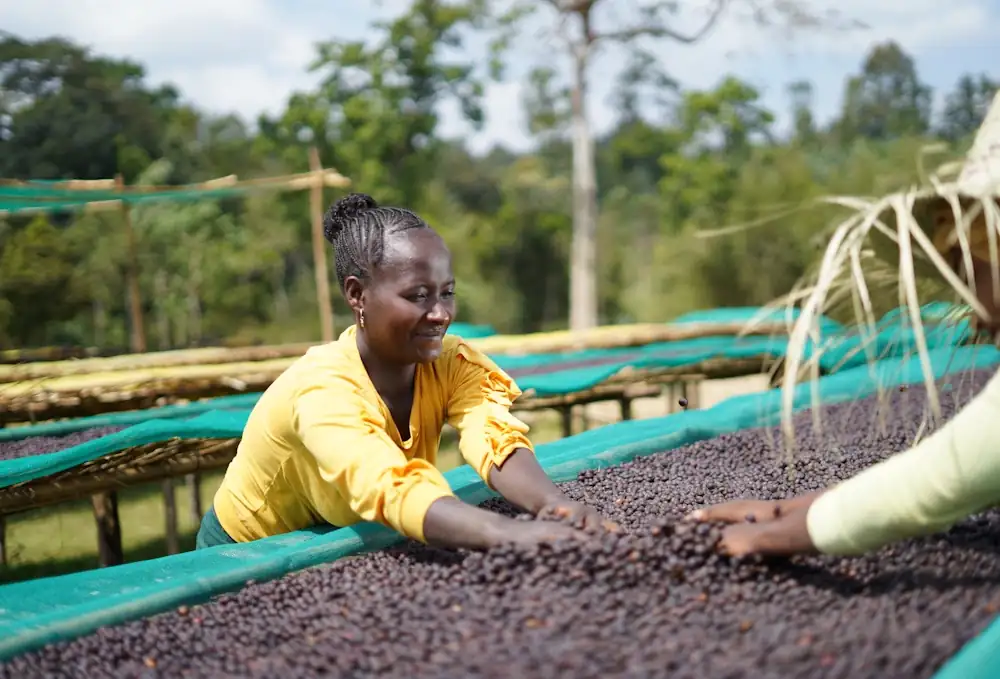
“We work closely with our partner, Fredrick Bejo, co-founder of Archers Coffee, who has been instrumental in guiding our approach, to embrace these new methodologies.”
Key takeaways
- Producers are scrutinising every coffee processing stage, from fermentation to milling.
- Colombia leads processing innovation, with co-fermentation now spreading to Ethiopia.
- Precision at each stage commands premiums but demands investment and expertise.
- Producers expect experimental methods to mature, standardise, and gain clearer categories.
Controlled, intentional fermentation in coffee processing has become one of the most widely discussed topics in the industry. Over the years, washed, natural, and honey processed coffees have given way to new techniques like anaerobic fermentation, carbonic maceration, and co-ferments.
These experimental profiles are in high demand, as customers seek bold and distinctive flavours. Yet where traditional techniques are relatively straightforward, advanced fermentation can require high levels of precision and control.
The shift is changing how producers run their businesses, turning processing from a post-harvest routine into a core commercial strategy. “Today, our operations are heavily focused on producing highly tailored micro-lots and experimental profiles for our global clientele,” says Eliyas Dukamo, a producer in the Sidama region of Ethiopia and founder of Elto Coffee. You may also like our article on how processing will change beyond co-ferments.
How coffee processing is changing
Historically, washed and natural processing have dominated global coffee production. Producers use them for practical reasons, but the methods also result in the consistency, volume, and predictable flavour profiles that the international market demands.
Rodolfo Ruffatti Batlle, a coffee producer and importer from El Salvador and Managing Director of Sapere.Coffee, draws on generations of family experience in coffee. “My family has been milling and processing coffee for more than 100 years,” he says. “I saw coffee production from an industrial lens: huge patios, professional staff, and the mechanics of farm operations.
The standard washed process was most common.” His perspective began to shift when he started buying coffee in Colombia around 2016, where more producers were beginning to experiment with processing. “From that period onwards in Colombia, it suddenly exploded,” Rodolfo says.
Alongside its reputation for exceptional washed coffees, Colombia has quickly established itself as a global centre for experimental processing. The country has pioneered techniques such as koji and lactic fermentation, and is now driving the fast-growing co-ferment category.
Producers add ingredients, whether fruit or other external organic substrates, that interact with the coffee’s mucilage, altering microbial activity and shaping flavour development. As the practice gains traction in Colombia, it is spreading to other origins, including Ethiopia.
“I believe we are among the pioneers of co-fermentation in Ethiopia,” says Eliyas. “We work closely with our partner, Fredrick Bejo, co-founder of Archers Coffee, who has been instrumental in guiding our approach, to embrace these new methodologies.”
A meticulous approach to processing
Buyers in the specialty market are increasingly drawn to advanced processed coffees, and the commercial logic for producers is obvious. Coffees with bold, expressive flavours, usually a result of processing, generate premiums.
Depending on the techniques involved, however, achieving them can require substantial investment. “While specialised coffee equipment requires a significant capital investment, it undeniably provides a strong competitive edge by enhancing both processing quality and operational efficiency,” Eliyas says. Beyond the technical benefits, he argues that investment builds trust with international buyers.
“It demonstrates our rigorous focus on quality control. This transparency builds huge trust, giving them the confidence to purchase our coffee because they know our protocols are reliable.” Achieving this level of control demands expertise, knowledge, and sound business infrastructure.
At Elto Coffee, Eliyas has established dedicated departments to manage fermentation. Separating those operations and equipping staff with precision tools underpins the company’s ability to guarantee consistent outcomes. “Having knowledgeable people and a highly organised processing space is critical because we manage incredibly small, delicate volumes,” he says. “At any given time, we are tracking 30 to 40 distinct micro-lots all the way from the farm level to the dry mill in Addis Ababa.
“Without strict operational control and expertise, all the meticulous effort poured into the harvest can completely collapse during the final stages.”
Balancing risk and reward
As processing becomes more experimental, with more steps and more critical variables, the risk of failure rises accordingly. “There are different types of buyers, people who like different profiles.
But for most coffee roasters, I think there’s like a certain place where you stop,” Rodolfo says. “You’re consciously taking on more risk doing more funky fermentations.” Despite the risks, processing can clearly help create the expressive flavours customers want, particularly where terroir imposes limits. “El Salvador’s coffee is not at the highest elevation, and it’s a kind of dry climate, so sometimes the coffee doesn’t develop the full secondary metabolites that create flavour,” Rodolfo says. “Processing certainly helps.”
The shift in buyer preferences shows up in prices. “With the same Red Bourbon, if I do a 120-hour anaerobic natural fermentation, people will buy it immediately,” Rodolfo says. “When the same coffee is washed, people aren’t always willing to pay as much.” For Eliyas, innovation rests on a mix of scientific input, data, and trial and error. “Our approach is a balanced blend of data-driven science, client feedback, and hands-on experimentation.
We actively listen to our clients’ suggestions and combine those insights with scientific processing variables, while remaining completely open to taking calculated risks through trial and error. “Every experimental micro-lot behaves differently, and the results on the cupping table are often incredibly distinct and surprising,” he adds. “Innovation is our core passion; even when an experiment doesn’t quite hit the target profile, we view it as a valuable learning experience that refines our craft.
That drive to discover something amazing is what keeps us moving forward.”
Where processing goes from here
Looking ahead, more producers want sustainable income and premiums for their coffees, and experimental processing is an increasingly popular route to both. “Experimental processing is not a temporary trend.
It will continue to mature,” Eliyas says. “Over the next few years, we will see these advanced methodologies become more refined and standardised, introducing even more precise, innovative flavour experiences to speciality coffee.” Further maturation could see these methods formalised into more distinct categories, creating greater clarity for customers. Classic washed and natural coffees, meanwhile, are likely to remain widely popular; their balance and intentional precision make them less susceptible to marketing trends.
Rodolfo says he is starting to look beyond processing. “I’m interested in genetics – it’s more permanent.” The goal is for coffees to remain resilient in tougher climates while retaining the most desirable flavour attributes. “Specialty coffee buyers really value floral flavours, so it’s very important to introduce floral characteristics into rust-resistant varieties, and that’s what we’re doing,” he concludes.
Ultimately, the producers who succeed with experimental processing are not those chasing novelty for its own sake, but those who pair it with the infrastructure, expertise, and discipline to deliver it reliably. Experimental processing has moved from the margins of specialty coffee to a central commercial strategy, rewarding producers who can pair bold fermentation techniques with rigour and investment. Premiums are real, but so are the risks, and only well-supported operations can consistently manage them.
As methods standardise, producers who treat processing innovation as infrastructure rather than novelty will succeed. Need more leads for your coffee business?
Get in touch with PDG Media, our marketing agency dedicated to specialty coffee, here.
Coffee processing FAQs
Why are coffee producers scrutinising every stage of processing? Advanced techniques like anaerobic fermentation and co-fermentation require far more precision than washed or natural methods.
Small variations at any stage can alter the final cup, so producers now monitor everything from cherry selection through fermentation to the dry mill. How do producers control each stage of coffee processing?
At Elto Coffee, Eliyas Dukamo runs dedicated fermentation departments, equips staff with precision tools, and tracks 30 to 40 micro-lots from farm level to the dry mill in Addis Ababa. Organised spaces and knowledgeable people underpin consistent outcomes. What happens when a processing stage lacks control?
The risk of failure rises with every added step and variable. Eliyas warns that without strict operational control and expertise, the meticulous effort poured into a harvest can completely collapse during the final stages, wasting the entire lot.
- Who: Coffee