Spice World
It’s only 8:30 a.m., but the narrow room is full of alchemical activity: Sheaves of herbs. Vegetables lurk imposingly in corners; cooks cleave bones and meat on huge chopping boards with resounding thwacks; others diligently stir the seething contents of enormous woks, each bursting bubble perfuming the air. Thus coale…
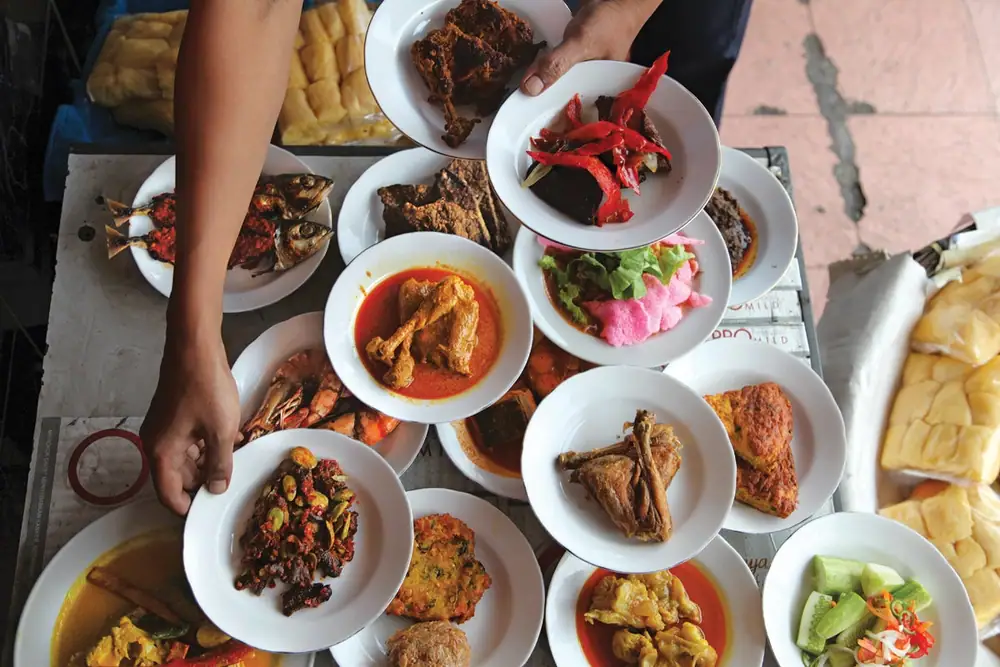
Per to But I’ve been, padang food outside Indonesia is an imprecise précis of the real thing. When my appetite and vacation time finally align, I book a trip to spend the day at Bundo Sati, revered in Jakarta for the freshness of its renditions of iconic Padang dishes.
I want to see how the masters make them, so I arrange to watch the cooks prepare nasi padang ‘s many elements before sitting down to lunch. The scent of caramelizing meat leads me to a cook daubing chicken pieces with a chile-red, coconut-creamy impasto of sauce before he browns them over red-hot coals.
A cool, sweet perfume brings me to an alcove where a wiry gentleman loads a pillowcase-size bag with freshly grated coconut, kneads it with some water in a basin, and clamps it between two heavy wooden boards to extract a stream of santan —coconut milk—the lifeblood of many a Padang dish. As dishes are finished, the staff stacks them in the restaurant’s front window—the better to seduce passersby.
That early in the morning, the air-conditioned dining room is calm and quiet, with just a couple of people having a coffee and a bite at the clean white tables, but by noon the tables will be jam-packed. Manager Pak Masril, who has worked here since 1978, tells me that roughly 500 diners drop by daily, mostly for lunch and dinner, streaming in and out slowly but steadily.
The arrival of a huge bunch of petai pods occasions much tongue clucking all around, for this prized component, which looks like a broad bean but tastes like sulphurous green almonds (it’s often referred to as stink bean in English), has an outrageously high current asking quotation, around 100,000 rupiah (about $8) a pound. Even the nasi putih , white rice, has unexpected dimension: The cooks combine two high-quality varieties for a blend with the ideal texture for soaking up gravies and sauces without turning to mush.
I sit down and signal my readiness, and the parade of curried, fried, grilled, and spicy dishes proceeds. I dig in, helping myself to a little of this, a little of that, alternating tastes and textures to my liking. (Another part of_ nasi padang_’s appeal: You eat what you like, leave the rest, and pay for only what you’ve consumed.) I pick curried chicken off its bones, savoring harmonies of coconut and a citrusy spice blend, and follow it with beef tendons, stewed until their cartilage melts into their pale curry.
The petai wink like jewels from amid a stir-fry of cubed potato and beef liver and red chile sambal. As I eat, I feel that I’m absorbing culinary rhythms like the rice soaks up curry, retuning my understanding of Indonesian food with a constant stream of small epiphanies—the fillip of shallots and creamy peanut sauce on a smoky stick of satay; the way a crisp tapioca wafer softens in a bowl of soto ayam , chicken soup.
It’s so suave and smooth that I find myself drinking deeply of it like soup, finally stopping only with heroic self-control. I wallow in the contrast between a deep-fried egg’s plush yolk and an intensely red, piercingly hot-sweet sambal infused with chiles, onions. Kaffir lime leaves, then reset my taste buds with an austere soup of oxtail, potatoes, carrots, and tomatoes.
Worlds away from the versions I’ve eaten outside Indonesia, these dishes bring vividly home to me the true genius of Minang-kabau cuisine: There is a finesse, a balance to the way it integrates flavors that satisfies past the sensory level and down to the soul. Ah , I find myself explaining, and ah , as this spice aligns with that one, like tumblers in a lock.
A cook whips it up before my eyes, beating a bright orange egg yolk to a custardy froth with honey, vanilla, and hot water, topping it up with condensed milk and dark coffee brewed with a cotton sock of grounds.
- Who: Bundo Sati
- Money: $8