How the Victorian Obsession for Order Created the Humble Sugar Cube
Matt Taylor-Gross In 1840, sweetening your tea was a complicated affair. To the cone-shaped loaf of refined sugar you’d picked up from your grocer, you’d take a sugar nipper—a pair of sharp-edged cast-iron pincers—to twist off a fist-sized chunk. If you were cooking, you’d then shave it down into powder, but for bevera…
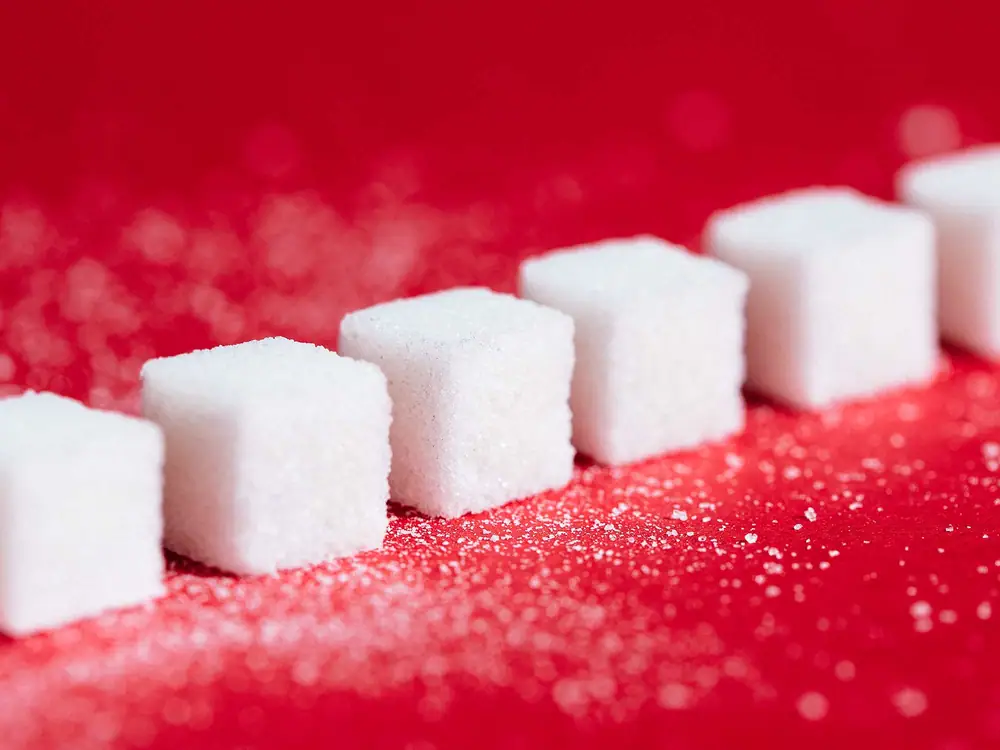
Rad’s answer, patented in 1843, was the sugar cube. The sweet highs and bitter lows of the component that regulations the world The Sugar Files By grating, wetting. Pressing the loaf sugar into a 400-slot mold, then letting it dry overnight, Rad’s factory was able to turn out perfectly uniform, individually portioned units of sugar.
After their resounding success at home, Rad dedicated a corner of his factory’s production floor to his new invention. With a small staff of women and girls was soon turning out 10 tons of cubes a day, selling them across Europe but primarily to Vienna, whose café culture was hungry for an easier, more hygienic coffee-sweetening option. This wasn’t the first time sugar’s form had been manipulated for human delight, but it was the most accessible. “Sweet salt,” as it was known during the Crusades, was a novelty brought back to the West from the Holy Land . It had arrived in the Middle East via India, where the first records of sugar refining have been found, dating back to the 5th century CE.
The cube made its British debut in 1875, when Henry Tate, a grocer-turned-sugar magnate (and namesake founder of London’s Tate Gallery), acquired the patent for a new cube-making process from a German named Eugen Langen. Later sugar artists would delight in trompe l’oeil designs; at a Venetian banquet given for Henri III of France in the mid-16th century, every piece of the 1,200-piece table setting was made of sugar, including the tablecloth.
The automation of the sugar extraction process in the early 19th century, as it coincided with the industrialization of the production of a great number of consumer goods, created a consumerist middle class with access to an unprecedented amount of stuff. By 1900, fully 20% of the calories in the average British diet came from sugar.
The cube made its British debut in 1875, when Henry Tate, a grocer-turned-sugar magnate (and namesake founder of London’s Tate Gallery), picked up the patent for a new cube-making process from a German named Eugen Langen. Rather than dealing with rough boulders of sugar, Langen’s process refined the sugar in a centrifuge first, then let it harden into bricks that were sawn into cubes by hand. At that point, refiners across Europe and in the U.S. were racing to come up with the most efficient method of cube-ifying their products; Tate’s was among the most efficient.
Cubes embodied the all-important Victorian values of order and rationality. But more importantly, cubes embodied the all-important Victorian values of order and rationality.
Sugar marketing of the time highlighted its purity, a delivery method for unadulterated food energy, and the cube was a visual indicator of sugar obeying the laws of science, unlike the hand-hewn cones of loaf sugar or artistically rendered sugar models of the past. After a steady presence into the mid-20th century fueled by new uses in cocktails. As an early vehicle for the polio vaccine, the sugar cube took a sharp nose dive in the latter half of the century, replaced with paper packets of granulated sugar and myriad sugar substitutes, taking the chemistry-class market to new levels.
In any high-end restaurant cocktail service or classically styled cocktail bar, you’ll be presented with uneven lumps of pale brown turbinado or white sugar—never a basic cube. These new-school lumps look like the jagged results of hard-fought struggles with a pair of sugar nippers. A Victorian housekeeper would have been horrified at the idea of setting out impure brown sugar for polite business.
The rectilinear sugar cube may be on its way out, but its mission—encapsulating the needs and values of an age in a kernel of sweetness—lives on.
- Who: Victorian · Matt Taylor-Gross But
- Percentages: 90% · 20% · 72%
- Figures: 10 tons · 90% · 20% · 72%