El salmón salvaje de Alaska, un ingrediente que merece un lugar en la cocina
El salmón salvaje de Alaska, de carne firme y sabor pleno, completa un viaje épico desde el río hasta el mar y merece un lugar en la cocina.
Wild Alaskan salmon is one of nature's most impressive journeys: born in freshwater, they migrate to the sea, mature for several years, and return to spawn in the river where they were born. Food writer Clarissa Hyman explores this species and shows you how to enjoy it to the fullest.
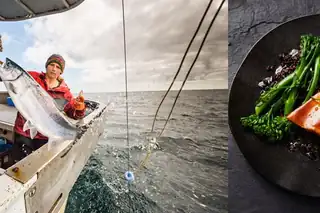
The Chinook (Oncorhynchus tshawytscha), also known as king salmon, is the largest salmon species in Alaska. It is rich in oil, protein, and omega-3 fatty acids, giving it a full, robust, and complex flavor. Fishermen eagerly anticipate its catch, and the region reveres this fish for its power and its place in the natural world.
Southeast Alaska is one of the world's great salmon breeding grounds: its islands, mountain ranges, and 150 inches of annual rainfall create thousands of streams and rivers. One of the first traders to arrive in the region reported that, during spawning season, salmon filled the rivers from bank to bank.
The indigenous population developed fishing methods, from harpoons and nets to complex weirs, and hundreds of preservation techniques involving drying, fermentation, and smoking. Hot smoking, sometimes called "kippering," involves salting the fillet in brine and hanging it over a wood fire. "Planking" ties it to a floating log. Both methods produce juicy meat with a rich, smoky flavor.
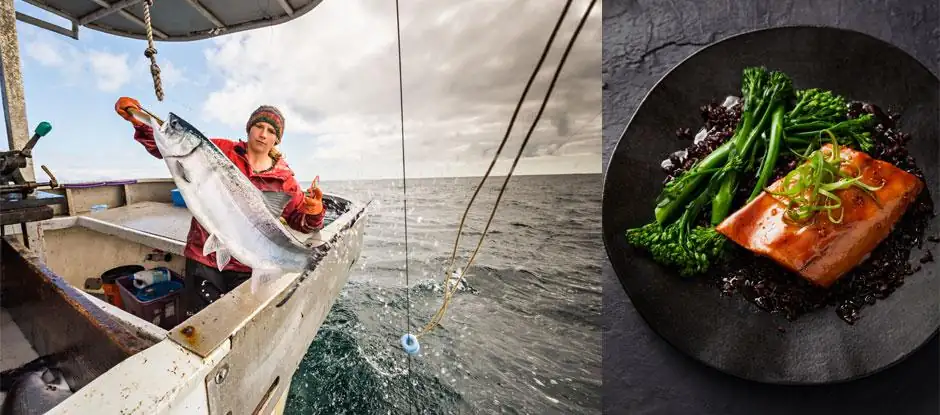
Modern chefs enhance its flavor by slow-cooking it in a controlled temperature using a bain-marie or steaming it en papillote with aromatic herbs. It pairs especially well with cilantro, soy sauce, sesame, chili, and lime. At Raw in Taipei, they serve gravlax salmon with Asian herbs.
Salmon are anadromous: they are born in freshwater, migrate through rivers and rapids to the ocean, and, when they reproduce, return to the same river where they were born. It is believed that they calculate the time of their return by perceiving changes in daylight hours, and that their orientation may depend on their keen sense of smell.
Sustainable fishing is enshrined in the Alaskan state constitution. Most of its fisheries hold RFM (Responsible Fisheries Management) and MSC (Marine Stewardship Council) certifications, the most comprehensive certifications a wild fishery can receive.