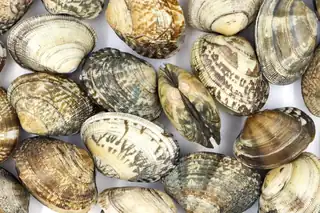
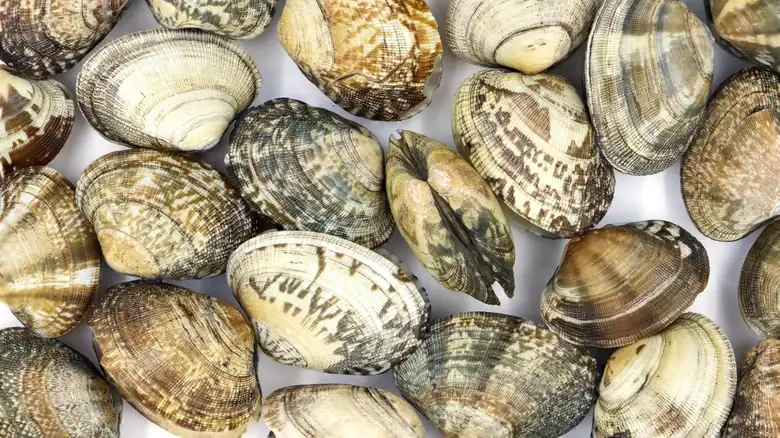
Soft-shell clams versus hard-shell clams: What's the difference?
Clams have many qualities. They are one of the most affordable shellfish and have some of the lowest mercury levels. Furthermore, they are a very versatile ingredient. They are delicious steamed, baked, boiled, or fried, in soups, with pasta, or simply on their own with a generous dollop of garlic butter.
“is often used specifically to reference chowder clams). The best ways to cook and eat soft shell clams If you want a tip for cooking soft shell clams, look no further than their most common nickname,”
Clams have many qualities. They are one of the most affordable shellfish and have some of the lowest mercury levels. Furthermore, they are a very versatile ingredient. They are delicious steamed, baked, boiled, or fried, in soups, with pasta, or simply on their own with a generous dollop of garlic butter. A key factor in the culinary versatility of these mollusks is that there are several species, each with its own characteristics for different preparations. Choosing the right clams is essential for a successful meal.
Seven species of clams are primarily sold in the United States. On the West Coast, you'll find Pacific razor clams, Manila clams, and the famously large geoduck clam. On the East Coast, you'll find surf clams and razor clams, but none of these varieties are as common as hard-shell and soft-shell clams. Although "hard-shell" and "soft-shell" sound like generic terms, they actually refer to two specific species of clams. You're likely to encounter them at some point, especially if you live on the East Coast, so let's clarify the differences, since the names of these species aren't very helpful.
What are soft-shell clams?
Softshell clams belong to the species Mya arenaria, which is found primarily along the northeastern coast of the United States. You might think that, like softshell crabs, they have a soft shell and are therefore edible, but in reality, the name isn't quite that simple. Softshell clams do have thin shells, but they aren't actually smooth to the touch. In fact, they are quite brittle, and fragments of crumbled shells can be found in the sand where they are harvested. Another key characteristic of softshell clams is that they have very large necks (technically known as siphons), so large that they cannot fully close their shells.
You may find soft-shell clams sold under different names. They are often called steamed clams, as steaming is a popular way to prepare them. They are also known as Ipswich clams, after the northern Massachusetts coastal town where they are especially abundant. These clams are about 5 cm wide when fully mature and spend their time buried in sandy intertidal zones. If you go to the beach to look for soft-shell clams, you can distinguish them by the small spurts of water they expel from their burrows in the sand.
What are hard-shelled clams?
Hard-shelled clams belong to the species Mercenaria mercenaria, also known as quahogs. They are found in the same northeastern waters as soft-shelled clams. Their shells are thicker and more resistant than those of soft-shelled clams, unlike the latter's fragile shells. Hard-shelled clams do not burrow as deeply into the sand as soft-shelled clams, so their siphons do not need to be as long. Thanks to these shorter siphons, hard-shelled clams can completely seal their shells.
Hard-shell clams are sold under different names depending on their size. The smallest, which are usually about an inch and a half wide, are called "littlenecks." The next size up is called "mediumneck" or "topneck," and they are about 2 inches wide each. Above that are "cherrystones," which are about 2.5 inches wide. Finally, there are the largest type of hard-shell clam, "chowder" clams, which are over 3 inches wide (the word "quahog" is often used specifically to refer to chowder clams).
The best ways to cook and eat soft-shell clams
If you're looking for a trick to cooking soft-shell clams, look no further than their common name: "steamed clams." The most popular way to prepare them is by steaming them in water or beer. Once cooked, drain them, but reserve the liquid. Traditionally, steamed clams are served with a cup of hot broth on the side, but not for the reason you might think. Because soft-shell clams can't completely close their shells, they often have a bit of sand embedded in them. To remedy this, the clams are removed from their shells and stirred in the hot liquid to remove the excess sand before dipping the meat in melted butter and enjoying.
Besides steaming, the other main way to prepare soft-shell clams is by frying them. This is the norm in many New England seafood restaurants, especially around Ipswich, where the popularity of fried clams has made the town's name synonymous with this species. Frying soft-shell clams can be tricky, as they toughen if fried for too long, but if done correctly, coated in cornmeal, they achieve the perfect balance between a crispy shell and tender meat.
The best ways to cook and eat hard-shell clams
Hard-shell clams are more versatile than soft-shell clams in the kitchen, but the best cooking method depends on the size of the clam. Generally, the larger the clam, the firmer its meat. Small, medium, and cherrystone clams are ideal for enjoying raw in their shells. Small clams are best steamed, while medium and cherrystone clams are excellent grilled. Cherrystone clams are also a popular choice for spaghetti with clams.
Clams for soup are more difficult to cook due to their large size and, consequently, the toughness of their meat. These clams can weigh half a kilo or more, and they need to be cut into small pieces before cooking. The best way to use them is, as the name suggests, in a creamy clam soup or bisque.