Wild plants, a forgotten resource in Spanish cuisine
Juan Carlos Roldán, one of Spain's leading experts on wild plants, reflects on the knowledge that has been lost about them.
Almost every day, Roldán travels for about twenty minutes across the valley and hills covered in olive groves of Jaén to his small mountain garden in the lush and rugged Otíñar Valley. The varied terrain fosters vegetation that thrives in opportune spaces, where nature and the seasons provide a multitude of wild plants that grow freely and without human intervention.
Upon sufficient investigation, the vast majority of these plants retain the memory of the peoples and civilizations that used them before, as they introduced them into the environment through cultivation, they became naturalized and escaped human control.
The abandonment of the natural environment by a large part of the population led to the association of wild plant use with a very poor economy and subsistence cooking, something many wanted to distance themselves from. Easy access to fruits and vegetables year-round relegated their gathering to a small group, some home-cooked dishes, and certain establishments where they formed part of the concept of a "typical dish." Thus, these plants continue to shape local identity and evoke childhood flavors.
General knowledge about them is minimal: most people know five or ten at most, such as asparagus, wild greens, golden thistle, fennel, or thyme. However, just fifteen kilometers from the garden, nearly three hundred plants with culinary value can be found. This gap between popular knowledge and the richness of these mountains has several causes.
According to Roldán, the current cultural use of these plants contributes to creating identity, which is always positive, but it greatly limits true knowledge by restricting it to the here and now. The Iberian Peninsula and the Mediterranean share with the Middle East an immense variety of plants that are not used in the same way: in Turkey, the root of the wild orchid Orchis mascula is used to make the prized drink known as salep, while in Spain this use is completely unknown.
Even between neighboring provinces, the transmission of knowledge is lacking. In Córdoba, the crujía (Bupleurum gibraltaricum), an aromatic plant with a pleasant citrus scent, is used to season olives, as its natural oils inhibit the yeasts that cause spoilage. In the province of Jaén, however, its use is completely unknown.
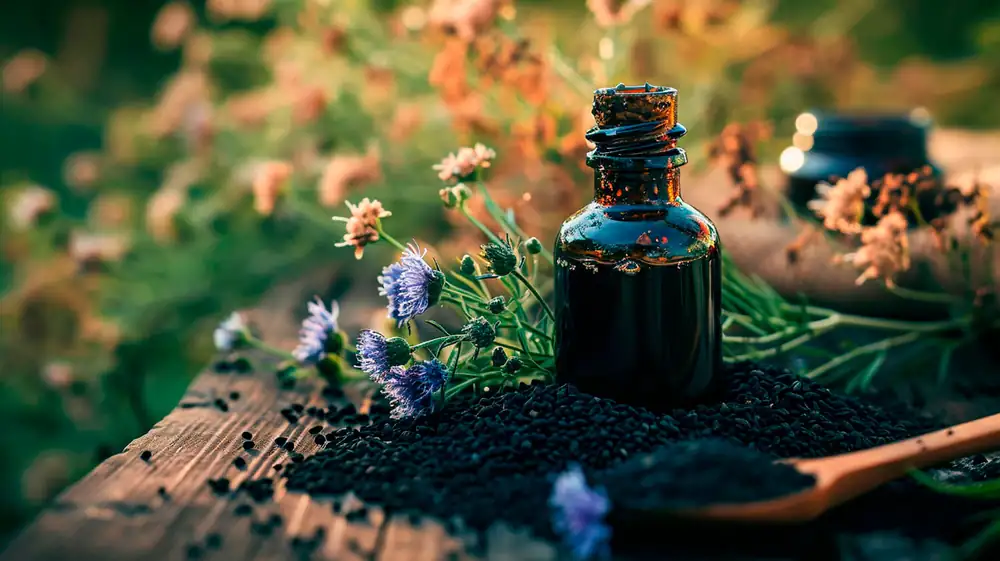
Other plants fell into oblivion when newer vegetables supplanted them. This is the case of celeriac or Alexandrian celery (Smyrnium olusatrum), popularized by Alexander the Great, which today grows wild and is practically ignored in Spanish fields, overshadowed by sweeter and less intense Italian varieties. Sumac (Rhus coriaria) and black cumin (Niguella damascena), typical of Andalusian and Sephardic cuisine, fell into disuse after the medieval decrees expelling Muslims and Jews, which provoked fear and aversion to their use in cooking. Today, their culinary uses are being rediscovered.
For Roldán, the landscape is, strictly speaking, "part of a territory that can be observed from a specific place," and each person interprets it in their own way. On his walks with friends and acquaintances, he conveys this perception through plants and their stories, nibbling leaves and smelling flowers.