¿Qué hace que la nata cuajada inglesa sea tan aterciopelada?
La nata cuajada inglesa se elabora desnatándola dos veces y horneándola después a fuego lento, hasta obtener una textura espesa y aterciopelada.
Hot chocolate, dulce de leche, or clotted cream: the list of indulgences is long. Clotted cream, the kind the English spread on filled buns, isn't everyone's favorite, but it has something particularly delicious about it.
Great Britain is home to some of the world's finest dairy products, including high-quality butter, cheese, and cream, according to Dairy UK. Curdled cream is legendary and has many uses beyond simply topping scones. As with many English traditions, it's made by dairy farmers and passed down through generations. Its most distinctive feature is its thick, velvety texture, the result of a refined process that transforms simple milk into a rich, creamy substance.
The process begins like any other dairy product: the milk is separated from the cream. Insider's YouTube series "Regional Eats" visited a curdled cream producer in Cornwall, UK, to see how it's made. The milk is heated to the precise temperature to allow the cream to begin separating, and then, using a cream separator, the cream is skimmed twice to ensure that no milk remains, only the highest quality cream.
If the cream were served in that state, it would be double cream, or whipping cream, as it's called in some places. The curdling process involves letting the cream rest for at least twelve hours and then baking it at a low temperature for just over an hour, so that the butter fat hardens. The result has the consistency of ice cream and an intensely buttery, yet sweet, flavor.
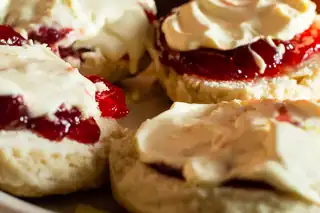
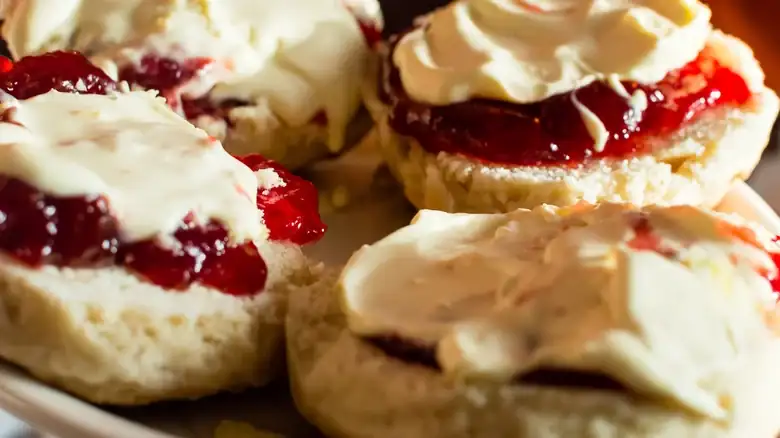
It is traditionally served on jam-filled scones at teatime, and, according to The Spruce Eats, another popular use is on fresh strawberries. It should not be used for cooking or as a substitute for whipping cream in a recipe: it should be served as is.