How to prepare spectacular charcuterie boards?
Charcuterie and cheese boards have become especially popular on social media in recent years; the emergence of "charcuterie and cheese influencers" has turned this tempting dish to share at meals into a trend.
Charcuterie and cheese boards have become especially popular on social media in recent years; the emergence of "charcuterie and cheese influencers" has turned this tempting dish to share at meals into a trend.
- “The best thing about a charcuterie board is that there are so many combinations you can try,” says Michelle Wallace, chef and owner of B’tween Sandwich Co. in Houston. “Plus, it’s an interactive experience: you pick up bites with your hands, and I love eating that way.”
Besides its diverse flavors and textures, charcuterie symbolizes shared meals and family time. It also evokes the changing seasons: in summer, for example, fresh berries add color to the plate, while in winter, fig jam or juicy pomegranate seeds create a festive atmosphere.
One thing is for sure: there are some ingredients without which a charcuterie board would not be complete.
Homemade pickles, jams and cured meats.
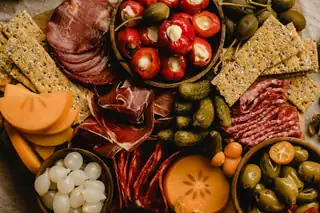
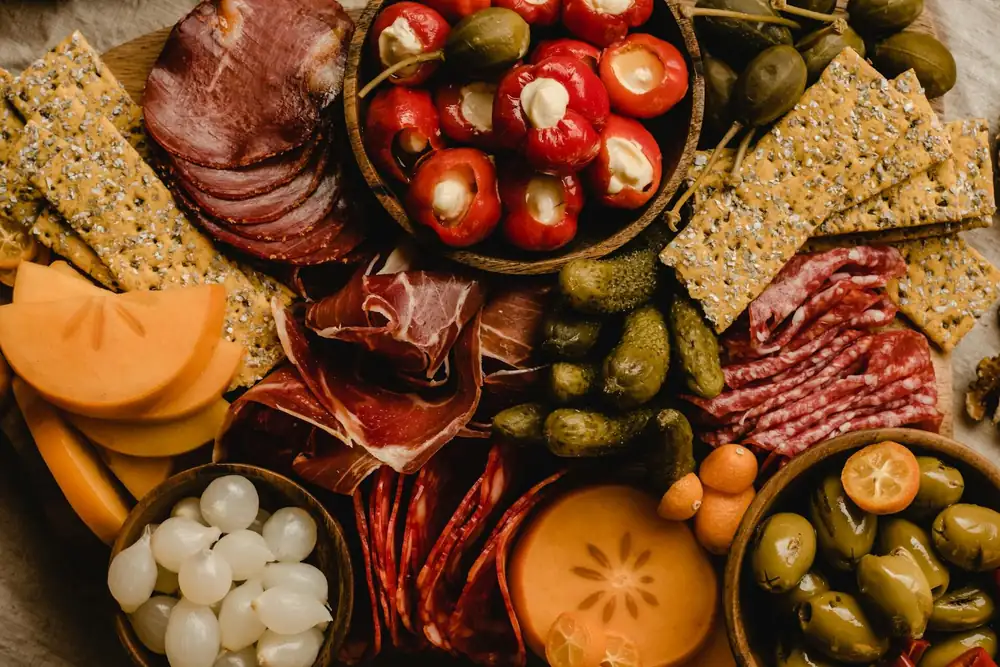
Chef Gabriel Kreuther says no dish is complete without a round gherkin (a small pickled cucumber), which adds "lightness, color, and contrast." The spicy and salty flavors of charcuterie and pâtés can be overwhelming, but the acidic and crunchy gherkin serves as a refreshing counterpoint. "It prepares us for the next bite," the New York chef emphasizes.
In addition to gherkins, you can also use pickled pearl onions or even culturally inspired pickles. For example, Michelle Wallace adds pickled okra or green beans to a Southern-inspired dish. “With deli meats, smoked fish, rillettes, and whole cheeses, pickles not only add variety to the flavor but also cut through the richness, so they’re always refreshing,” she explains.
Chef Dawn Burrell says that spreads add a special touch to the charcuterie experience. Honey is a classic, but she prefers sweet and sour combinations, like Spanish quince paste, which pairs perfectly with the nutty flavor of Manchego cheese. There's also orange marmalade, ideal for spreading on creamy brie and placing on a toasted baguette. "These elements bring balance to a hearty and substantial dish," explains Burrell, who also recommends at least one spicy ingredient, such as pepper jam.
Katy Valdez, a butcher at Gwen Butcher Shop & Restaurant in Los Angeles, says no charcuterie board is complete without cured ham. Her favorite is culatello, which originates from the Italian region of Emilia-Romagna. “It’s similar to prosciutto, but it’s boneless, hand-tied, and cured with salt, Lambrusco (a sparkling red wine also from Emilia-Romagna), rosemary, garlic, and pepper. After two weeks of salting, it’s dried for a year; the result is a slightly salty, clean flavor with beautiful marbling,” she explains.
According to the butcher, the key to culatello lies in its simplicity: while sausages or pâtés have a more structured texture, culatello has a light, almost delicate appearance when spread on fruit on a plate, for example. "It's suggestive and fun," he says.
How to build a complete table?
The most important principle is variety: in flavor, texture, and appearance. "Always listen to your palate first," advises Michelle Wallace. "Are all the flavors present? Sweet, salty, sour, bitter, and umami?"
Textures should be considered in the same way; according to Gabriel Kreuther, for example, the combination of pâtés, terrines, smoked and cured meats provides the real richness, as is customary in Alsace, where the whole variety of sausages is served.
Dawn Burrell also recommends variety when it comes to cheeses: "I always add at least one cheese made with goat's or sheep's milk."
In the final composition, Katy Valdez begins with geometric shapes, such as cakes or cheeses, and then fills the space with elements of more natural shapes, such as fruits and seeds.
Michelle Wallace adds: for the finishing touch, you can't forget crusty breads, crackers and a bottle of good wine.