Six generations of grilled eel in the heart of Tokyo
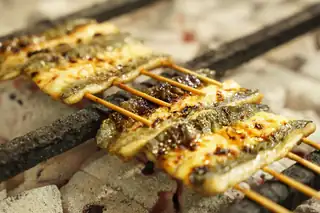
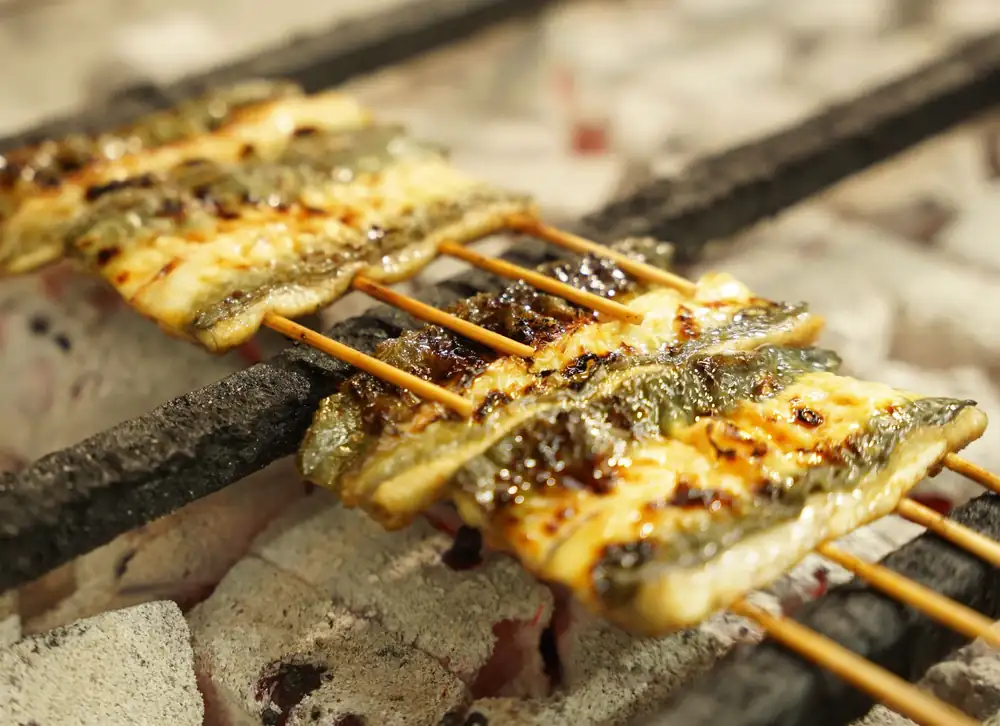
At Kinsan Nihonbashi, a small restaurant in Tokyo, the eels are steamed, bathed in a secret sauce, and grilled four times over hot coals.
The finest small eels (kyushu) are selected, meticulously cleaned, steamed, and coated in their secret sauce. They are then grilled over hot coals, coated again, and grilled once more until perfectly cooked. Only then are they served to the restaurant's loyal Japanese clientele. The restaurant itself is tucked away from the street, with a narrow entrance known only to regulars.
In Japan, restaurants specializing in a single product abound. Those who want tempura go to the best fryer, and those looking for eel (unagi in Japanese) choose a place where years of experience and thousands of cooked specimens guarantee the best flavor and the most delicate texture, like Kinsan Nihonbashi.
Shinichiro, a sixth-generation eel farmer, is a perceptive young man who is delighted to have an unusual table at the restaurant. He says, half-jokingly, half-seriously, that he only knows how to cook eels and that he aspires to see the world and learn other things. His father, Masakazu, watches him silently as he speaks with the visitors, thanks to Momoka, a regular customer who acts as their interpreter. There is no menu, not much variety in the dishes, and no English translations.
The menu begins with raw eel usuzukuri, something quite unusual even in restaurants specializing in unagi. It requires meticulous cleaning and is only prepared on special occasions. It has a smooth texture, unlike cooked eel, and a more neutral flavor that lets the texture shine through. The skin is served separately, in small pieces that curl as they steam. Next comes umaki, a Japanese omelet filled with eel and a customer favorite. The egg is mixed with dashi before cooking to make it softer, and its sweetness contrasts beautifully with the eel. The broth is a clarified, almost transparent dashi made with eel liver and parsley, where the liver floats like a small clam with a slightly chewy texture.
The main course is grilled eel served in a box on a bed of Koshihikari rice from Niigata Prefecture, cooked to perfection in both texture and temperature. They explain that the rice is grown using meltwater from Mount Amakazari, one of Japan's 100 most famous mountains. The green pepper is Budo Sansho, or grape pepper, which they source from Wakayama after more than a century of using sansho to flavor their eels.
The only thing they don't reveal is the marinade: it contains soy sauce and mirin, but the type, quantity, and other ingredients are unknown. It's one of the Matsuki family's secrets, having used the same marinade for a century. They add fresh sauce to keep it from running out, but they don't alter it, and its most valuable components are the juices and fat released by the thousands of cooked eels.
The family is unaware of the controversy surrounding elvers in Spain. No Japanese person understands why people prefer to eat hundreds of elvers at once instead of raising them until they become adult eels, which are much tastier. Restaurants like Kinsan Nihonbashi and families like the Matsukis should be as protected as the eels themselves.