Suburban bars: the kitchen of the future
Observing a city's transformations through its culinary expressions is probably one of the most interesting ways to understand the internal dynamics of the communities that comprise it. Doing so in its surrounding areas is to anticipate the future.
Is the table a political arena? Is it possible to deduce ongoing geopolitical movements by observing the products and dishes that grace it? Obviously, yes. The table is also a space of power. Food and its culinary grammar—recipes or methods of preparation—are political actors sitting at a banquet to negotiate their status. Depending on the circumstances, they can take center stage or be mere supporting players, amplify their influence, or remain dormant for an indeterminate period, like underground aquifers, until the flow of water increases and overflows its initial banks. This is what happens in the kitchens of population groups living on the outskirts of cities, which are the seedbed of "internal gastronomic revolutions" in the medium or long term.
Most of the world's greatest culinary "hits" have much to say about the migratory movements following the first industrial revolution, whether it's a minced meat sandwich, a baked bread dough topped with various ingredients, or a holey bun. Bagel, hamburger, pizza, pastrami, kebab, wonton, ramen, ceviche, taco, naan, and gazpacho are examples of the social integration of migrants. Tracing their spatiotemporal trajectory involves observing the movement of the people who brought them with them to the heart of societies with different culinary languages. Sometimes, they initially inhabited the margins of the social and gastronomic reality of the power groups, eventually merging, with varying degrees of difficulty, into the host society itself.
Barcelona is a city experiencing a moment of internal reflection. It wavers amidst the drift of its large markets, from which it has expelled local producers; it writhes between the paradoxes of limitless growth while casting a sidelong glance at its desolate citizens; it hesitates between the touristification of its poorest neighborhoods and the recovery of identity markers whose origin and scope are unclear, given that its population is not monolithic. The city center has an economic and social dynamic diametrically opposed to that of the outskirts. They devalue each other. The distance between them is perceptible in culinary offerings that barely even touch each other, due to sheer ignorance and disdain.
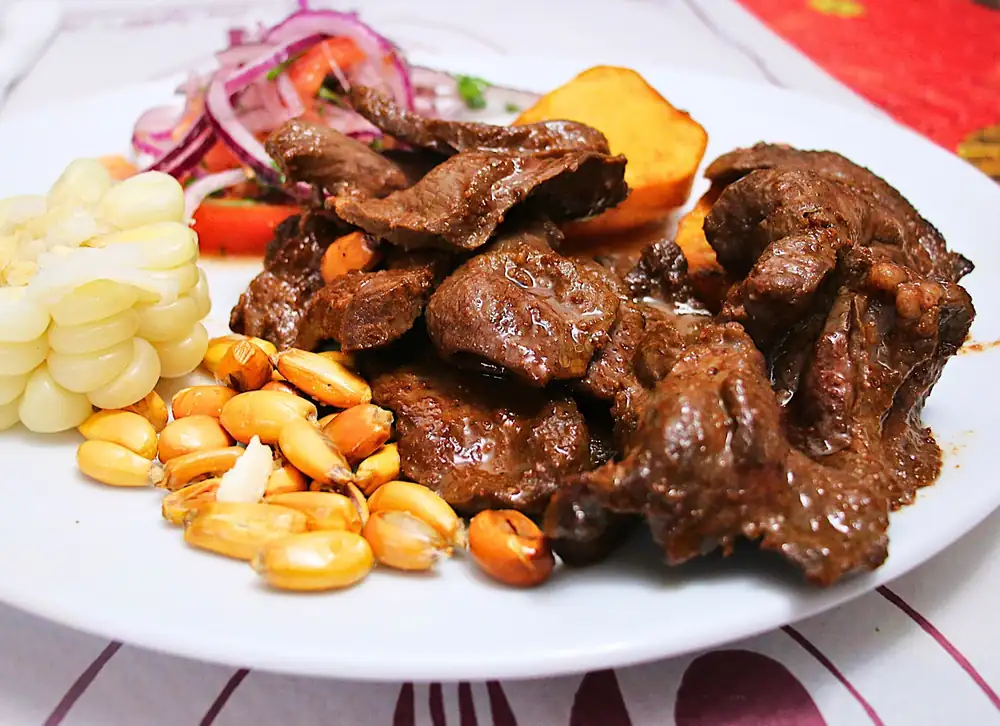
History repeats itself. The Galician, Andalusian, Extremaduran, and Aragonese immigrants of the 1960s had little culinary presence in Barcelona, except for the luxurious world of Galician seafood and the relentless exploitation of Mauritanian octopus. Their cuisine took refuge on the banks of the Besòs and Llobregat rivers. Nor do Maghrebi, Venezuelan, or Middle Eastern cuisines have any visibility today, despite our boasts of our globalized gastronomic voracity. Chinese restaurants and bars also fail to garner genuine public acclaim, despite their overwhelming popularity—or perhaps because of it. Their role is to feed the hungry. Meanwhile, Southeast Asian cuisine, which captures the gourmet imagination, occupies a higher rung than the rest, however humble its origins, just as any cuisine touched by Japanese influences achieves a higher status. This was the case with the arrival of Peruvian cuisine in Barcelona, which was nothing more than a Europeanized version of Nikkei cuisine. Just step into a Peruvian-Ecuadorian restaurant in Santa Coloma de Gramanet to realize that what's served there are deep, piping hot dishes, like baptismal fonts, offal stews, roasts, and fried foods, along with the most common non-alcoholic beverages. Human warmth, spoon in hand, at prices for families living in the most sordid corners of the underground economy.
Whether in Romanian or Urdu, in the Spanish of Puente Genil or Barbastro, or in the Galician of the Lugo mountains, in the outskirts of town, people speak like they eat: searching for roots somewhat diluted by the urgent need to belong to two worlds destined to merge. The pioneers of these restaurants are now seasoned veterans, well-versed in migas, dressed potatoes, rice blood sausage tapas, and salmorejo. Every morning, the bar-restaurant El Cruce opens its doors in Santa Coloma de Gramenet, its yellowed photos of Isabel Pantoja and the Mosque-Cathedral serving bean and pumpkin stew on the daily menu, along with fried dishes and oxtail stewed in the Cordoban style; La Alegría, a tiny corner of Cádiz that boasts its own gin; and El Rincón Gallego, with its touch of nostalgia. In Badalona and facing the sea, La Bota de Aragón still displays, since 1973, next to the cachirulo and the little Virgin of Pilar, some carved wooden signs with the old tapas hanging on the wall: house-made rinds, gherkin stuffed with tuna and fried Aragonese sausage and a menu with the old-fashioned toasted bread from the peasant.
Alongside them, a new generation, better trained in the culinary arts, is emerging. Víctor Quintillà's Bar Verat, whose restaurant Lluerna boasts a Michelin star, in Santa Coloma de Gramenet, offers a combination of cannelloni, migas (a traditional breadcrumb dish), and bao buns. In Hospitalet, Cal Siscu serves lobster casseroles topped with fried eggs and chickpeas with sea cucumbers, a luxurious dish served in a classic wine cellar setting. On a street near the train station, Guillem Salazar opened Bar Debut after training at the Hofmann school, one of the best wine bars almost unintentionally. He prepares Catalan classics like bacallà amb sanfaina (cod with ratatouille), cap i pota (a tripe and pig's stew), and broad beans Catalan-style, as well as spectacular fig tarts. Sometimes he even invents a terrine of meats and bids you farewell with a whisky and a hug.
Suburban bars can be the heart of something big, as happened to Artur Martínez after Capritx in Terrassa. Or, simply put, the place where the future is being forged, whether we like it or not.