Fabien Ferré: Haute Cuisine on the French Riviera
Chef of the Month: Fabien Ferré
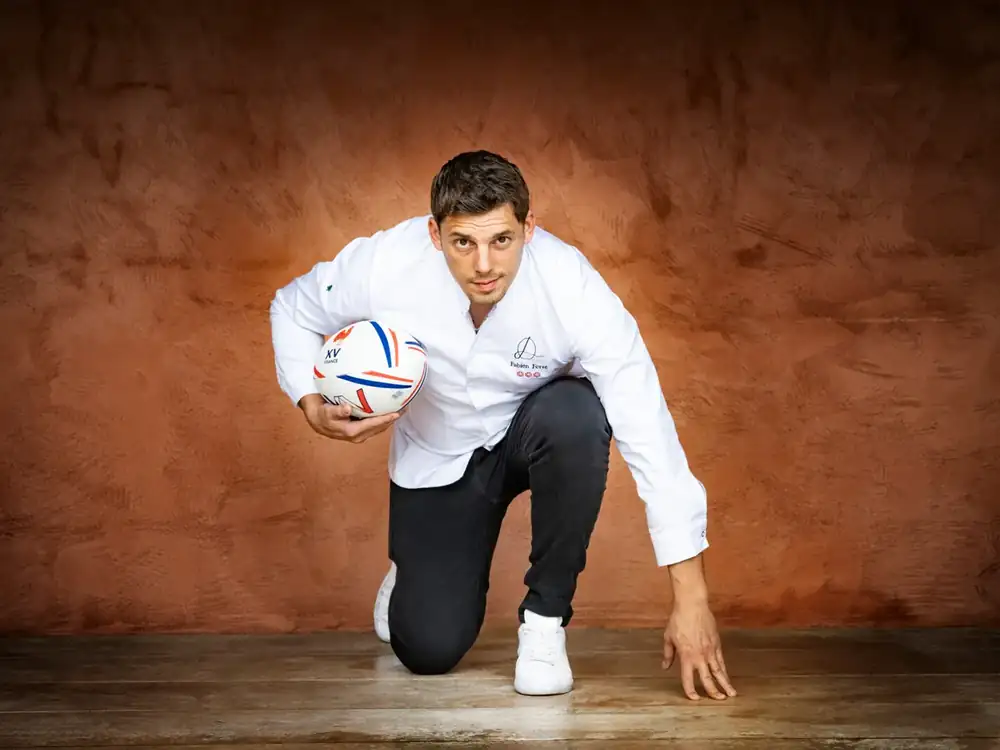
Fabien Ferré is tall and angular, and moves through his kitchen with such force that you fear he might shatter a lot of china. Thankfully, he doesn't, but he was an athlete back in Burgundy, and he's retained his muscles as well as his drive to attack – which is naturally very pronounced in rugby. He always wanted to be at the very front – and is himself surprised that it happened so quickly. His restaurant, "La Table du Castellet," at the Hôtel Du Castellet, is one of the highest-rated in France, boasting three Michelin stars. It's located in the southern tip of Provence, and the Mediterranean coast at Saint-Cyr-sur-Mer is a twenty-minute drive south.
At Ferré's, things are calm and collected; the chef gives instructions and orders to the group. The team is very young, very fast, very agile – nimble as ants, all the stations work together, well aware that the dining room outside is packed – word of their success has spread. The elegant and luxurious Hôtel du Castellet is located on the old Formula 1 racetrack in the mountains above Bandol, near a magnificent golf course and fantastic hiking trails – the clientele is mixed: racing fans, athletes, golfers, and beach lovers. Fabien Ferré is particularly proud that many locals also come. "The Provençal people have noticed that I put their products on a pedestal – gently and carefully," says the chef.
Why did Ferré move south in the first place?
Ferré had always wanted to experience Mediterranean cuisine, even as a child in his hometown of Burgundy, where the dishes are hearty and the sea is far away. His grandmother was a fantastic cook, he says. She laid the foundation for Ferré's palate.
After years of apprenticeship with the Troisgros family in Roanne (Loire), he knew one thing for sure: he no longer wanted to order his fish from the wholesale market, but to pick it up directly from the fishermen. So he went to Le Castellet as sous-chef to work for his mentor, chef Christophe Bacquié, and there he found the qualities he so desperately craved. From Thursday to Saturday, he personally goes to the market in Sanary-sur-Mer and selects his seafood treasures from the fishermen he trusts, usually directly on their boats. If the squid isn't good one day, he'll take the crabs. If the red mullet are too small, he'll choose the mullet. It's paradise for someone like him, who keeps his cuisine so close to the source of the ingredients. This also applies to the vegetables and herbs: "When I arrived here and saw the quality of tomatoes, artichokes and morels that small farmers offered, I could hardly believe it. And then all the herbs that can even be picked wild on the rocks near the sea – marjoram, verbena – it's phenomenal."
So, is fish the main thing on the menu?
That's right – the menu is like an encyclopedia of the seas, and that's Ferré's focus. Each fish takes center stage. The man from Burgundy understands how to bring out the differences and make them almost instantly perceptible. "I try to present everything very simply. I don't want any games; I don't want the guest to have to ask questions because they don't understand the dish and dozens of flavors are overlapping. My cuisine has to be legible."
How does the menu taste?
Wonderfully intense and succulent. One example is the squid, which is only lightly grilled and remains tender, pure flavor. Ferré loves bitter notes and acids; for the chicken stock under the squid, he cooks the bones of sea bream, a burst of marine flavor, while the oil of his favorite herb, marjoram, adds earthiness and depth. The skate is also magnificent, a fish that so often tastes dry and stringy elsewhere. Here, it's carried to the guests on a Japanese charcoal grill, the roasted notes making their mouths water. The fish tastes delicate yet powerful, complemented only by a touch of wild garlic and a calamansi gel – c'est parfait. "The fish here is so good that it would be a shame to smother it with caviar and truffles. I want it direct and clear, without any wild flourishes." This is how someone speaks who completely trusts his producers.
How should one sit in a restaurant?
The dining room exudes luxury and elegance, the round white tables are spaced far apart, and despite all the modernity, it doesn't exactly evoke a romantic atmosphere. However, the chef's dishes shine all the brighter for it. If possible, come in the summer, when you have the rare pleasure of enjoying exquisite haute cuisine al fresco. The view of the golf course from the terrace is truly phenomenal.
What's the story behind the cheese cellar?
This is Ferré's idea: to get the guests moving a bit. They go to the cheese, not the other way around! After four or six courses, the gourmets are invited to stretch their legs and head to the glass-walled cheese cellar. There, the aroma of all the rare and aged cheeses immediately fills their nostrils, and restaurant manager Pierre Méchain explains each variety before they make their selection. The wine list, curated by the fantastic sommelier Jonathan Pral, consists of five books, organized by region. The margins are fairly calculated, which is rare at this level and in the expensive Provence.
Overall, the atmosphere in Ferré's restaurant is relaxed. The young chef avoids excessive formality because he knows that in times of crisis, staff is paramount. "I'm only open four days a week so my people have more free time. If a waiter wants to wear sneakers, then so be it. I want my team to be in good spirits and relaxed. That's when they're happiest and can pass that on to the guests." Ferré frequently beckons one of his young cooks or servers over, explains things to them, they joke around, and sometimes even hug. It's teamwork like in a successful rugby team. It seems Ferré has indeed arrived in a coaching role – right at the top of haute cuisine.