Peruvian cuisine, twenty years after the boom
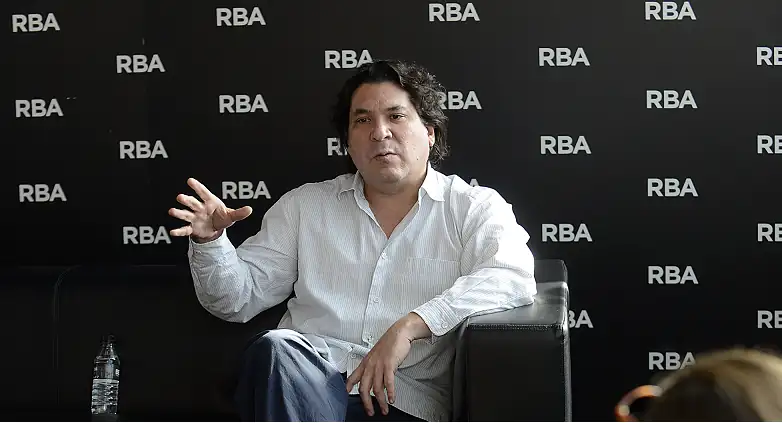
In 2006, Gastón Acurio delivered a speech at the Universidad del Pacífico that today sounds almost foundational. He spoke of identity, of pride; of a cuisine capable of becoming an economic engine and a national narrative. Peruvian gastronomy, he said then, had a mission.
That cycle, the so-called gastronomic boom, could be symbolically closed in 2023, when Virgilio Martínez reached number one on The World's 50 Best Restaurants list with Central. Not because the process ended or because its material effects disappeared—the training, the export of talent, the symbolic infrastructure continue to operate—but because the narrative that sustained it, that of cuisine as a collective project of national representation, reached its peak of global legitimacy. More than an end, it is a turning point: that framework no longer shapes the scene with the same force as before.
It was a generation of chefs who not only cooked, but also built discourse, a scene, and a market: Gastón Acurio, Jaime Pesaque, Mitsuharu Tsumura, Pedro Miguel Schiaffino, Héctor Solís, Rafael Osterling, among others. Different cuisines united by a single idea: to represent Peru. This representation was undoubtedly the fruit of a deep conviction, but also of a strategic understanding of the global context.
The narrative worked because it engaged with themes such as origin, territory, and biodiversity, constructing a Peru that was both legible and desirable for the world. In that process—inevitable in any attempt at synthesis—some aspects of Peru were left out: the cooks, cuisines without a recognizable originator or a stable territory, or without the promise of export. The domestic, the urban, the migrant, the informal. Not as a deliberate exclusion, but as a consequence of a narrative that needed to be in focus.
Even Virgilio Martínez is part of that system. Before becoming an explorer of high altitudes, he worked at Astrid y Gastón, within a training framework that understood cooking not only as a profession but also as a cultural responsibility. That framework was crucial for years. Today, he no longer speaks from the perspective of culture, but rather from that of the land. A shift that is not insignificant.
The next generation: more intimate kitchens
The next generation doesn't reject the boom; it simply doesn't need it as a starting point. They no longer think of cuisine in general terms as a national cultural expression, but rather as a personal one. Territory ceases to be a guiding principle, and identity, in some cases, becomes an unnecessary burden.
There are Pía León, Ricardo Ehni, Francesca Ferreyros, Arlette Eulert, Angelo Aguado, Jorge Muñoz, Miguel Pulache, Sergio Nakamura, Aldo Yaranga, Ricardo Goachet, Zara Alanya, among others. There is no common manifesto nor an explicit desire for explanation. There is technique, cross-references, individual obsessions.
Language change
This isn't about silence, but rather a shift in language. Generally speaking, this generation doesn't feel obligated to articulate a public discourse or to think of its cuisine as a national representation. This doesn't imply an absence of thought, but rather a different way of processing it: less declarative, more situated. The risk lies in continuing to measure these cuisines with parameters that belong to another historical moment. Peruvian cuisine is no longer being conceived as a unified whole. People cook from Peru, but not about Peru.
Adding to this shift is another crucial phenomenon that is just beginning. From being merely a gastronomic capital, Lima is starting to transform into a cosmopolitan culinary scene. Chefs arrive, settle, open restaurants, and add layers to an increasingly diverse landscape. Mérito, led by Venezuelan Juan Luis Martínez, and Banh Mi, by Ecuadorian Felipe Salas, are clear examples. The city functions as a platform: it welcomes, enables, and sustains. And they contribute their cuisines in an act of culinary sedimentation. They enrich the panorama with new interpretations, flavors, and concepts.
In this context, cocktail culture emerges as a space where thought is once again articulated with greater clarity. Bars like Carnaval, Lady Bee, Muna, and Booze Bar work with ingredients, technique, and narrative with a discursive awareness that seems more active today than before. Paradoxically, the bar becomes the place where an identity is tested and reflected upon.
So what now?
Lima still hasn't clearly defined what it wants to preserve, what it wants to support, and what it's willing to let go. When everything is possible, the risk isn't mixing, but dilution: the city risks becoming a neutral backdrop, rather than a space that transforms, challenges, or engages with the players in the culinary scene. We're all experts in Peruvian cuisine, but do we really care? Do we have a clear idea of what it means to be a gastronomic capital? Are we on par with others?
Peruvian cuisine is now an undeniable part of the national identity. It's established, it thrives, and it exports talent. But the intellectual discourse that once accompanied it no longer holds the same place. Not because it has disappeared, but because the spaces that expressed it—criticism, academia, certain media outlets—have weakened, fragmented, or shifted away, and risk becoming meaningless.
When a scene develops without a framework to guide its reflection, other gaps begin to appear: the traceability of inputs, the well-being of farmers and small producers, our relationship with the sea. Not as new problems, but as areas that cease to be central when the narrative that sustained them loses its power.
The void, then, isn't necessarily in the kitchen, but in the ecosystem that conceived it. Perhaps this new generation doesn't need to formulate a narrative. Perhaps the next movement will come from elsewhere. Or perhaps we are simply in a time of transition: an apparent silence that doesn't announce an end, but rather the anticipation of a new language. Are we going to sit idly by waiting, or are we going to start building it?