New splendor in Bordeaux
Between vineyards and ocean
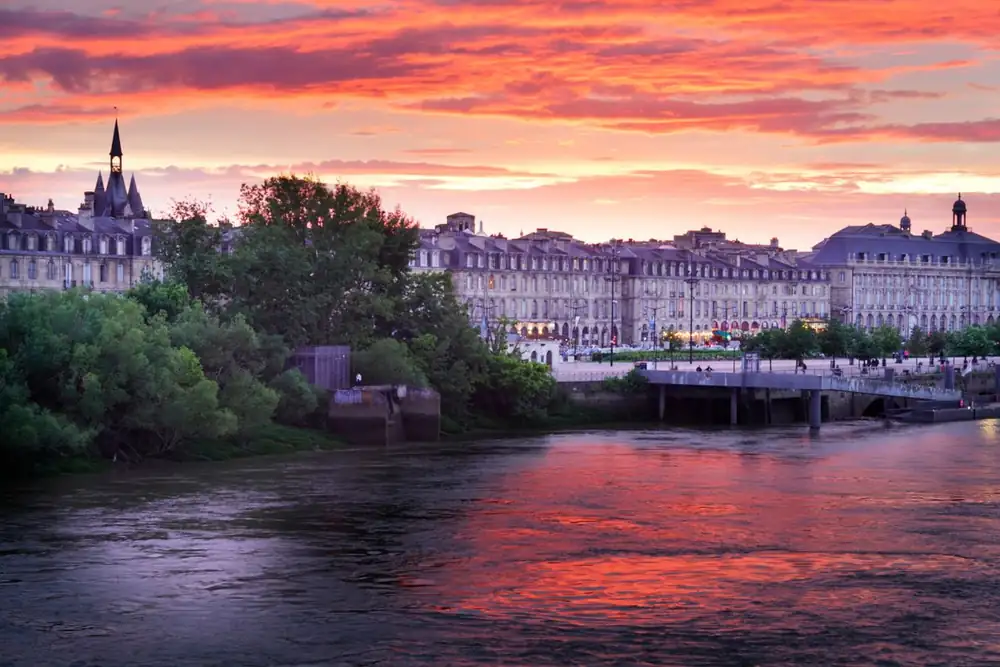
But with astute policies and healthy tax coffers, then-mayor Alain Juppé turned things around, had the facades of the buildings cleaned and illuminated – and the citizens of Bordeaux rediscovered their pride in their city. Three futuristic museum buildings later came the TGV high-speed train, connecting the wine capital to Paris in two hours, and the Parisians immediately recognized the high quality of life in the metropolis nestled between vineyards and the ocean. Now Bordeaux is poised to overtake Paris. Real estate is scarce, one chic hotel after another is opening, and tourists are flocking to the city.
Highest restaurant density in France
No other city in France can boast as many restaurants relative to its population. And above all, no other city can boast as many good restaurants. This is partly because the people of Bordeaux are incredibly discerning. Tanguy Laviale knows this all too well. The top chef came to Bordeaux from Paris 15 years ago for love. After the great success of his restaurant "Garopapilles," he first opened "Resources" and, a few months ago, "Vivants."
“It’s not easy to please the locals,” says Laviale. “The people of Bordeaux are very critical, they have very high expectations – if it’s not good, they come once and never again.”
Heart - Oxana Cretu
“That’s true,” says Oxana Cretu, a young chef who lives a few streets away. “Anyone who has managed to win over the discerning guests in Bordeaux can do it anywhere.” She says this with a laugh, but also admits that it wasn’t always fun dealing with these critical and sometimes difficult citizens of the city. “They are incredibly convinced of themselves and their region – and therefore very closed off to anything that comes from the outside. Yet it is precisely us, the outsiders, who have enriched this city.”
She herself comes from quite far away, not from the Basque Country, not from the much-maligned Paris, but from Moldova. She has lived here in Bordeaux since 2006. Professionally, she has done many things: first marketing, then product design, later she studied four languages, only to become a mother at 30 and think: I want to be a chef. She did an internship with Alain Ducasse, nothing more; she taught herself the rest.
Now she is a chef and owner of her small restaurant "Inima," a stone's throw from the old opera house. There she composes beautiful dishes, all of which are floral and colorful, such as the mature char with pumpkin and chanterelles in a richly aromatic broth.
We leave the city and turn to the three distinct landscapes of the Bordeaux region: There are the seemingly endless maritime pine forests, planted by Napoleon to make this largely barren area fertile. Straight access roads wind through the woods – until the treetops finally open up, revealing the ocean. Three hundred kilometers of sandy beaches stretch to the Spanish border – this is the Côte d'Argent. It's so named because the sand shimmers silver due to the many seashells. Along the Bassin d'Arcachon bay, countless oyster farmers have their picturesque cabanes, small wooden huts where they offer seafood, oysters, shrimp, and razor clams for tasting.
Young chefs return to their homeland
Inland, however, wine is the main attraction. From Médoc to Pomerol, from Saint-Émilion to Sauternes, thousands of châteaux cultivate wine – sometimes for six euros a bottle, sometimes for 6,000; there's no upper limit. Almost all estates offer tastings. Or you can simply stop and ring the bell. Life – and enjoyment – is very simple here.
Aga - Alexandre Goniak and Gerie Jenne
Three-quarters of an hour east of Bordeaux lies Cadillac. A resident of this small town founded what is now the US automotive metropolis of Detroit 320 years ago – and thus a car brand is named after the city on the Garonne River. One wouldn't necessarily expect haute cuisine in such a sleepy place, but on the other hand, rural France has undergone a remarkable transformation since the pandemic: all over the country, young chefs have returned from the big cities to their hometowns, like Alexandre Goniak and his wife Gerie Jenner here in Cadillac. He has cooked all over France, in Germany, and in Australia, where he met Gerie, who comes from New Zealand and speaks fluent German thanks to her father.
But when they had their daughter, it was clear: they needed family support. Alexandre's parents lived near Cadillac, and on the outskirts of the city, he and his wife opened the restaurant "Aga." "Getting the produce isn't so easy," he says. "Very little produce is grown around here; everyone just focuses on wine. And because we're so small, we can hardly find any suppliers." So the young chef drives to farmers and fishermen himself, making his rounds every day. "Running your own place is a lot of work; it's a real learning experience."
But it's work that pays off, especially for the guests. The three-course lunch menu costs just 30 euros, for which Goniak serves an aromatic tomato tart and, for the main course, an outstanding pan-fried sturgeon. Whole fish are appearing more frequently on plates here in Aquitaine, and the region is now also producing the country's best caviar, Sturia. The guests of the "Aga" come from Bordeaux or abroad; only a few locals venture here. "People in the countryside are still a bit reserved," says Goniak, laughing. "They prefer to go out for steak frites. But that will change."
La Grand'Vigne - Nicolas Masse
A completely different league – especially in terms of price – can be experienced half an hour further south. In the heart of the Pessac-Léognan wine region, the cosmetics brand Les Sources de Caudalie has opened a luxury resort. The hotel's gourmet restaurant is called "La Grand'Vigne," where chef Nicolas Masse, together with sommelier Aurélien Farrouil, creates dishes that reflect the location. "The wine, like many good fruits and vegetables, is very delicate," says Masse. "That's why I try to be as vegetarian as possible – using permaculture whenever feasible." This is brilliantly achieved with the appetizer: a beautifully presented artichoke filled with a peppery spinach cream. And particularly eye-catching is a replica red wine cork made of edible paper and buttery foie gras flavored with red grapes.
Masse comes from Normandy and knows the simple, the authentic. "Here in Aquitaine, beauty lies in everything," he says. "The sea is so close, as are the Basque mountains. And we're right in the middle of vineyards – it's a world of fine produce." His cuisine follows the seasons; two large gardens on the property reliably supply him with fresh herbs and vegetables, and he also sources produce from small local farmers. France's haute cuisine, the chef says, is finally on the right track with this local focus. "I think our cuisine has never been as close to the producers, the farmers, the fishermen, the livestock breeders, as it is today. And I like that."
Château d'Yquem
Onward to Sauternes, home of the world's most famous sweet wine. The village of 840 inhabitants seems like the quintessential French village: church steeple, bakery, roundabout, bar. All around rise the gentle hills covered with vineyards, but instead of red wine as is typical in Bordeaux, white wine is cultivated here. A very special white wine, in fact. The Ciron River, flowing through the nearby valley, brings with it a lot of mist, which promotes the growth of a fungus: Botrytis. This fungus perforates the grape skins, allowing the water in the berries to evaporate. What remains is sugar and a wealth of aroma. Sauternes sweet wine is legendary, not least because of the exceptional wines from Château d'Yquem.
Lalique - Jerome Schilling
At Château Lafaurie-Peyraguey, they also make a Sauternes Grand Cru, but nowadays the estate is better known throughout France for its restaurant "Lalique," owned by the luxury goods company of the same name. And for Jérôme Schilling. He is considered by many in France to be a future three-Michelin-starred chef. Since 2023, he has proudly held the title Meilleur Ouvrier de France (Best Craftsman of France), which is awarded every four years to outstanding representatives of various crafts after a rigorous competition.
The collar in the tricolor colors blue-white-red, the towering chef's hat – conventions are important to Schilling. This is refreshing in a time when even highly decorated chefs show up in sneakers to demonstrate their casualness. "When I was a child, my father always sat at the table on Sundays in a suit and tie, even at home," says Schilling. "That shaped me." The Alsatian speaks fluent German – with that wonderful sing-song accent that is characteristic of the region.
Joël Robuchon was his mentor; the chef with the crew cut adopted a motto from him and made it his own: "Excellence is work that is simply well done." To be truly excellent, he prefers to sit at one of the tables in the dining room. "Dining room" is a rather mundane word for this space. Resembling a conservatory, it is framed on three sides by floor-to-ceiling glass, offering a view of the vineyards. Here, the chef plans his creations throughout the morning – his eyes fixed on the vines.
Role reversal: The food serves the wine
For Schilling, wine is always the focus of his menus. He has asked several renowned critics to taste the Château's vintages and decipher their aromas. In the 2011 sweet wine, for example, these include lemon, orange peel, cinnamon, mirabelle plums, and bergamot. Schilling then develops his dishes around these aromas to perfectly complement this wine. A role reversal, then: here, the food serves the one who usually acts as the "accompanist." Schilling also incorporates elements from winemaking. For instance, he marinates his hake with the oil from the grape seeds of the estate's own harvest. And he makes the fleur de sel for his dishes using the must from the second pressing. The fact that the butter is traditionally served in the shape of vines and grape leaves may be purely for aesthetic reasons. However, the other elements also make perfect sense from a culinary perspective. But even where Schilling refrains from direct references to the world of wine, he knows how to impress: for example, with the two preparations of lobster – as carpaccio with Espelette pepper and calamansi, and perfectly fried with blossoms and pollen. This dish alone demonstrates the Alsatian chef's impressive handling of top-quality ingredients – we will be hearing much more from him. Everything is served on Chinese porcelain and in carafes and glasses from the company that bears the restaurant's name. In this very special conservatory, guests can watch the evening sun during their meal until it sinks into the vineyards in the south. It is a fabulous spectacle and a celebration of conviviality in this rediscovered culinary region on the Atlantic coast.