What do critics eat? 7 Cannibals
I landed in Madrid ready to fill in a few squares of that sort of game of Snakes and Ladders that is the landscape of Spanish gastronomy: see kitchens I've never been to, visit new restaurants (not that many, they tend to be repetitive, even down to the staff uniforms), fill in some historical gaps, like the myriad brands of the Dani García group, fall into the pit, return to square one… The need
I read them later and I'm almost as thrilled by the gastronomic spectacle his account captures as by the tremendous skill of a chef in a perpetual state of grace. They describe him as someone capable of achieving excellence regardless of the style he explores or the terrain he treads: brasserie, classic French, Japanese, Italian, wood-fired, smoke-infused, sea, land, and sky. I miss a Korean restaurant—they're all the rage in New York—a Chinese one, and a North African one; there's an audience and critics for that and much more. Be that as it may, the sun never sets on the García empire. It also rings true what they used to say about the Chinese themselves: they eat (in this case, cook) everything that flies, except airplanes, everything that floats, except ships, and everything with legs, with the exception of park benches and Victorian sofas, which are always untamable.
I got stuck too many years ago in that Dani García of Michelin stars, back and forth—"Why don't you give them to me? Are you giving them to me now? You'll see, I'm closing it down." Well, now you'll see: I'm giving you two more. Give me a hug, no hard feelings, and we'll go back to square one"—and I decide to start with the basics. On Monday at lunchtime, I sit down at Lobito de Mar with a friend who made a reservation in his name. It's the right thing to do when you want to see how a restaurant handles customer relations and eat on equal footing with the regulars. I used to do this a lot at Central, Virgilio Martínez's restaurant in Lima, every time the local press publicized the new dishes on the menu or, more directly, the vibrant essence of the new direction the cuisine had taken. Then it turned out that, arriving unannounced, the menu was the same as last year, and the year before, and the year before that… Some kitchens change depending on who sits at the table or what kind of guest they are. Some even feature custom-made papier-mâché sets and speeches crafted in a communications agency's office. It works; there's always someone who believes it. They're usually successful and end up occupying a place of honor in the year's culinary celebrations.
What I find at Lobito de Mar bears no relation to what the chef's best friends say - how the new gastronomic journalism, already part of the old, likes to rub shoulders with the chef as if he were hanging out with his best man - after the summer visits.
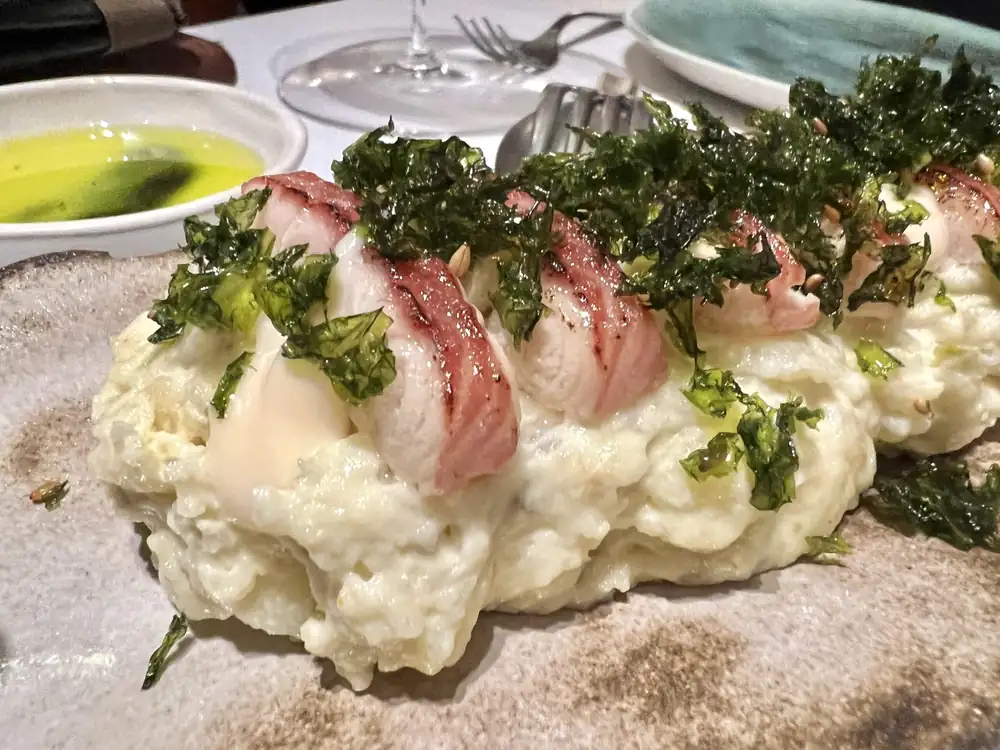
The order is simple: potato salad with smoked eel, a sort of lazy white prawn omelet finished tableside, two red mullet, and a grilled John Dory. Not three minutes pass before the head waitress returns to show us the John Dory and two langoustines. They're out of red mullet and suggest swapping them for the langoustines. I estimate the weight by sight and, give or take five euros, the price of the langoustine is double that of the red mullet. Better to pass. I'm starting to feel like the host at a work table in the old Dorada restaurant on Félix Cabeza Street, whether you were in Madrid or Seville. As soon as guests sat down, platters of ham, prawns, and shrimp that no one had ordered were placed on the table… and no one would dare refuse in front of a customer or potential customer. They did the same thing to me with a plate of ham at the old Jockey, already in its most decrepit phase. The cut of the ham, which looked like it had been finished off with a lumberjack's axe, hurt me more than the monumental rip-off.
My fears are confirmed when the sommelier arrives. I'm craving a dry, structured white wine, one that benefits from a bit of warmth, and I tell her so. She suggests a mineral Alsace: 360 euros a bottle. Some people really know how to understand their customers. I choose something more down-to-earth, and she returns with a different bottle than the one I ordered. Coincidentally, her colleague sold the last sample of the wine I wanted three days ago, but he has this one that I'm going to love. After all, what's 65 euros more? I think of the langoustines and imagine some strange epidemic. I resist the idea that it's intentional, but for a split second, the fleeting image of Curro Jiménez flashes through my mind; I don't know what I was thinking.
They bring out the potato salad, a decent mess, a tortilla that looks rather bland, and then the John Dory arrives. They show it to us, fillet it, and serve the plates: one fillet per person, some of the gills for each, the flesh from one cheek on each plate, and then they serve it. It's as dry as fish should never be served. Perhaps they're punishing us for refusing the langoustines. The plates return to the kitchen amidst condolences befitting a state funeral, and they compensate us, without our asking, with some prawn croquettes that rival the John Dory for the worst thing we ate. The bill includes the 104 euros for the fish we couldn't eat. The next day, a friend tells me that the restaurant is having trouble finding good front-of-house staff. I don't think that's the case. It's more likely that someone wearing a mask is lurking in an office in the restaurant.
The story always has two sides, and this time they aren't just those of the critic and the restaurant, or the customer and the chef, but rather the contrast between the diner's experience and the critic's experience in some restaurants. When you think about it, some questions arise: Is the customer's experience the same as the one that prompted the review that led them to the restaurant? Do the customers of these restaurants eat the same food as the journalists who visit them? This time, the answer is no. In many cases, I'd say yes; in others, I wouldn't know. In any case, the questions keep coming: Aren't we complicit, often actively so, in a grand deception? Do guided tours deserve some kind of restraint, even if only in the adjectives used?
I'd vouch for the hundreds of chefs and restaurants I've visited and continue to visit since I cooked my first professional meal; that will be forty years ago this November. I'm also aware of the many shortcuts taken in the day-to-day running of a restaurant, or those sought by a profession—ours—that is increasingly underpaid, increasingly lacking the resources to support the work of professionals and pay their bills, and with each meal more at the mercy of the self-serving generosity of some chefs and the manipulation of others. It's a good time to reflect on this and discuss it. Our profession depends on it.