Llama Inn explores new paths in Peruvian cuisine
Llama Inn made the leap from the Bronx to the heart of Madrid to showcase its hybrid, contemporary, and at times playful take on Peruvian cuisine.
Llama Inn made the leap from the Bronx to the heart of Madrid to showcase its hybrid, contemporary, and at times playful take on Peruvian cuisine. While the concept, still in its early stages and needing refinement, remains somewhat uneven, they are exploring new avenues and breaking with the typically static approach of chefs working in Peru.
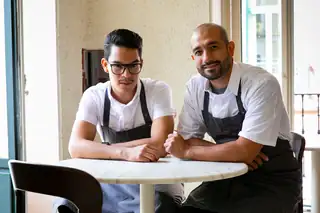
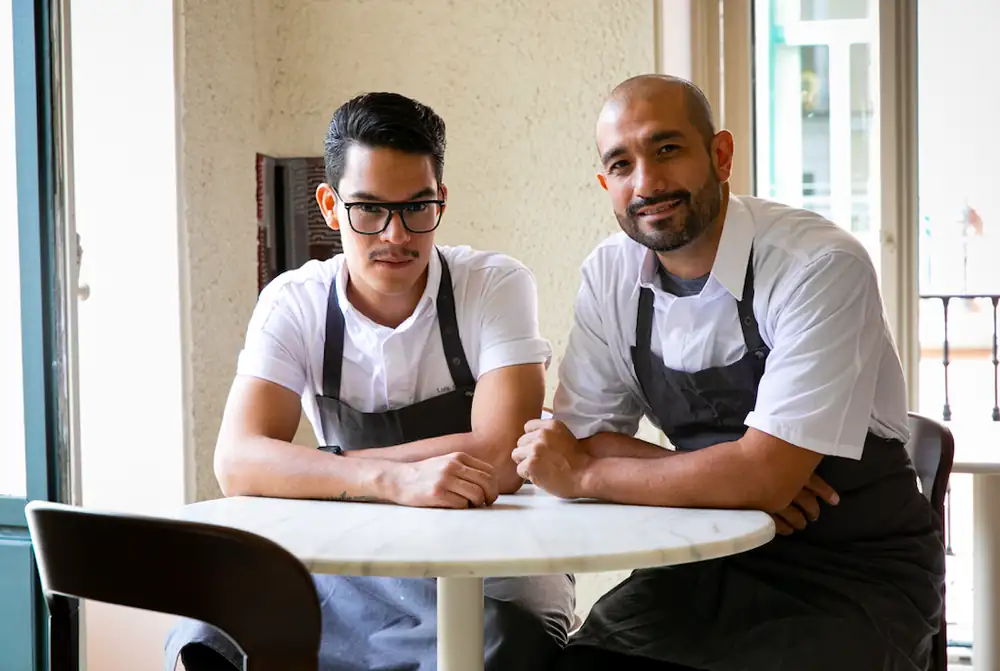
Erick Ramírez created Llama Inn seven years ago in New York, achieving success that catapulted a career that had made a stopover as sous-chef at Eleven Madison Park (the restaurant where Daniel Humm made his name). This success, as Nicholas Gill recounted in 7Caníbales, led to the creation of Llama San, a high-flying Nikkei restaurant, and solidified the presence of Peruvian cuisine in New York boroughs like the Bronx and Queens. Now, he's making the leap to this side of the Atlantic, opening a restaurant just steps from Charrúa, on Conde de Xiquena Street, an increasingly vibrant area, home to La Buena Vida, the restaurant of Elisa Rodríguez and Carlos Torres, for many years, in a space where Luis Cornejo, a young Peruvian chef, is at the helm. Erick Ramírez's presence is already being felt in these first few weeks.
Llama Inn occupies the corner of Prim Street and is structured over two levels. On the ground floor, there's a cocktail bar with a couple of informal tables, and on the first floor, a casual dining area and the kitchen, open to the dining room by the two walls that connect it. This is the source of one of the most noticeable problems: the smells that waft from the kitchen to the dining area.
The menu is short, seventeen dishes plus desserts, but sufficient, delivering what you'd expect from the brand: updated offerings, reimagined classic recipes, and new approaches. This is commonplace when you travel outside of Peru, Omar Malpartida did it at Tiradito, for example, before paying the price for his reckless expansion, and rather unusual if you're familiar with Lima.
The menu is visually appealing. They advertise a variety of dishes, starting with the anticuchos. There's the classic one, made with beef heart, and alongside it, another very successful, crispy, and flavorful version made with rectangular slices of cabbage seasoned with sankyo miso, quinoa furiyake, and chancaca honey. The mackerel anticucho, with tartar sauce, potato, and capers, is confusing; the mackerel's character gets lost amidst the accumulation of accompaniments that compete for the spotlight. The same thing happens with the oyster with crème fraîche and caviar, which opens the raw section of the menu. The weight of an overly thick cream completely masks the flavor of the caviar and largely obscures that of the oyster.
From there, you just go with the flow. I found the scallop ceviche brilliant, in which the mollusk, fresh, whole, and exuberant, revels in its encounter with pieces of pittahaya, crispy nori sheets, and the addition of yuzu kosho to the tiger's milk. Sour, sweet, salty, surf and turf… It escapes the Peruvian recipe book in a tasty dish of lentils with pickled mushrooms, garnished with fried potato chips, and with a mussel yakimeshi completed with shiso, dashi flakes, soy sauce, and a slow-cooked egg. It's a bit confusing, but it works.