María Elena Marfetán, la cocinera del mar uruguayo
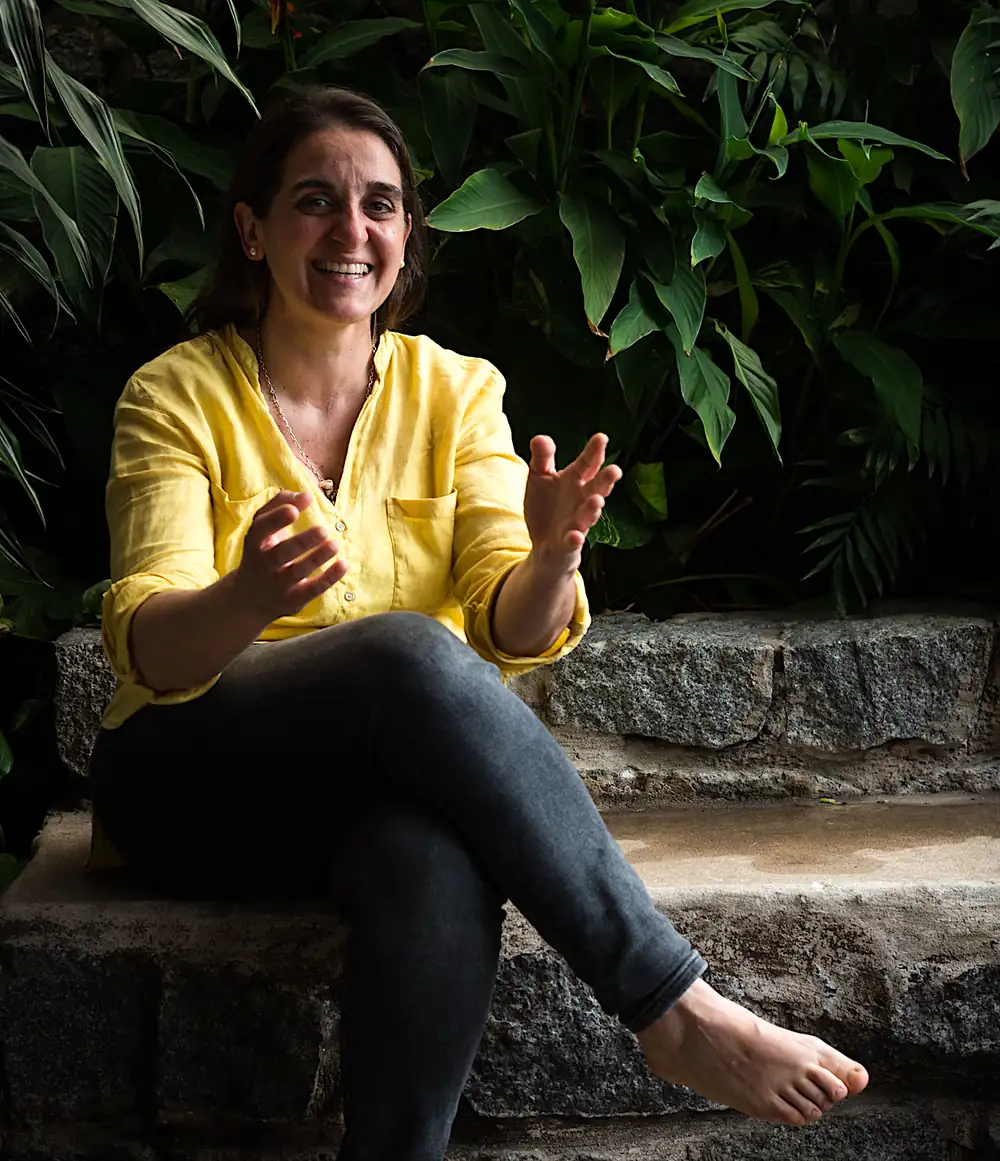
En un país agrícola y ganadero, con una gastronomía poco ligada al mar, María Elena Marfetán, a sus 41 años, es como un pez nadando contra la corriente. Si bien la parrilla es el modelo de negocio más prolífico y exitoso, ella ha optado por dedicarse a la pesca artesanal.
In an agricultural and livestock-based country, with a cuisine largely disconnected from the sea, María Elena Marfetán, at 41, is a fish swimming against the tide. While the grill is the most prolific and successful business model, she has chosen to dedicate herself to artisanal fishing. This has been reflected for over 20 years on the menu of her restaurant, Lo de Tere, overlooking the yacht harbor of Punta del Este. Her fight is for artisanal fishing, in a complex and hostile environment, with people living in the informal sector and a state apparatus focused on agriculture. In 2019, she implemented the Eastern Ocean Pact, a project that works with artisanal fishers to improve fishing conditions and promote healthy consumption habits.
The 117 km separating Punta del Este from La Paloma are green. There are cows, pine trees, eucalyptus trees, meadows, olive groves, and vineyards. This is the productive, sparsely populated Uruguay, abundant with food. Behind the wheel, María Elena, nervous at times, loses control of her speed; at others, she contemplates the springtime landscape and reflects.
Suddenly he points to a field.
“Under those pine trees I found the first porcini mushrooms in 2020. During the pandemic, with the restaurant closed, I dedicated myself to collecting mushrooms, samphire, wild garlic, fennel, and flowers. My cousin Fede (Federico Marfetán) and I, my nephews, and I would go out with two baskets in our hands and spend hours looking at the ground. It's amazing what's in the countryside and how much we don't know about what we can use in the kitchen.”
In La Paloma, Maria Elena always follows the same routine. She meets up with her parents, Elsa and Lalo, hugs them, asks her father about the butcher who supplies the meat for the restaurant, and he gives her the town's health report. Her mother adds that she's discovered a new strawberry producer whose strawberries "are spectacular." Mar, her dachshund, who now lives with her grandparents, curls up between her legs. A giant bag of crackers awaits on the kitchen counter, along with herbs from the garden, and the refrigerators are overflowing with food. Always prepared to receive a battalion.
A few minutes later, she walks the block and a half that separates her house from La Balconada beach, renowned by locals and tourists for its surfing and cinematic sunsets, cloudless, with pink skies, the kind that are greeted by a chorus of applause as the day ends. It is there that her cooking comes to life.
In the days leading up to a storm, when the tide goes out, he takes off his shoes, rolls up his trousers, and starts pulling up sea lettuce rooted in the rocks, which the receding tide leaves exposed. In less than five minutes, while filling a bag with seaweed, his mind races with ideas for a special menu he'll have the next day: seaweed, mussels, samphire, and flowers.
A time to act
During the time Lo de Tere was closed, from April to October 2020, the chef dedicated herself to strengthening her relationship with the artisanal fishermen who supplied her. She encouraged Jorge, who moors his boat in front of the restaurant, to start fishing with cages, a technique used, for example, in Europe for octopus, and to sell his products in boxes instead of bags, thus adding value. With Choco, she got up at 5 a.m. and climbed the rocks of Punta Ballena to watch him pull dozens of sea bream from the water, armed only with his fishing rod. In March, she accompanied Fabián and Marina to the Rocha Lagoon, searching for pink shrimp and stocking up on blue crabs for the entire year. She also learned that the best place to buy fish in the port of Punta del Este is at the tables below, not in the shops. There she buys the mussels collected by divers on Lobos Island, as well as fillets of silverside and corvina. Seeing each exchange between them helps to understand Maria Elena's commitment to her cause: that the entire chain is valued, the families, the habitats, the seasonalities, the richness that the sea holds.
This is her way of seeing life. She brings the same passion to the kitchen. In her constant pursuit of coherence, she acts as a conduit between the diner and the ingredient, serving it as fresh as possible, without embellishment. She learned this as a child.
The Marfetán siblings are five in number, and they all know how to fish. Their father taught them during the winters in La Paloma. There, 225 km from Montevideo, they ran a restaurant in their family home, named after the beach where it was located: La Balconada. Elsa cooked, and Lalo took care of the suppliers and the sauce. Each child had a task. At age 12, life turned María Elena into a cook by default, “it was after an embarrassing mishap in the dining room” she confessed. At 18, she moved to the capital to study political science and later culinary arts, but she wasn't away from home for long. In 2001, her parents were offered the kitchen at Lo de Tere in Punta del Este. María Elena was the head chef from the start, even though she was only 20 years old.
The Marfetán Curbelo family is never complacent; they always strive for improvement. In the 1990s, Elsa received a visit from Father Luis de Lezama (creator of Lezama, Café de Oriente, and Taberna del Alabardero in Spain), and the encounter resulted in an internship at La Taberna del Alabardero in Madrid. A few years later, it was María Elena's turn, first at Café de Oriente and then at Ramón Freixas in Barcelona. This connection to Spain and their proximity to the Atlantic Ocean explain the restaurant's history.
“My mission is to inspire those who work with me to value what comes from the sea.”
María Elena's cuisine is fresh, with subtle flavors, using few ingredients, delicately arranged on the plate. The presentation, however, remains classic. It still features linen tablecloths, fine silverware, and crystal glasses. It's one of the few formal dining rooms remaining in the resort town, with a retro nautical decor.
From her mother's repertoire, the ravioli filled with crab and shrimp sauce remain. "To this day, it's one of the most requested dishes, along with the 'Once Upon a Time,' which we used to call 'Balcony Filet'; it's baked with leeks and au gratin cheese." The more classic, creamy dishes have been disappearing from the menu over the last seven years.
The blue crab was discarded in Rocha until the 1990s, when Elsa told the women of the lagoon that if they harvested its meat, she would buy it. Today, with this now revered product, they make croquettes, crab cakes, and sushi in various restaurants throughout the country.
The flag of the sea
During the pandemic, her parents retreated to the family home, La Balconada, and María Elena embraced the sea even more strongly as her guiding principle. Little by little, she's overcoming her shyness to spend more time with customers in the dining room and enjoys collecting samphire, loquats, mushrooms, garlic, or wild fennel, which she later plays with in the restaurant.
What keeps her awake at night?
“Being consistent. It’s part of the Marfetán culture. Being consistent means stopping selling salmon, which is what they say the public wants, even if it means I can’t pay some bills.”
“For older people, success means getting married, having children, buying a house and a car, working in the same place your whole life, getting promoted, and being respected. I don't believe that a company's success is solely financial; for me, it's also about being consistent in what you say and do. In the 20 years we've been in business, I've never had to say we didn't have a dish on the menu, for example. I owe that to my parents.”
What is their kitchen like?
“I’m a sucker for simplicity. The less information a dish has, the better. You shouldn’t put all your ego into it. Mind you, the customer’s taste matters. Every weekend I offer a raw dish with fish or seafood, very simple. It’s very rare for a customer to go straight for that. What is true, though, is that they come to Lo de Tere looking for fish. Today I’m indulging myself by not serving hake because I got sea bream, anchovies, pompano, or whatever. My commitment to artisanal fishermen and fishing in Uruguay is something I inherited from my family.”
Is your menu not 100% fishing?
“It would be suicidal, but I would have it. Tourists and locals arrive in Punta del Este asking for hake and barbecue. Now, I don't promote fishing because the meat is bad, but because we don't value it. Uruguayans eat 100 kilos of red meat per person per year compared to seven kilos of seafood.”
"I don't want us to be a trendy cuisine or destination, but rather to be consistent."
What bothers you about gastronomy today?
“I don’t like trends, I distance myself from them. It would be much easier to take down the tablecloth at Lo de Tere, put out vermouth, thick glasses, a cocktail bar, and serve sourdough toast with avocado, with a waiter opening the wine on your knee. I want better gastronomy in Uruguay, to revalue the product. I would love for other colleagues to question the egg vendor to improve, and others who grow carrots or wheat, or raise meat, just as I do with fishing.”
In the age of social media, what's more important: the message or the flavor?
“We cooks provide food, it has to taste good.”
What is she like as a boss?
“I try to stay on top of my people’s problems. It’s important to me to inspire initiative and a sense of belonging. I want those who leave to come back and tell me things. We say that young people don’t want to work 14-hour days. I think: ‘We have to adapt to young people because we have to work with them.’ Before, it was believed that experienced people were the only ones who added value to the team. I discovered some time ago that young people with initiative and enthusiasm also contribute a great deal. You have to know how to inspire enthusiasm so you can put care into every dish you serve to people you don’t even know.”
“Young people have a blank slate to fill with information. We have to see what information I want to put into the head of a kid who says he likes cooking. I have to make him fall in love with the product he handles, make him passionate about what he does.”
“I’ve decided to fight for artisanal fishing. In 2016, I had the small idea of organizing a charity event through what was then the Uruguayan Gastronomic Association, called 'Here We Catch, Here We Cook.' In it, the chefs prepared artisanal fish, the fishermen showed and shared information about their catches, and the proceeds went to a children’s soup kitchen in a disadvantaged area. The Pact is a larger-scale take on the same idea.”
One day, we were arguing about electricity rates with the Minister of Industry, Carolina Cosse, along with other members of the Punta del Este Gastronomic Corporation (an association of business owners in the sector). I asked the Corporation's president if I could propose an idea. He agreed, and I spoke about what would later become the Ocean Pact. He immediately supported us. Today, the government has changed, but the project continues. It brings together the Pescar Group, the Ministry of Industry, Energy and Mining, and the Corporation's member restaurants.