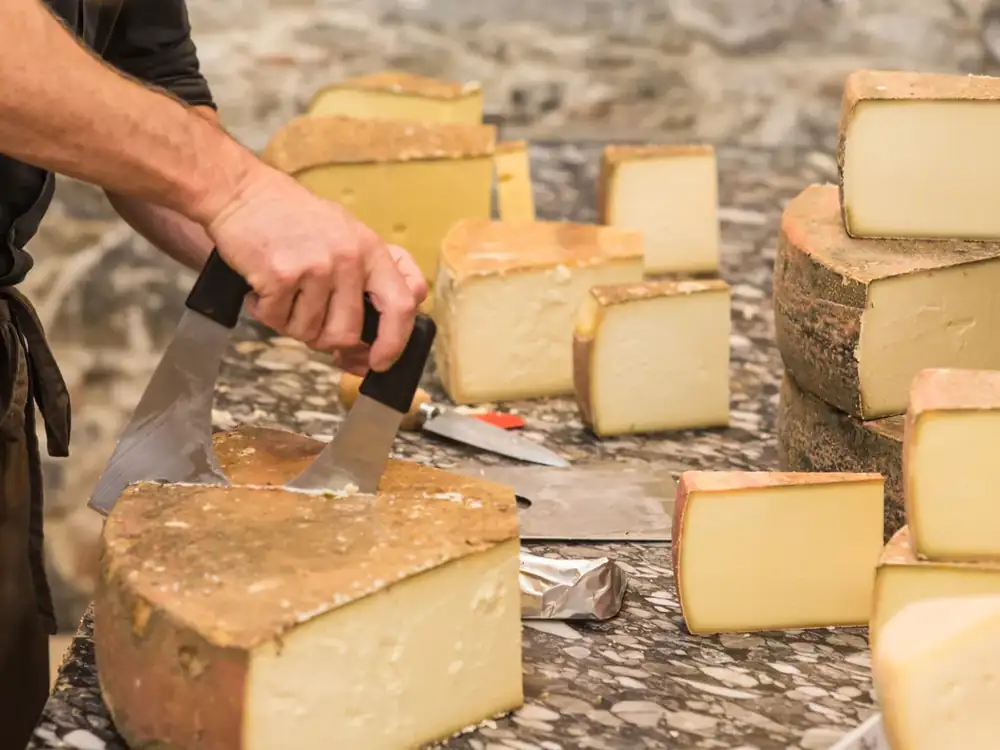
Cheese knowledge: The best tips for cheese lovers
1. How can I recognize good cheese?
Ursula Heinzelmann: It's all about the taste! It should tell a story – not always loud, but with character. The texture is crucial: moist and melting, rather than dry and crumbly. The cheese should look well-presented at the counter, and ideally, you should be allowed to taste it. When tasting, it's important not to chew the cheese, but to press it against the roof of your mouth with your tongue and consciously perceive the aromas.
2. Raw milk cheese: a sign of quality or a risk?
Ursula Heinzelmann: The ideal is raw milk, meaning unheated milk processed into cheese at body temperature immediately after milking. Why? Because cheesemaking follows the natural development of the milk: acidification, curdling, draining, and rind formation. Each step slows down further changes and thus preserves the milk. The absolute pinnacle of complexity, originality, and quality is only possible with raw milk. Pasteurized milk is more hygienic, but it loses variety and complexity. However, raw milk alone doesn't guarantee a top-quality product – hygiene, milk quality, and craftsmanship are crucial.
3. What is the best way to store cheese?
Ursula Heinzelmann: It should be bought to be enjoyed, not stored! If you do buy it, wrap it in wax paper, put it in a paper bag, and refrigerate it. Tupperware containers and cheese domes are unsuitable for storage because the different cheeses, with their aromas and cultures, can affect each other.
4. What to do if cheese gets moldy?
Ursula Heinzelmann: If stored for an extended period, white or blue-green mold may develop on the cut surfaces. These mold cultures (unlike mold on bread or fruit) do not produce mycotoxins. Simply eat them or slice off a thin layer. However, slimy, damp surfaces or long, black mold are a clear sign of improper storage. Please discard!
5. Should you cut off the rind, or can you eat it?
Ursula Heinzelmann: Avoid rinds with artificial coatings, such as wax or plastic. Otherwise: just try it! The rind is usually surprisingly aromatic. If it's very hard, like Parmesan, you can cook it in broths or stews.