Al preparar tostadas francesas, ¿se debe usar aceite o mantequilla?
Podríamos definir la tostada francesa perfecta por su centro suave y cremoso, y su sabor a canela con toques de vainilla. Pero una cualidad fundamental de este desayuno tan popular es, sin duda, la textura de la corteza.
We could define the perfect French toast by its soft, creamy center and its cinnamon flavor with hints of vanilla. But a fundamental quality of this popular breakfast is undoubtedly the texture of the crust. Without it, we can't enjoy that crispy contrast, that satisfying bite bathed in creamy butter and sweet syrup. And yet, as simple as it may seem, achieving that ideal surface is truly an art.
You might have your go-to method for making easy French toast, but some cooks face a controversial question, regardless of their usual recipe: whether to cook it with butter or oil. If opinions are divided in your household, we have good news that everyone will love, because the answer is... (drumroll): both.
Combining these two cooking fats not only imparts a full, complex flavor and that iconic golden color, but also offers numerous scientific benefits. While you can technically cook with either butter or oil, there's a belief (and some debate) that combining them alters the smoke point. A higher smoke point is important because it allows you to cook at lower temperatures for a longer period, giving the butter time to brown without burning as that caramelized crust develops. It's also crucial for ensuring the slices cook evenly throughout.
How to prepare your French toast with two types of fat
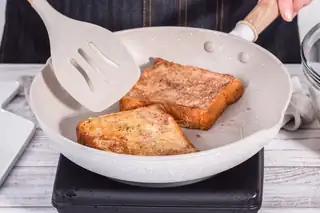
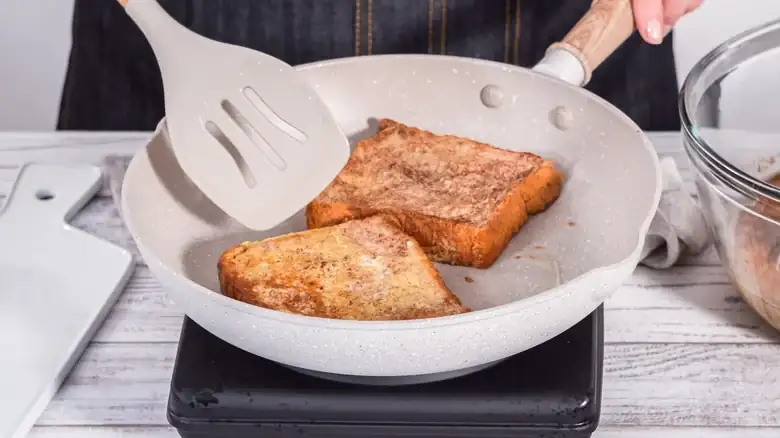
You'll need to use slightly more butter than oil; a good starting ratio is about 1 1/2 tablespoons of butter to 1 teaspoon of oil. Be sure to use medium-low heat and let the butter melt completely until it coats the entire surface of the pan. From there, the cooking time for the French toast will depend on the thickness of the bread, the type (whether you prefer Japanese milk bread or Hawaiian rolls), and your desired level of doneness; but it should take about one or two minutes before you flip them and finish cooking. You can replace the oil and butter as needed if the pieces start to brown too much; just keep the ratio the same.
You can use canola or vegetable oil, but if you prefer another type of oil, take the opportunity to add a different touch. Olive oil can have herbaceous notes that pair well with butter, or contribute subtle peppery undertones that provide a contrasting flavor. Nut oils like pistachio, almond, or walnut can work well with your idea of French toast, and may even have higher smoke points than olive or canola, while sesame oil adds a salty note. There are countless delicious variations of French toast to satisfy your cravings, but this tip will ensure they all turn out perfectly crispy.