¿Existe alguna diferencia entre mermelada, jalea y conservas?
Tanto si eres un amante de los dulces empedernido como si simplemente disfrutas de un toque fresco y afrutado en tu desayuno, las mermeladas, jaleas y conservas están aquí para satisfacer tus necesidades.
Although they're a breakfast staple today, the prototypes of these delicious little jars date back 8,000 years. Since honey never spoils, early humans used it to preserve fruits like dates, figs, and quinces.
This preservation method was so effective and delicious that it lasted for thousands of years. There is evidence that both the Mesopotamians and the Romans enjoyed their own version of fruit-infused honey. Eventually, the Persians substituted sugar for honey, and the rest is history.
Of the three delicious toast accompaniments in question, jam is perhaps the oldest. The first known recipe for jam was published in a cookbook written in the 4th century AD by the Roman culinary expert Marcus Gavius Apicius. The Romans considered quinces ideal for making jam, as they are naturally rich in pectin.
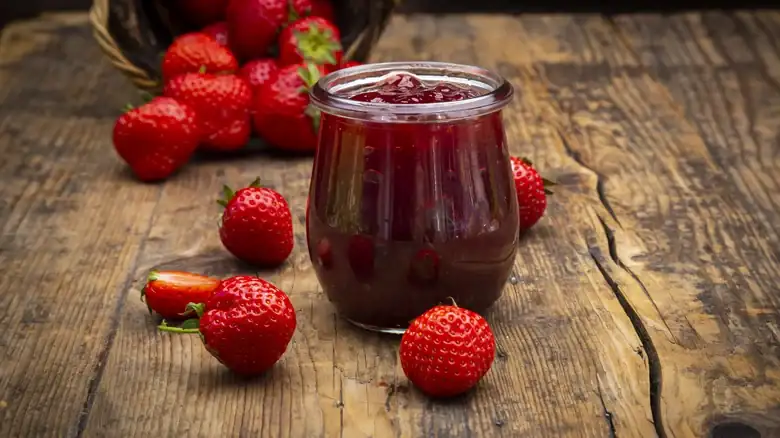
When comparing jam and jelly, the main difference lies in whether pieces of fruit are included in the mixture. To make jam, the fruit is crushed or pureed before being mixed with sugar and pectin. Because it contains pieces of fruit, jam has an opaque appearance.
Gelatin is the only one of these three fruity treats that doesn't contain pieces of fruit. Instead, fruit juice is mixed with sugar and pectin and heated until the mixture begins to thicken.
Preserves are very similar to some of the older versions of jams and other preserved fruits. This is because they contain more fruit than jam or jelly, and little or no added pectin. Also, unlike jam, the fruit used in preserves is not crushed or liquefied.
When comparing these three jams, their similarities are readily apparent. All three can be made with almost any type of fruit or combination thereof. They are an excellent way to preserve fruit harvested during the warmer months.