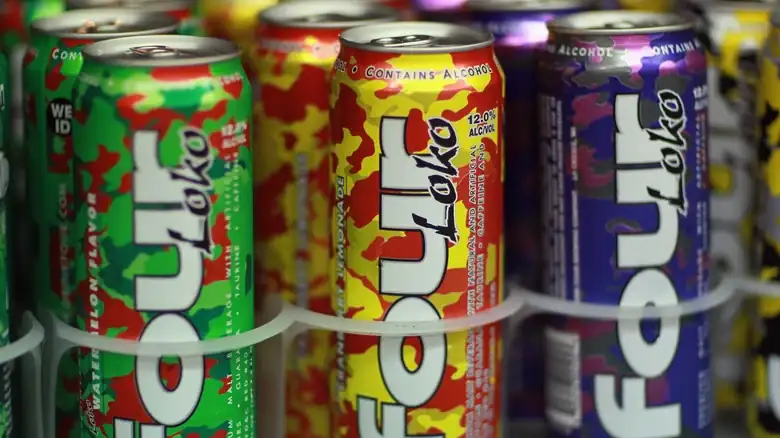
The Reason Original Four Lokos Were Banned
With nicknames like "blackout in a can" and "liquid cocaine," it's probably not that surprising that the original Four Loko drink, which combined a potent mix of caffeine and alcohol in various fruity flavors, would eventually face scrutiny.
With Four Loko, the friends' company, Phusion Projects, supersized the mixture via its ingredients and 23.5-ounce cans. The company combined caffeine, guaraná (a South American plant also packed with caffeine), the amino acid taurine, wormwood (the herb found in absinth, which they removed in 2008), lots of sugar, and malt liquor containing 12% alcohol. That made one can the equivalent of drinking five or six 12-ounce cans of beer and two cups of coffee. In the wake of a rise in alcohol-related hospital visits, colleges began banning the drink on campuses. Several states followed suit, and by 2010 — after the FDA stepped in — the brief heyday of the original Four Loko was over.
The FDA steps in
The original Four Loko may not have been a match for Spirytus Rektyfikowany Vodka, which at 192 proof is too potent to drink neat, but that doesn't mean the drink didn't have its issues. The large amount of caffeine in Four Loko easily masked the effects of the alcohol, often leading to overconsumption. Reports of drinkers experiencing black outs, injuries, and in a few cases, death led New York to ban Four Loko in 2010, which was a bad year for Phusion Projects. Utah, Michigan, Kansas, and Washington also banned its sale. That doesn't even include the slew of lawsuits that followed.
In November 2010, the FDA, which had been studying the issue of caffeine in alcoholic beverages for a year, sent warning letters to Phusion Projects and several other companies making similar drinks stating that the added caffeine in these canned products was an unsafe food additive. While the company remained adamant that adding caffeine to alcohol was safe, it buckled under the mounting pressure. That same month, Phusion Products announced it would remove the caffeine and other related ingredients from the drink. The company released a new, caffeine-free version of Four Loko in January 2011, but the drink's popularity never truly recovered since many consumers had moved on to hard seltzer.