¿Qué diferencia hay entre la sémola de maíz y la polenta?
Aunque se parecen, la sémola de maíz y la polenta no son lo mismo: se diferencian por el maíz, la molienda y la textura que dan al plato.
Corn grits and polenta are staples of American cuisine, but few people know the difference between them. Polenta was once considered a sophisticated dish, while grits was long a Southern staple associated with low-income families. Although Iowa is the largest corn-producing state in the U.S., it is not a Southern state. These connotations have shifted in recent years, but that doesn't make them the same thing, even though both can be prepared in a rice cooker.
Polenta is a dish from northern Italy made with flour from hard yellow corn of a variety called eight-row corn. It is usually coarsely ground and, when cooked, has a dense, flaky texture. There are also precooked polenta rolls or instant versions that are rehydrated with hot water. Porridge, on the other hand, is based on a dish of the Muskogee Native Americans and is made with hard white corn, which has more starch. It is usually ground finely and becomes creamy when cooked; the finer the grind, the faster it cooks.
Although semolina and polenta are used similarly in some recipes, semolina requires more frequent stirring due to its higher starch content. Substituting one for the other can change the flavor and texture of the dish, sometimes unintentionally, so it's worth considering the outcome before making the change.
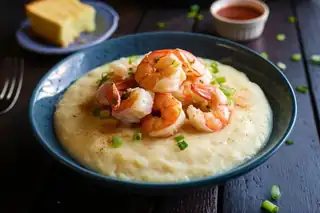
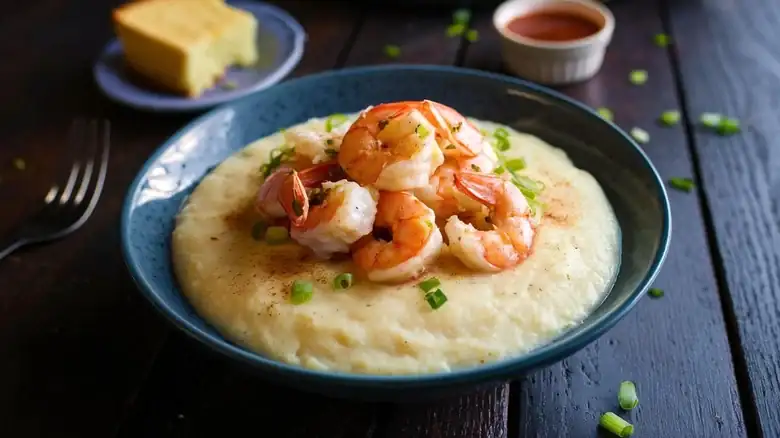
The choice influences the final result. For example, polenta won't provide the same creamy base as the classic shrimp and grits dish, and substituting grits won't achieve the same thickness or hold its shape as well. Polenta has a more subtle flavor, making it a neutral base for adding ingredients, while grits retain a more intense corn flavor. Both can be sweet, savory, or spicy depending on how they are seasoned.
The degree of grinding also makes a difference. Stone-ground semolina is obtained by grinding whole kernels: it's the coarsest, with a firm texture and a pronounced corn flavor. Quick-cooking semolina is finely ground to cook faster. Nixtamalized corn semolina, from which the husks and germ have been removed, offers an intermediate texture. Corn flour labeled as polenta is usually coarsely ground, although fine or medium-ground can be used if necessary. Regular corn flour, however, is not the same as traditional polenta.