What's The Difference Between Rompope And Eggnog
Winter is the perfect time of the year to sit by the fire and sip on your favorite holiday-themed spiked beverage. From boozy hot cocoa upgraded with liquor, to mulled wine and hot toddies, there's tons to choose from.
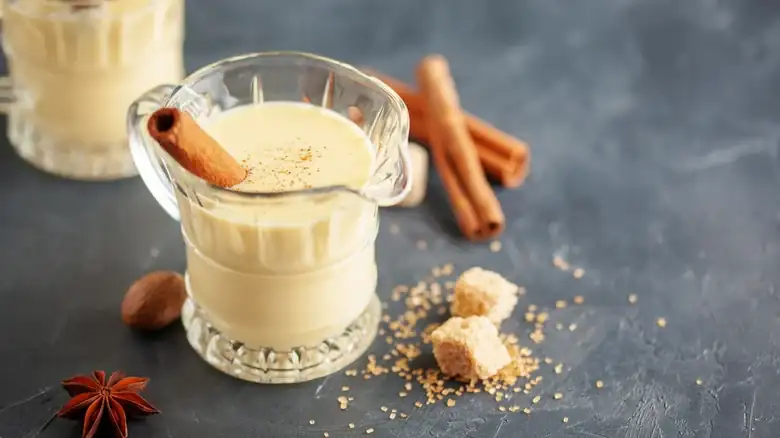
If you're not familiar, rompope is a version of eggnog, and it's a very popular holiday drink served in Mexico and other Central American countries. It gained popularity in Puebla, Mexico during the 17th century via Spain, where it was originally known as rompon or ponche de huevo. It's said that nuns at a convent in Puebla would serve rompope to welcome guests, and eventually sold bottles of it to raise money for the church. Similar to an eggnog recipe, rompope is a mixture of egg yolks, milk, vanilla, and a splash of alcohol, but instead of nutmeg, most recipes call for cloves and a stick of cinnamon. Flavor-wise, it still has that slightly eggy, sugary taste like American eggnog, but the clove and cinnamon give rompope a spicy depth that is more akin to horchata, a similarly cinnamon-forward milk drink. Some rompope recipes also contain almonds, walnuts, pistachios, or pine nuts which lend it a more nutty flavor than eggnog.
There are many eggnog variations across Latin America
Although the major difference between American eggnog and Mexico's rompope is the use of a cinnamon stick and nuts, other Central and South American countries have their own take on the comforting drink. Ponche crema de ron is an eggnog recipe popular in the Dominican Republic and Trinidad, where it is traditionally served during Christmas. It uses a combination of evaporated and condensed milk along with eggs, cinnamon, freshly-grated nutmeg, and white rum. The result is a creamy, extra-sweet concoction that some compare to liquid flan. While in Costa Rica, their version of rompope is served cold and typically only uses egg yolks, which give it a vibrant yellow hue.
The Puerto Rican version of eggnog is known as coquito, and its main difference is that it is made from a base of coconut milk. This adds a slightly nutty, almost savory touch to a traditional nog. It usually still calls for the rompope-esque cloves and cinnamon sticks, but coquito itself has many different variations. Some recipes use star anise, nut milks like oat or pistachio, honey, lemon rinds, and ginger. Others even add coffee into the mix to give it a real kick. No matter what spin you put on it, there are a lot of delicious versions of rompope and its similar eggnog cousins to try out.