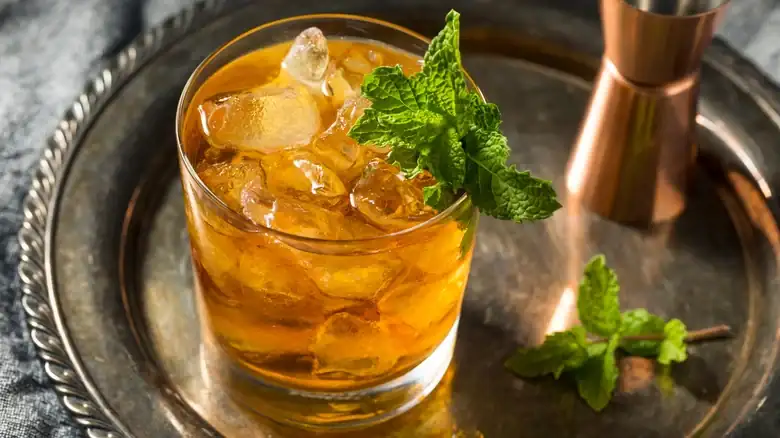
The Stinger: The Glitzy Cocktail That Was Practically Forgotten After Prohibition
Over a century later, the Prohibition era still has its effects on the drinking culture in America. From the many U.S. speakeasy bars that still dot the landscape, to the way the Prohibition helped make lemonade popular and the effect that it had on moonshine (whose legal status in the U.S.
Still, there are some things from the Prohibition era that ultimately did not stand the test of time. The once popular cocktail known as the Stinger is a perfect example of this. With origins reaching back to the 1890s, the Stinger is made of brandy and crème de menthe, and was typically served as a digestif (which isn't the same as an aperitif). Its popularity peaked during the 1920s, but it remained part of popular culture through the 40s and 50s until it eventually fell out of favor and disappeared from public eye.
While the Stinger is not necessarily a drink exclusive to the Prohibition era, there is a specific reason, or rather one specific person, responsible for the drink's strong association with the time period. Millionaire Reginald Vanderbilt was known to love the drink so much that he would serve it to guests at his home. Many attribute the drink's rise to fame to Vanderbilt's habit of serving it, sometimes even as a before-dinner beverage rather than a digestif.
The history of the Stinger
Although most people can cite Reginald Vanderbilt as the person who propelled the Stinger to popularity and fame, not many can say with certainty exactly who invented the Stinger. Overall, its time period of origin has been narrowed down to the 1890s and its first appearance in print is dated as 1914, when Jacques Straub published his book "Drinks." While Straub didn't necessarily invent the drink, he was the first to put the recipe for this cocktail on paper.
Another thing Vanderbilt gets credit for is naming the Stinger. Previous iterations of the drink were named quite differently, with the first version being called the Bartholdi Cocktail after the New York-based hotel where it was born. A later version that included Angostura bitters was called the Brant Cocktail, while another iteration that used orange bitters and rye was known as the Prince.
When Vanderbilt started serving the beverage, he called it the Stinger and the name stuck for good this time. The drink remained popular after Prohibition ended and it even makes quite a few appearances in the hands of famous actors in several films, like Cary Grant in "Kiss Them for Me." One possible reason for its downfall was sadly the rising price of liquor needed to make the drink, and while some still hold the tipple in high regard, it never returned to the popularity of its glory days.