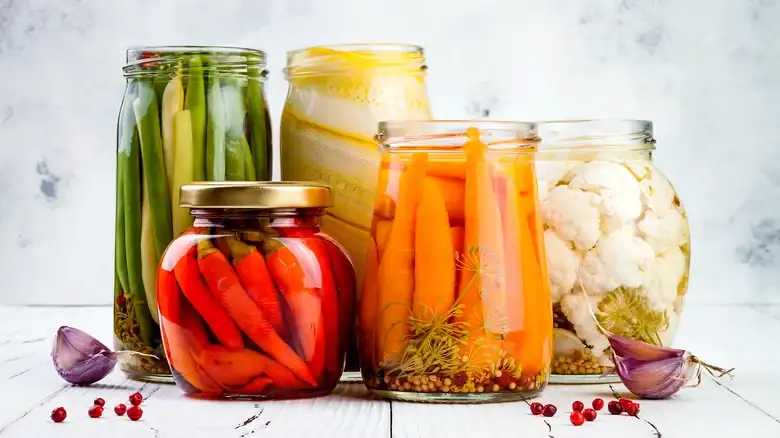
The 15 Best Veggies For Home-Canning
In Italy, it's served as an antipasto or on a charcuterie board for a tangy bite. While originally an Italian condiment, giardiniera has been adapted by Italian-American immigrants in Chicago, where it was reenvisioned as a relish for the classic Chicago hot dog.
Italian giardiniera is usually not spicy. Its American cousin, Chicago-style giardiniera, is filled with hot peppers making the vinegary spicy condiment a favorite among those who like the heat. The other difference is that in the Italian version, the vegetables are cut into larger chunks — while in the Chicago version, the vegetables are cut into smaller pieces resembling relish or chutney, perfect for sandwiches, burgers, and hot dogs.
Both versions are easy to make at home, with no pressure canner required. Giardiniera just needs a briny soak in vinegar. And, of course, a water bath if you don't plan on using it within the week.
Asparagus
Asparagus is an excellent choice for canning, mainly because it has a short growing season. Asparagus is a spring vegetable with thin stalks and a purplish tip. Asparagus that is past its prime has thick woody fibrous stalks that are unappealing. Always look for the freshest asparagus and try to can it as soon as possible, as asparagus has a short shelf life. As it is a low-acid vegetable, asparagus needs to be pressure canned. Unfortunately, when asparagus is canned, it changes its texture and can become mushy. If you plan on using your asparagus in a stew, soups, casseroles, or other dishes where texture is not an issue, then canning it for a long shelf life is perfect. But pickling asparagus before canning is a better option if you prefer to keep some of the texture. Pickled asparagus has nice zest with a firm texture and is perfect for salads, sides, or
Cucumbers
Cucumbers are one of the best veggies for home-canning. And any gardener will tell you that just a few cucumber plants will provide an abundance of cucumbers throughout the summer. Fresh cucumbers are great in a green salad, and they make refreshing flavored water, but it can be hard to use them all before they go bad. But canning this water-rich vegetable is a great way to preserve your cucumber harvest. The traditional way to preserve cucumbers is, of course, pickles. You can make dill pickles, bread and butter pickles, lacto-fermented pickles, or even sweet pickles. You can cut them in spears, coins, flat sandwich style, or leave them whole. Home canning pickles is easy, and you can add your favorite herbs and spices, like peppercorns, garlic, and red pepper flakes, to make them any way you like them. If you find yourself pickled out or just don't like
Tomatoes
Late summer is the season for plump, ripe tomatoes, and canning that natural goodness is the best way to have flavorful tomatoes year-round. Acidic tomatoes are one of the vegetables that don't need to be pressure canned — a simple water bath is sufficient for home-canning tomatoes, making them a good starter vegetable for those new to home-canning. Plus, with the variety of ways you can prepare them, you will surely find a recipe you love. There are many different ways to can tomatoes, from stewed tomatoes, which are great for soups and stews, to a hearty marinara sauce for pasta and pizza. But beyond the classic canned tomatoes, you can also make home-canned salsa for all of your favorite Mexican recipes. Of course, salsa is so varied you could fill jars with all kinds of different salsas, be it spicy salsa with jalapeños, a smoky roasted salsa with chipotles, or a
Peppers
Peppers have a short growing season, but luckily they are excellent for home-canning. You can use sweet or hot peppers, depending on how you want them. The trick to canning peppers is to fire roast them first to give them some char and to soften the skin. You can fire roast on a gas or charcoal grill. If you don't have a grill, you can always use your oven and broil them, or throw them on a comal and blacken them on the stovetop. Both sweet and hot peppers benefit from roasting mainly for flavor but also because once they are roasted, it makes it easier to remove the skin and seeds. If you aren't a fan of fire-roasted peppers, you can parboil your peppers to soften them up before canning them. When the peppers are properly roasted, let them cool, and then remove the skins and core. If you are preparing hot peppers, then make sure to wear gloves. Hot peppers have oily
Carrots
Everyone's favorite root vegetable, the humble carrot, is a top choice for home-canning. They are versatile and easy to grow. You can get the best deals on carrots at the end of the summer and early fall, so it's the best time to stock up for canning. Carrots need to be peeled and pressure canned to avoid botulism. But from there, home chefs can get creative and cut them in sticks or coins or keep them whole. If you have a crinkle cutter, use that for a sophisticated shape. Canned carrots won't be as firm as fresh carrots, but they will be just as tasty, and you can use them in soups, stews, roasts, or eat them right out of the jar. Adding a little salt can amp up the flavor, and for those with a sweet tooth, a simple brown sugar syrup can turn your canned carrots into a sweet treat. You can also pickle carrots for a tangy topping for salads and sandwiches.
Beets
Beets get a bad rap on the culinary scene. This purple root vegetable is polarizing for many — some people think they taste like dirt, while others enjoy the sweet earthy flavor. Beets are a favorite for gardeners since they are easy to grow, and when they are fresh out of the garden, they are perfect for roasting with a drizzle of olive oil. They are also easy to home-can. One of the best reasons to home-can beets is that once you put in the work, peeling and canning, then you just need to open that jar to add beets to salads, soups, and other favorite beet dishes. Beets, like other low-acid vegetables, must be pressure canned for safety. The process starts with boiling the beets enough so that the peels will slide right off. From there, you can slice them, cut them in sticks, or keep them whole. Ideally, you will want them to be similar in size. While purple beets
Peas
One of the best things about growing sugar snap peas and snow peas in the garden is to pick them right off the vine. Fresh peas are sweet and crunchy and the perfect summer snack. While many gardeners choose to freeze peas to preserve them, you can also home-can peas. Depending on the type of peas you are canning, you have two options. If you are canning shelled peas, then you need to use a pressure canner to seal them up. The canning process will make them a bit softer, but they will keep their flavor. However, if you want to home-can peas with edible pods like snow or sugar snap peas, then pressure canning is not ideal because it will change the texture too much. And you will end up with stringy and mushy edible pods, not exactly what you want in your stir fry. But don't worry. You can still pickle those tasty edible pea pods and all. Pickled snow and sugar
Pickled onions
If you have ever had pickled onions at a taqueria layered on a tasty pork taco, then you know what pickled onions are all about. These tangy treats make more than just tacos better — you can add them to burgers, toss in a green salad, or add some extra oompf to a plate of nachos. Pickled onions have no limits. They are easy to make and can at home, so you can always have this zesty condiment on hand. Most pickled onions are made with red onions. Red onions are naturally sweet and mild, making them the best onions for salads and sandwiches. But there are no rules when it comes to pickling onions, and you can use other sweet varieties like Walla Walla Sweets or Vidalia onions. Shallots and pearl onions are good too. We suggest checking your local farmers' market to find local onion varieties. A quick pickled onion only needs a day or two before you can crack into them.
Cabbage
While the USDA does not have any canning guidelines for cabbage and does not recommend canning plain cabbage, you can still home-can the cruciferous vegetable if it is pickled first, for example, in sauerkraut, kimchi or other types of relish and chutneys. They even specifically recommend against adding it to any home-canned soups. Apart from the obvious safety concerns, it makes sense because canned cabbage will lose its texture and flavor when pressure canned, leaving limp pungent leaves. Classic sauerkraut is the most common way to home-can cabbage. Sauerkraut has a district flavor that is popular on hot dogs, burgers, and of course, the Ruben sandwich. The fun thing about making sauerkraut is you can add in other veggies and get creative with your recipe. Kimchi, sauerkrauts' spicy Korean cousin, is another way to make the most of your cabbage. Kimchi has gained po
Corn
Sweet corn on the cob season means barbecues at the lake, picnics at the park, and warm summer nights, so why not bottle up that special flavor to enjoy year-round? Corn may not be the most obvious veggie to home-can, but it's an excellent way to preserve that unique sweet flavor. Of course, you can't can a whole ear of corn on the cob. But you can cut off and home-can those bright yellow kernels. Home-canning sweet corn requires the pressure method to keep bacteria at bay. The process starts with a parboil to cook the kernels; then follow the appropriate cooking times for the jar sizes. The corn will still have a firm texture but won't be as firm as biting into corn on the cob. Another way to home-can corn is to pickle it in a vinegar brine with peppercorns, garlic, and hot chilies for a ready addition to tacos, salads, burrito bowls, and more.
Squash
Surprisingly you can home-can winter and summer squash, but the two require different methods. Winter squash, like butternut, acorn, and pumpkin, has a hard rind and must be pressure canned. The only way to home can winter squash is by cutting it into cubes and then pressure canning. The National Center for Home Food Preservation specifically does not recommend pureeing pumpkin before canning. So if you plan on making pumpkin butter or puree, you must can them in cubes and then mash the cubes before adding them to your recipe. Summer squash varieties — like zucchini, yellow squash, pattypan squash, and chayote — must be pickled first before they can be home-canned. You can pickle them and cut them into coins, spears, or matchsticks, depending on how you want to use them. With a water bath, the home-canned summer squash is safe for the shelf. The only exception that Th
Okra
While okra is a popular vegetable in the southern region of the U.S., many in the North aren't familiar with this vegetable. Okra is actually a fruit, but like the tomato, it's used as a vegetable. You won't find tomatoes or okra in a fruit salad. These long green tube-shaped pods have white seeds and are commonly used as a thickener for soups and stews like the classic Southern gumbo. When it's in season, it's plentiful, which makes it a good candidate for home-canning. Okra requires pressure canning and can be canned in pieces or whole. Okra is infamous for having a slimy texture when cooked, and home-canning it will not improve this mushy consistency. But home-canned okra is mostly for soups, so the texture isn't a cause for concern. If you like okra but don't like the slimy texture or prefer roasted okra, skip the home canning and freeze it instead to preserv
Potatoes
The best potatoes for home canning are waxy potatoes. Waxy potatoes, like baby reds, are usually smaller potatoes and are perfect for canning because they hold their shape. Avoid home-canning large baking potatoes like Russets, as they are better for boiling and mashing because they are starchy potatoes. Home-canning potatoes is a great way to preserve potatoes and makes it easy to pull together a potato salad. Potato must be peeled and pressure canned. You can cut them into smaller pieces or can them whole. The other option is to pickle those little baby spuds for a tangy addition to a charcuterie board or snack plate. If the idea of pickling potatoes seems odd, it's probably because potatoes have such a long shelf life they weren't traditionally pickled. But it's common in Mexico and Central America, where they make curtidos and pickled vegetables from a wide vari
Green beans
While many diners have an aversion to slimy green beans from cans, home-canned green beans are a whole new territory. Home-canning freshly picked green beans is an excellent way to store them. Green beans must be pressure canned — if you like a little variety, green beans can be safely canned with other vegetables like carrots. The key is to follow the processing timeline for the vegetable with the longest processing time to ensure they are safe to eat. Though canned green beans are good in casseroles, soups, and stews, pickling is the way to go if you like nice crunchy, tangy green beans. You can add your favorite spices and customize them to just eat straight out of the jar. Pickled green beans are great on salads, as a side, or on a charcuterie board. A little zesty green to balance out those salty meats and creamy cheeses makes a balanced board.
Mixed veggies in a giardiniera
If you are home-canning for the first time and are trying to decide what veggies to start with, you don't have to pick just one. Try them all in the classic Italian antipasto mixed vegetable condiment giardiniera. Giardiniera, which is Italian for "from the garden," is a mix of pickled vegetables like cauliflower, carrots, peppers, celery, green beans, and others in a vinegar brine. In Italy, it's served as an antipasto or on a charcuterie board for a tangy bite. While originally an Italian condiment, giardiniera has been adapted by Italian-American immigrants in Chicago, where it was reenvisioned as a relish for the classic Chicago hot dog. Italian giardiniera is usually not spicy. Its American cousin, Chicago-style giardiniera, is filled with hot peppers making the vinegary spicy condiment a favorite among those who like the heat. The other difference is that in the