De dónde viene y qué lleva la salsa romesco catalana
Originaria de Cataluña, la salsa romesco combina tomates maduros, ajo, aceite de oliva y pimientos asados, y ha viajado por todo el mundo.
Few sauces have as much affinity with Spain as romesco. Originating in Catalonia, it is slightly reddish and captures the essence of rustic Mediterranean flavors. Its name comes from the Spanish Muslims of Tarragona, the birthplace of numerous variations.
The term generally refers to the same base used in both traditional Catalan seafood stews and cold romesco, the most well-known version. Regardless of the specific variation, ripe tomatoes, garlic, olive oil, and the smoky flavor of roasted peppers are considered essential. Depending on the recipe, toasted bread and nuts, such as almonds or hazelnuts, are often added for thickening.
Almost every chef and home cook has their own version, and choosing the best one is difficult. What you do have to decide is what kind of romesco you prefer: the smoky bitterness of poblano peppers or the intense flavor of Spanish paprika. It truly shines on the grill.
Outside of Spain, romesco has become a favorite sauce for international dishes: some mix it with noodles or rice, while others use it to thicken soups. Marc Vidal, executive chef of Boqueriain in New York, enjoys dressing salads with romesco, especially those with a bitter flavor, such as frisée or escarole.
All romesco sauces share one characteristic: they are prepared with precooked ingredients. The tomatoes and peppers are roasted over high heat and then peeled before being crushed and added to the sauce. This imparts its smoky flavor and subtle sweetness. The sauce often has a rustic appearance, and some chefs prefer to prepare it in a mortar and pestle. It can be served hot or cold, with the same delicious result.
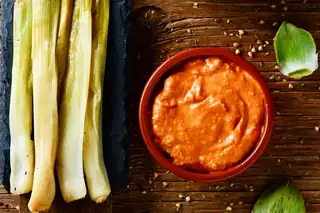
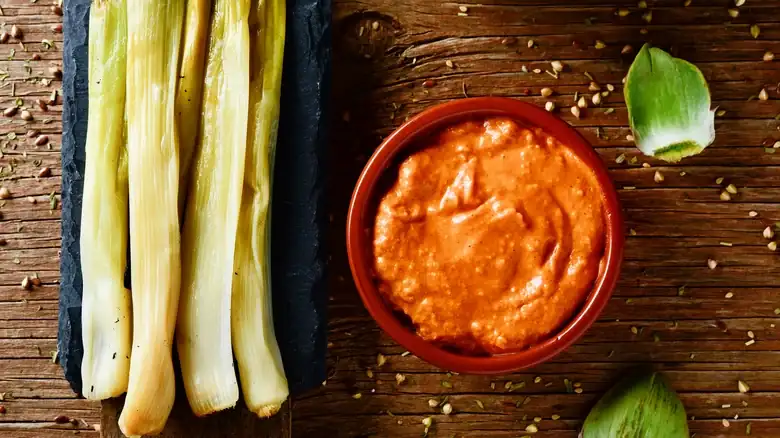
One of Catalonia's classic seasonal dishes is calçots, grilled spring onions with romesco sauce. The smoky flavor of the sauce explains why it pairs so well with grilled fish, vegetables, or meats, adding richness to the vegetables, ideal for those who want to avoid meat or fish. It can also be enjoyed with grilled leeks or endives, or with caramelized broccoli in a smoky romesco sauce.
Romesco sauce pairs wonderfully with grilled hamburgers. Don't skimp on quality: store-bought will never have the same intensity as that made with freshly roasted peppers or toasted nuts. Fresh, seasonal ingredients are what make romesco a sauce you'll want to make again and again. A personal touch, like a few drops of good sherry vinegar or a pinch of cayenne pepper, gives it an even more intense flavor.