‘It Isn’t Only About Who Gets Seen. It’s About Who Gets to Feel Safe Being Seen’
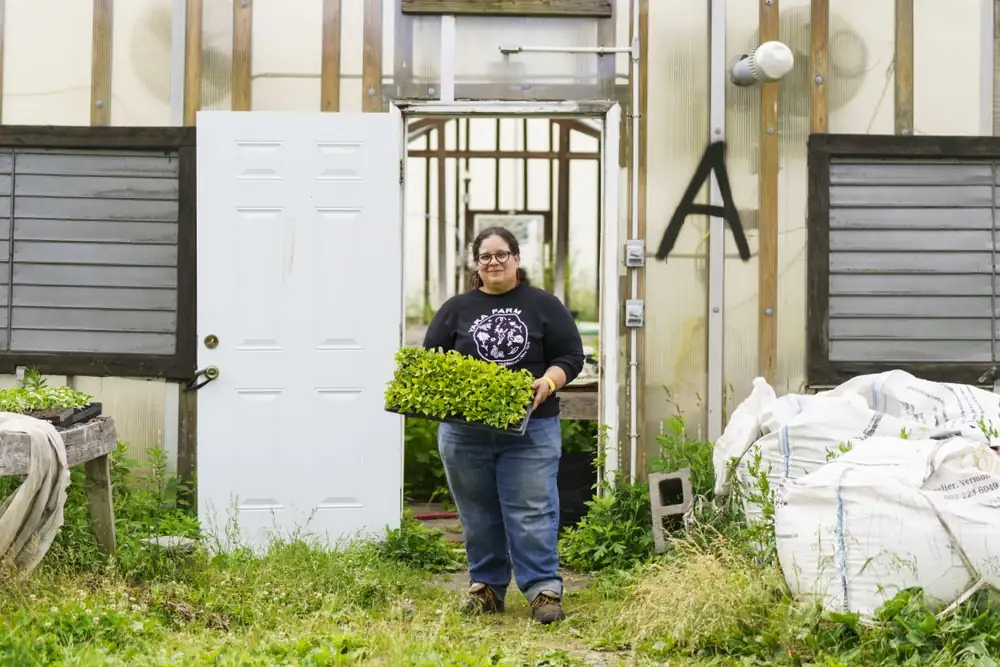
I’m Gabriela Pereyra, and I wear many hats. I’m director of operations at the Chester Agricultural Center. I started in agriculture back in my country, Venezuela, when I was doing my undergrad, working with cocoa, rice, and white corn small farmers. I decided then to continue my education.
During my Ph.D., I was very insecure about my English, and I started to talk to a New Yorker with the hope of improving it. Thirteen years later, we are married.
We’ve been farming together four years now. She is from Queens, New York. She grew up in the middle of a city, a redlined neighborhood, without exposure to agriculture. The food came from the market and food stamps.
COVID happened in Queens. We were in a small apartment. I had been traveling through the Northeast, helping people, especially BIPOC farmers, get access to land, capital, markets. After COVID, I convinced her to look for the land.
We were absolutely lucky. This is 27 acres of raw land, and it had not been farmed probably for 30, 40 years. The previous owner, the husband, died during COVID. It was too painful for his wife to continue, but she wanted that land to keep producing, or to keep the dream they once had.
In 2024, Mama K created BQE, the BIPOC Queer Expressway. It grew through partnerships leveraging a program called Nourish New York. That funding was the beginning of community-based organizations having the money to purchase from us. In 2024 our community-based organization partners started asking for more, so we began reaching out to other farmers, and we began aggregating through the Chester Agricultural Center.
I’m Karen “Mama K” Washington, and I am a farmer and the co-founder of the BIPOC Queer Expressway.
The BQE was started because when people think of farmers, they think of a white male, and a lot of the food that goes into communities of color—they don’t have our faces.
So how do we represent ourselves in a way that’s authentic, that people know who we are, and that we are the ones that are farming and putting that food back into the community that looks like us?
Instead of the BQE standing for the Brooklyn Queens Expressway, it stands for BIPOC Queer Expressway. Each of us falls into that category: be it Black, Asian, Latina, straight, or queer, it all fits into that category. We are inclusive and diverse in that, and that’s why the name came up.
Community organizations work with us because we are Black, we are people of color. We’re growing fresh, some of us are certified organic, like my farm is certified organic. We invite the same clientele to come visit our farm, and they can see exactly where the food is being grown.
How do we represent ourselves in a way that’s authentic, that people know who we are, and that we are the ones that are farming and putting that food back into the community that looks like us?
Especially in communities of color—because I came from the Bronx—when you say “organic,” it has an elitist tag to it. In people’s mind, it’s elitist, it’s white people food, it’s expensive food.
But now you have, “Wait a second, you mean to tell me that there are farmers that look like us that are growing organic food that is nourishing, and it’s not expensive, and we can eat that? It’s not the fast food, the processed food, the junk food that we have been so used to, and have been dumped in our neighborhoods?”
And it isn’t only about who gets seen. It’s about who gets to feel safe being seen. Farming spaces haven’t always felt open to queer people, especially queer people of color. Building something like BQE means younger farmers coming up behind us get to see there’s already a place for them.