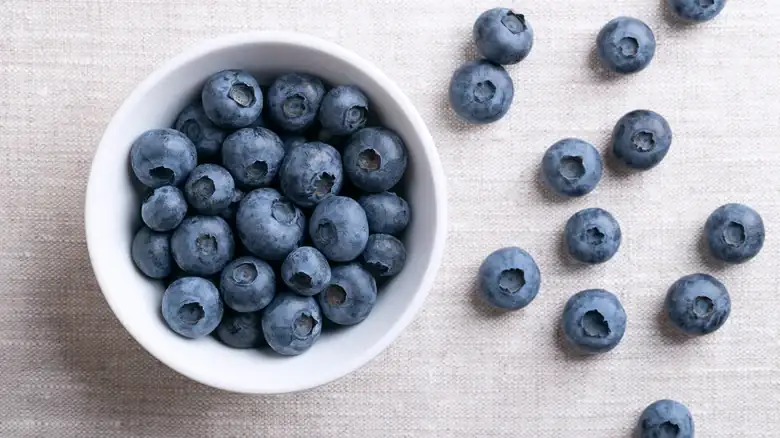
¿Cómo se pueden conservar los arándanos para que no se pongan blandos?
No hay nada peor que hurgar con ilusión en un envase de arándanos y encontrarte con una masa informe. Si simplemente tiras el envase a la nevera al llegar a casa, lo más probable es que te encuentres con fruta estropeada en un futuro próximo; dile adiós a los muffins de arándanos de textura perfecta de Ina Garten.
There is nothing worse than excitedly digging into a clamshell of blueberries, only to sink your fingers into absolute mush. If you just unceremoniously throw that container into the fridge when you get home from the store, chances are you'll have spoiled fruit in your close future — say goodbye to Ina Garten's perfectly-textured blueberry muffins.
To both preserve your fruit-related joy and avoid throwing blueberries (read: money) into the trash, store them properly. The best way requires just a few quick steps. Start by picking through the berries for any less-than-desirable individuals — look for bruising, splits, and of course, mold. Then rinse the rest under cool running water in a colander. If they are freshly-picked and particularly grubby, you can also put all them in a large, water-filled mixing bowl, swish them around (any debris will sink to the bottom), and gently lift them out into a strainer.
After the blueberries have drip-dried for a bit, transfer them to a sheet pan lined with kitchen or paper towels, and let them sit out until they are completely dry. This is absolutely crucial, because residual moisture makes berries spoil more quickly. Finally, line an airtight container with paper towels, arrange a single layer of blueberries on top, and top it off with another paper towel. Continue layering until all the blueberries are sandwiched between towels, seal the container, store it in the fridge, and expect to have near-perfect berries for at least two weeks.
What to do with mushy blueberries
All this may seem like a whole lot of fuss, but the payoff of having fresh, plump, and juicy blueberries makes it well worth the effort. But if you are kicking yourself for not investing in proper storage up front, and are now stuck with berries past their prime, you have a couple of options. Moldy or slimy fruits should be discarded, but if they are just a bit too squishy or shriveled for raw snacking, you can salvage them by cooking them.
Make sure the berries are well-washed, and then pop them in a saucepan to whip up a simple compote. Do not make common blueberry cooking mistakes by adding too much water and sugar — the berries will release some of their own liquid as they cook, and the flavors will become sweeter naturally. Gently simmer until the mixture reaches your desired thickness, and then serve it on top of yogurt, oatmeal, or pancakes.
Cooked blueberries really are extremely versatile. You can also turn them into an elevated blueberry balsamic ice cream sauce, or add blueberries to barbecue sauce for summer culinary bliss. Or, puree the cooked berries so you can easily incorporate them into fruit-forward salad dressings and pan sauces, not to mention smoothies. Hope is clearly not lost, but next time, you know how to store them properly from the start.