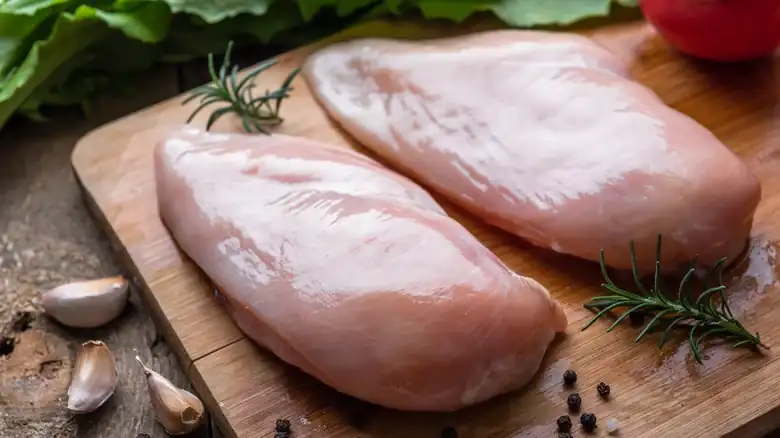
¿Qué demonios es el “pollo Woody” y es seguro comerlo?
"Pollo leñoso" no es un nombre nuevo y divertido para los hongos maitake. Es un término que se usa para describir pechugas de pollo con músculos endurecidos, transformando lo que debería ser un corte tierno y sabroso en un trozo de ave duro y poco apetitoso.
"Woody chicken" isn't a fun new name for hen of the woods mushrooms. It's a term used to describe chicken breasts with hardened muscles, transforming what should be a tender, flavorful cut into a tough, unappetizing slab of poultry. This phenomenon most commonly affects mass-farmed "broiler" chickens, which are bred for their size. While the exact cause has yet to be definitively proven, a 2022 study published in Poultry Science links it to accelerated growth from selective breeding.
Woodiness can start as early as two weeks old. Inflammation of small veins in the pectoral muscles causes muscle fibers to die and be replaced with scar tissue. This tissue is significantly tougher than normal muscle fiber, causing the woody texture. However, it's important to note that this doesn't affect the safety of the chicken. The same 2022 study found no bacterial infection in any of the 60 breasts examined.
Identifying woody chicken in stores can be difficult, but there are a couple of telltale markers the observant shopper should be able to catch. The meat may appear paler than usual and have white striations or unsightly bulges. These indicators of scar tissue, however, are by no means foolproof — they're just the most effective filtering criteria for the average consumer. If you accidentally purchase woody chicken, don't throw it out! There are several cooking methods that don't require tender breast meat to be enjoyable.
What to do with woody chicken
There are two approaches: either take extra steps to tenderize the chicken, or make a recipe where tenderness isn't required. Both options are valid and have several methods available.
Slow cooking is one of the best ways to tenderize meat, regardless of how tough it is raw. Low and slow heat breaks down muscle fibers and melts collagen, creating tender and flavorful meat. This slow cooker butter chicken recipe takes eight hours, giving the "woodiness" of even the toughest breast plenty of time to soften.
Acidic ingredients are both delicious and potent tenderizers. Vinegar, citrus juice, and other acids can help break down the chicken's muscle fibers, and marinating or cooking chicken with these ingredients is a quick, easy, and cheap way to combat woodiness. This slow cooker sweet and sour chicken recipe, for instance, combines the benefits of low, slow heat with vinegar and pineapples juice.
Shredding is another great way to deal with tough meat without needing to tenderize it first. Whether you're making chicken noodle soup or just discovering why it's better to use shredded chicken for chicken salad, this method breaks up muscle fibers and makes the meat easier to chew. You can even double-up on tenderizing methods by shredding slow-cooked breasts, all but guaranteeing your meat won't be too tough to enjoy.