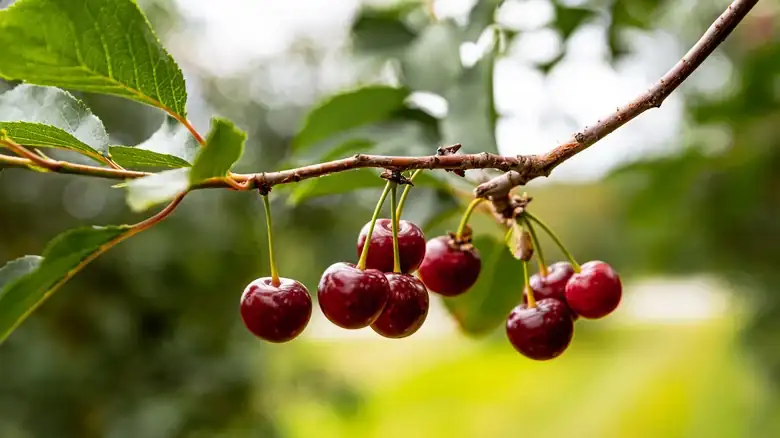
El estado lluvioso que cultiva la mayor cantidad de cerezas
Las cerezas son una de esas frutas que se pueden transformar en casi cualquier cosa: una empanada de cerezas hojaldrada, una salsa dulce de cerezas para rociar sobre pato o una guarnición de cerezas al brandy para cócteles. Mejor aún, puedes comerlas frescas a puñados.
Cherries are one of those fruits that can be transformed into almost anything — a flaky cherry turnover, or a sweet cherry sauce to drizzle over duck, or a brandied cherry garnish for cocktails. Better yet, you can just eat them fresh by the handful. No matter how you enjoy the fruit, it's worth knowing which state you have to thank for this sweet and delicious natural treasure.
In the United States, Washington ranks at the top of the list of cherry production per state, with a volume of 240,000 tons in 2023, per World Population Review. Following that are California at 80,000 tons and Oregon at 51,000 tons. Washington, and the Pacific Northwest as a whole, has a unique microclimate ideal for growing cherries, one that provides cold winters (important for the necessary 'chilling hours' of cherry trees) as well as hot summers, plus low-humidity, well-draining soil, and lots of fresh, mountainous air.
The result is several varieties of sweet cherries, as well as sour tart cherries. A few of the most popular Washington varieties include Bing cherries (which represent over 50% of cherry production in the state, according to Washington State University), as well as Rainier, Chelan, and Lapins.
Sweet versus sour cherry production
While Washington may hold the title for largest production of sweet cherries in the U.S., it doesn't come close to the highest in tart cherry production. In 2022, Michigan took that title with over 180 million pounds, per the USDA, which accounts for over 70% of the total tart cherry production in the country. Utah (22.6 million pounds) and Wisconsin (12.9 million tons) are also high producers of tart cherries, as well as Washington, Oregon, and Pennsylvania. Sour cherries require a similar climate to sweet cherries, although they can tolerate colder weather (hence their being able to survive harsh Michigan winters).
When it comes to using cherries in cooking and baking, or just eating them as a snack, it's important to know what type of cherry is best to choose. Sweet cherries — as you may have guessed — are sweet (1 cup has around 15 grams of sugar), while tart cherries have a higher acid-to-sugar ratio. That means that if you're looking to add cherries to a salad, drink, or just to eat as a snack, reach for sweet cherries. If you're baking pastries like a sour cherry cobbler or sour cherry cheesecake bars, however, the tartness of the sour variety can lend well to these desserts.