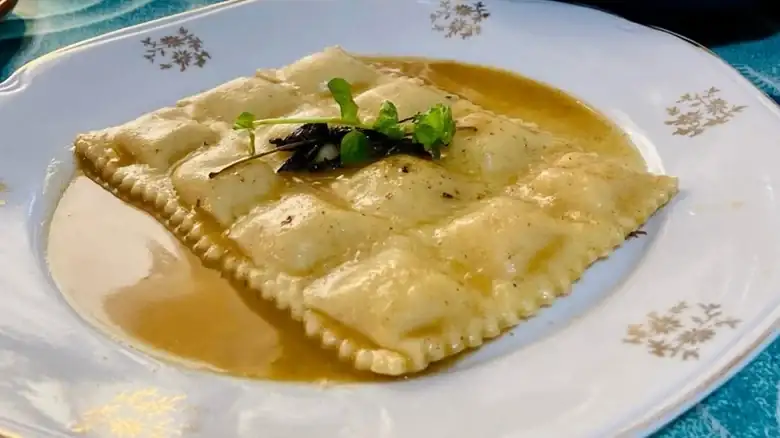
La versión francesa de los ravioles se remonta al siglo XIII
Cuando la mayoría de la gente piensa en ravioles, Italia suele ser el primer país que les viene a la mente. Sin embargo, Francia ofrece su propia versión de este plato con los Ravioles du Dauphiné, una especialidad que se disfruta desde hace siglos.
When most people think of ravioli, Italy is usually the first country that comes to mind. However, France offers its own take on the dish with Ravioles du Dauphiné, a specialty that has been enjoyed for centuries. This delicious French creation holds a rich history and deserves a place on your radar.
What sets Ravioles du Dauphiné apart is its soft texture, created by using French cooking techniques that are found in many other traditional French dishes, making these small pasta squares practically dissolve in your mouth. While often compared to Italian ravioli, their history extends back even further, potentially to Roman times with a dish known as "rissole." The term "raviole" emerged in the Dauphiné region in Southeastern France around the 13th century, predating documented mentions of Italian ravioli by about a hundred years.
Nowadays, Ravioles du Dauphiné is celebrated as a regional treasure. The dish has been awarded the prestigious Label Rouge (LR) and Protected Geographical Indication (PGI) certifications that are not just fancy titles but guarantees of quality and authenticity. These labels ensure that the ravioles are made following methods within the Dauphiné region, protecting the dish's heritage and connection to its home.
Modern takes and variations of Ravioles du Dauphiné
These ravioles are made from a simple, elegant pasta dough combining wheat and eggs. Unlike the ricotta or meat fillings commonly found in Italian ravioli, and other stuffed pastas, the key to Ravioles du Dauphiné lies in a blend of Comté cheese, fromage blanc, eggs, and parsley. This filling truly shows the French cooking approach, especially this region's mastery of dairy products, which can be tasted in the creamy and earthy flavors. While many recipes involve serving the ravioles in a simple butter sauce with grated cheese, there are variations that present the pasta in long, uncut sheets, as opposed to individual squares.
While the traditional cheese and herb filling stays a frontrunner, chefs are also now experimenting with modern takes. In the 1300s, the ravioles were made with turnip leaves, and today, adding finely chopped greens like chard or spinach introduces an earthy undertone that draws out the richness of the cheese and can cut through the heaviness of the dairy. Substituting the traditional Comté with a softer, tangier cheese like fresh ricotta or goat cheese results in a softer texture and a brighter taste. Some chefs are even venturing into bolder territory, incorporating unexpected spices like ginger, curry powder, or even matcha into the dough, adding complex layers inspired by different parts of the world.