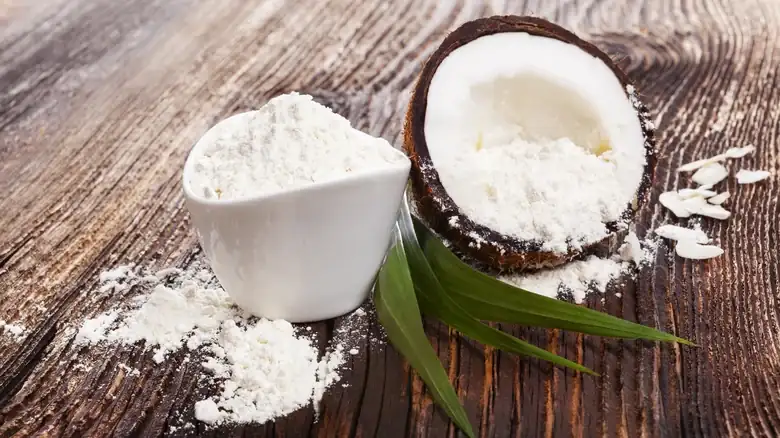
¿Se puede sustituir la harina de trigo común por harina de coco?
Según Guy, "[L]a harina de coco es fina y muy absorbente, lo que, si se usa incorrectamente, hace que los productos horneados sean más densos y propensos a secarse o desmoronarse. También carece de gluten, por lo que no proporciona mucha estructura por sí sola".
According to Guy, "[C]oconut flour is fine and very absorbent, which, if used improperly, makes baked goods more dense and prone to dryness or crumbling. It also lacks gluten, so it doesn't provide much structure on its own." So while this could be a good gluten-free option, coconut flour requires some extra handling and isn't an exact substitute. To prevent a mealy texture, Guy advises adding "extra eggs for better binding and structure and extra fat like cream, butter or coconut oil to keep the texture tender." You'll need to stay mindful of your recipe so you use the right ingredient ratio, or try a recipe like salted caramel coconut flour brownies that already accounts for the more absorbent flour.
Swapping all-purpose flour for coconut flour
It's worth knowing the specifics of swapping all-purpose flour for coconut flour in case you need to adjust a recipe on the fly. According to Jerrelle Guy, you can "try swapping ¼ or ⅓ cup of coconut flour for every 1 cup of all-purpose flour." It may seem like a drastic change or make things appear too soggy before baking, but remember coconut flour is ultra-absorbent. Guy adds, "[Y]ou may also need to increase one of the liquids in the recipe, either the milk, eggs, or water, by a couple tablespoons per ¼ cup of coconut flour to prevent things from getting too dry." You could also try combining coconut flour with almond flour — a trick used to make paleo pancakes – to help with moisture. Regardless, it's all about balancing the ingredients you substitute.
Of course, coconut flour is going to give your baked goods a coconutty flavor unlike the relatively bland all-purpose flour — so why not use this to your advantage? Coconut naturally pairs well with bright fruits, so you could plan such recipes accordingly by adding berries. Alternatively, play into the coconut flavor by changing the game with a coconut milk whipped cream. You'll help bring back that creamy moisture the flour may take away, and you'll highlight the coconut taste by making it a more purposeful-tasting substitution. So while you'll need to keep an eye on your ingredient ratios, there are plenty of reasons why you can and should swap all-purpose for coconut flour.