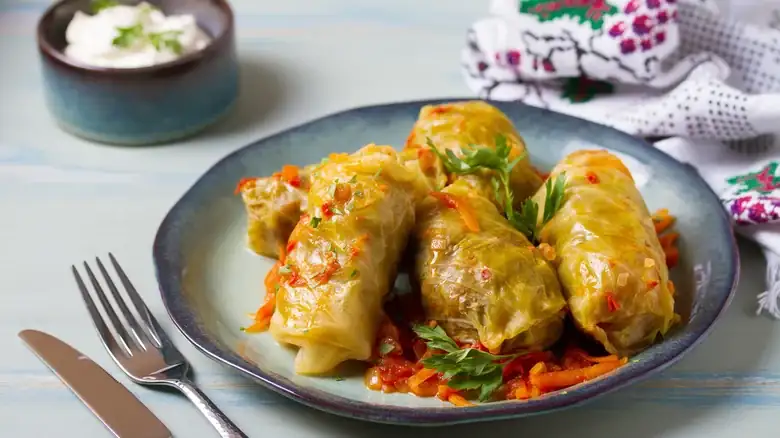
La peor manera de recalentar los rollitos de col y qué hacer en su lugar
Las sobras traen una alegría especial: puedes abrir el refrigerador y encontrar una comida deliciosa, sin necesidad de cocinar. El único inconveniente es tener que recalentarlas antes de disfrutarlas, lo cual, desafortunadamente, puede ser un problema.
Leftovers bring a special joy — you can open the fridge and find a delicious meal, no cooking required. There's just the hurdle of reheating prior to enjoyment, which, unfortunately, can be a downfall. Say you're hoping to dig into a batch of delicious leftover cabbage rolls stuffed with meat and covered in sauce — the worst thing you could do is place them into the microwave and zap them to an excessively hot state. It's all too likely one part will be lava hot, while another cold, and the cabbage structure falls apart and dries out. Not to mention, if you let the center stage vegetable overcook, it'll release a foul smell, so think twice before putting it into the microwave.
Instead, take the extra time, and you'll get much more enjoyment from your leftover cabbage rolls. The best reheating method is to place the rolls in a single layer in an oven-safe dish, then cover them with foil and bake them to a warm state. Unfortunately, this will take around 25 minutes plus time for the oven to reach temperature. So, alternatively, you can place the rolls into a pan and gently turn them every few minutes — this will also lend a tasty crunch. If you're low on sauce, introduce some water in order to prevent them from drying out, thereby yielding a perfect plate of cabbage rolls.
Avoid the microwave when reheating cabbage rolls
Cabbage rolls come in many delicious renditions, from a Macedonian take with rice to a Polish version with beef and pork, as well as Ukrainian holubtsi, which pack in both meat and rice. Either way, they're a wonderful canvas for combining vegetables, protein of your choice, and seasoning. And best of all, they're easy to craft in a large batch — which is why the prospect of leftovers is so common. In fact, such a convenient nature has also made cabbage rolls a common frozen food item, making it all the more likely you'll be dealing with them cold.
Just remember that cabbage rolls balance both taste and texture, and there's plausible potential for a mushy result. Plus, they're not uniform in consistency, with the meat, rice, and vegetable components all requiring different durations for reheating. Precisely such factors explain why you'll want to use a uniform heat method, like an oven or delicately rolling and rotating the cabbage rolls on the stove until completion. So, if you need to use a microwave in a pinch, blast it on short intervals and frequently agitate the contents. After all, learning how to reheat leftovers without overcooking is a skill, and cabbage rolls are a challenging candidate.