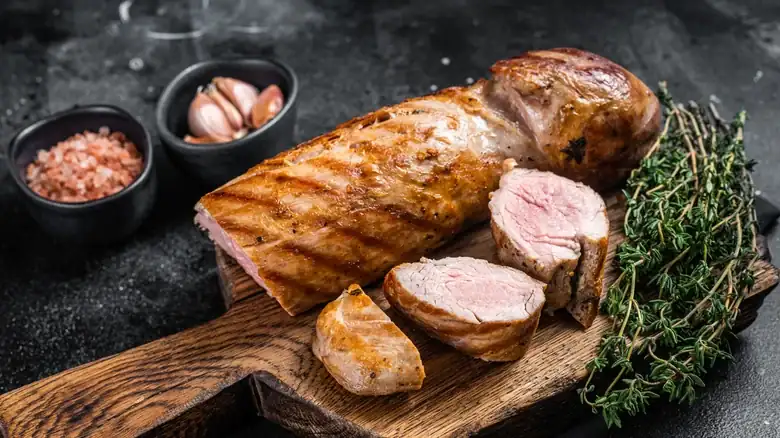
Dora tu próximo lomo de cerdo a la inversa para obtener más sabor y textura
La carne de cerdo es una proteína delicada, especialmente cuando se trata de cortes magros como el solomillo. Bien cocinado, es un plato principal jugoso y con un agradable sabor terroso, ideal para cualquier mesa. Sin embargo, si se cocina demasiado, se vuelve fácilmente harinoso, seco y sin sabor.
Pork is a tricky protein, especially when it comes to lean cuts like the tenderloin. Cooked properly, it's a juicy, pleasantly earthy main dish welcome at the center of any dinner table. When overcooked, however, it easily becomes mealy, dry, and devoid of flavor. It doesn't help that the line between perfectly cooked and completely ruined is razor thin. A succulent tenderloin can cross the line to tough and inedible in just minutes. Luckily, it's fairly easy to avoid this faux pas by employing a technique called the reverse sear.
A traditional sear starts by browning the outside of your meat until it's beautifully caramelized and then finishing it in the oven to cook through completely. The idea is that the initial sear "locks in" the juices. This is great for fattier cuts of meat that are hard to overcook, but leaner meats like pork tenderloin can easily dry out during that initial sear and lose additional moisture while they finish in the oven.
A properly executed reverse sear takes time, but it's a simple process with crave-worthy results. After rubbing your pork tenderloin with delicious carnitas seasonings or your flavorings of choice, roast it in the oven at about 225 degrees Fahrenheit for up to an hour. Once the internal temperature reaches 135 degrees Fahrenheit, let it rest for about 30 minutes to allow the juices to redistribute. (Note: The pork's temperature will continue to rise as it rests, eventually reaching that safe 145 degrees Fahrenheit zone.) After that, crank your oven up to about 500 degrees Fahrenheit and let the outside of the pork caramelize for about 10 minutes.
Preparation tips and serving suggestions
One of the best things about the reverse sear technique is how hands-off it is. Once seasoned and in the oven, there's no need to babysit it, leaving you plenty of time to whip up sides like a crisp, refreshing chopped salad or a comforting baked elote dip. However, there's a few more things you can do to amp up the flavor of your tenderloin even more. This may mean a bit more planning, but the tradeoff is worth the extra effort.
A great way to add flavor and improve texture is to season your meat the night before you cook it, also referred to as dry brining. We already know dry brining is the secret to juicy baked pork chops, and the same holds true for the tenderloin. This technique not only helps the seasoning sink deeper into the meat, but also aids tenderization by breaking down the proteins a bit. Finally, it proves a boon for a rich, crisp brown sear on your tenderloin, as the dry rub — particularly the salt in it — ensures the outside of the meat is nice and dry when it enters the oven.
Though a crisp, juicy, reverse-seared pork tenderloin is delicious all on its own, there are dozens of ways to pair and serve it. The most obvious is as a beautiful main dish, nestled between creamy mashed potatoes and au gratin broccoli. If you love tropical flavors, try pairing it with coconut sticky rice and mango salsa, or slipping it inside al pastor tacos.