Tu vitrocerámica está sucia, pero no cometas este gran error de limpieza
Así como hay muchos errores que se pueden cometer al cocinar en una estufa eléctrica, hay una cantidad casi igual de errores que pueden ocurrir al limpiar una placa de vitrocerámica eléctrica.
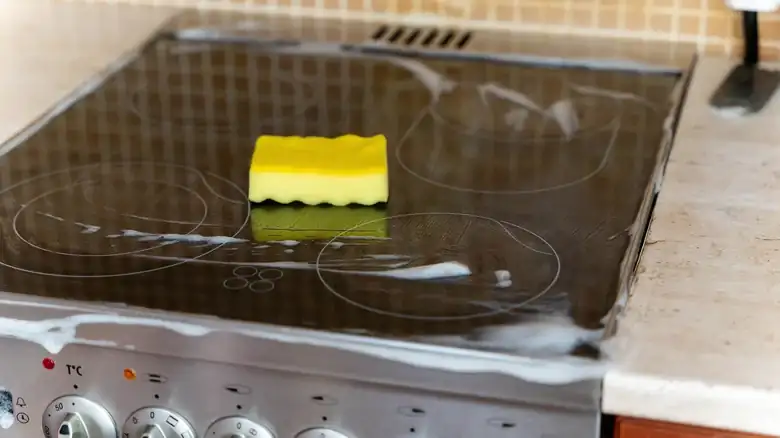
Just as there are many mistakes people can make when cooking on an electric stove, there is an almost equal number of mistakes that can occur when cleaning an electric glass cooktop. Although their sleek appearance makes them a popular kitchen appliance, glass stovetops don't hide grime very well, and things like burned-on food and water stains can easily mar their surfaces. Unfortunately, when things like this happen, many folks reach for a coarse sponge to try and scrub the gunk away, which can actually make things worse.
Heavy-duty scrubbies like Scotch-Brite and scouring pads like steel wool, while good for scrapping away stuck on gunk, can easily scratch up the surface of glass stoves. The scratches, however fine, will stand out from the cooktop's shiny surface and ruin its appearance. Although more of an aesthetic problem at first, they can pose problems over time. For example, micro-scratches created from scrubbing and pans scrapping the surface can weaken the glass as they accumulate. Eventually, this can cause the glass to crack if it becomes weak enough.
That being said, cleaning a glass stovetop doesn't have to be an ordeal. There are many tools designed for glass cooktops that can prevent scratches while removing baked-on gunk and grime.
Make cleaning a glass stovetop easier with the right tools
To keep them functioning well and looking their best, glass stovetops require regular cleaning, but because of how they're designed, you must be careful to avoid damaging them. For instance, you should avoid cleaning glass stovetops with baking soda due to its abrasiveness; however, it could be viable if you're using it as a paste and wiping it away without rubbing it in. Still, there are plenty of other options made for glass cooktops that you'd be safer considering.
Two of the most popular commercial options for cleaning away gunk on a glass stovetop are Cerama Bryte and Weiman Cooktop Cleaner. Both of these can be bought on their own or as part of a cleaning kit that comes with sponges and scrapers. However, these scrapers must be used carefully because they are razor blades. So, make sure not to scrape them horizontally over the surface to prevent scratching. Instead, hold the scraper at a 45-degree angle and push it upward with gentle pressure to lift away baked-on grime. For lighter, everyday cleaning, you can use a bit of diluted vinegar and a microfiber cloth to wipe the surface when it's cool.
If you stay on top of cleaning your glass cooktop, less gunk will be able to build up, meaning you won't have to resort to harsh scrubbing. So long as you clean up messes as soon as possible and wipe things down daily, your stove will continue looking as good as new for as long as you have it.