¿Cuánta agua se necesita para envasar conservas en casa de forma segura?
Aunque menos popular que la masa madre y el pan de plátano, la conserva casera se suma a la lista de tendencias alimentarias de la pandemia. Tiene sentido: si te preocupan los estantes vacíos de los supermercados, ¿por qué no aprender a conservar alimentos que se conservan bien y pueden durar hasta dos años?
Although less "viral" than sourdough starters and banana bread, home canning is yet another entry on the list of pandemic food trends. It makes sense: If you're worried about empty grocery store shelves, why not learn to preserve shelf-stable food that can last up to two years? Plus, many people were able to garden more at that time, meaning they needed something to do with all that extra produce! Even beyond the pandemic era, home canning is still an appealing hobby for those who want to save money on groceries, avoid additives that may be found in commercially processed products, or simply want to make something both creative and useful.
Perhaps you've considered canning yourself. If so, you have a couple main options: water bath canning and pressure canning. Which of the two you use depends on whether you're processing low-acid foods (most veggies and meat), or high-acid foods (fruits, tomatoes, pickles). The amount of water you use will also depend on which method you're implementing. For water baths, you'll end up filling the container at least half full of water. For pressure canning, you'll only need two to three inches of water.
A closer look at the canning process
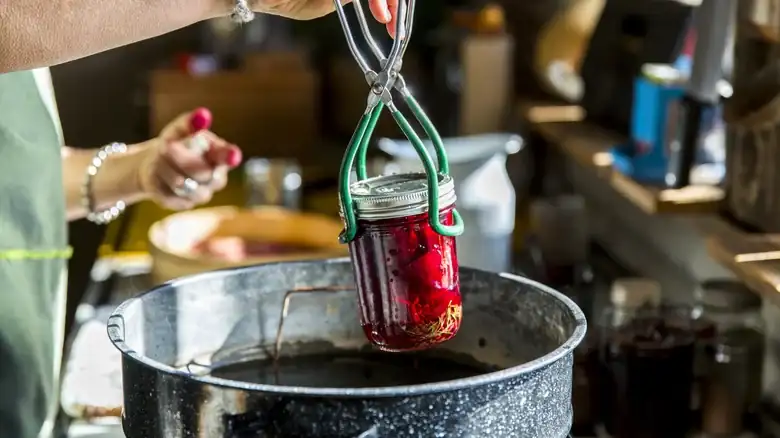
If canning high-acid foods, you'll want to use a water bath. The main risk when canning is not eliminating the bacteria that can cause botulism — a potentially fatal form of food poisoning, and the same reason you may want to avoid dented cans at the grocery store. Submerging your cans in boiling water for the proper period of time is necessary to eliminate the risk in high-acid foods. Start by filling your water bath half full of water. After you've heated the water (not yet to boiling), you'll place the cans in the bath and add additional water until it covers the cans by about an inch. Follow your recipe carefully to ensure the proper safe timing.
For a pressure cooker, you'll just add two to three inches of water to the bottom of the cooker and follow the usage instructions from there. The water will turn to pressurized steam, which is hot enough to kill potentially harmful bacteria in low-acid foods. The pressure allows the internal temperature to rise above the boiling point (Water boils at 212 degrees Fahrenheit), which is important because it is easier for the botulism spores to grow on low-acid foods. So you really want to make sure they've been thoroughly nuked, so to speak.
Even if you've followed your canning recipe to a T, always be alert for signs that your canned goods have spoiled — and be sure to store your favorite canned goods properly.