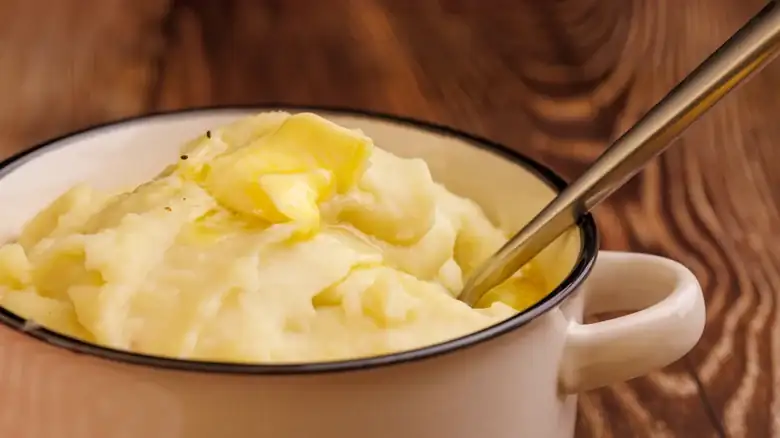
Para un mejor puré de patatas, añade la mantequilla en el momento justo
Sabemos lo que estás pensando: ¿Por qué complicar un plato cuyo nombre lo dice todo? Hierve las patatas, machácalas y sazónalas a tu gusto. Pero, ¿cuántas veces has preparado (o te han servido) un puré de patatas que no está a la altura de su potencial?
We know what you're thinking: Why try to overcomplicate a dish where the name says it all? Boil potatoes, mash them up, and season to your liking. But how many times have you made (or been served) mashed potatoes that fall pretty short of their dreamy heights?
The truth is that cooking mashed potatoes requires more careful attention than you'd think. Underboil your potatoes and you're left with a firmly lumpy result. Overcook them and your potatoes will taste grainy. Over mix them after mashing and they'll become gluey. Add butter at the wrong time and your mashed potatoes won't taste like butter at all. Yes, we're serious.
Almost every mashed potato recipe calls for some combination of milk (or heavy cream or half and half) and butter, which are both added to the potatoes after they're boiled and mashed (or riced or food milled). Some supposedly helpful recipes even have you melt the butter with the milk to save you a dish to wash later, before adding them to the potatoes at the same time. This, however, is a huge mistake in terms of flavor as well as texture. The reasons why come down to both logic and science.
Add butter to mashed potatoes before milk
Potatoes themselves have a very mild flavor, so when we think of the delicious taste of mashed potatoes, we're really thinking of the more flavorful added ingredients like butter, sour cream, crème fraîche, and other cheeses. But have you ever found that no matter how many more tablespoons you add, your potatoes just don't taste buttery enough? That's because any butter you add needs to come before any additional liquids, like water-rich milk.
Potatoes are a food scientist's dream because their starches behave predictably. After being boiled and mashed, a potato's starches are open and ready to absorb anything added. If you add melted butter first, the starch molecules will soak up its flavor before anything else, creating a butter-fat coating that protects them from the water in your other dairy products. Instead of them becoming gluey, you'll have that Platonic ideal of a buttery, better-tasting mashed potato. Also, by adding the milk second, you'll still effectively loosen the structure of the starches but create a silkier texture that's a far cry from gloopy.
There's no need to modify your go-to recipe's measurements or ratios, either. Just be sure to add any melted butter first before turning to the liquids. It's worth the extra dish, we promise.