Butter in Spain - Gastroattitude. Passion for food
From rejection to rediscovery
Butter, let's see, butter! To do good, to do sabourex! Anyone who has seen the film Délicieux might remember the words of chef Pierre Manceron leading his kitchen brigade, then in the service of the Duke of Chamfort. But, since the film is set at the dawn of the French Revolution, the union of the two—aristocrat and kitchen boy—is short-lived. Once the chef is freed from the supposed tyranny of courtly gastronomy, the film unfolds a simple yet visually powerful storyline to explain the birth of modern restaurants and the eventual liberation of the chef's creative capacity. Three centuries of the absolutist power of French cuisine and its favorite fat were yet to come.
A matter of fats: territory, imitation, and abstinence.
Although Napoleon's armies had left Spain with little more than a monastic Extremaduran recipe book, the French conquest had entered through the kitchens and would not leave us until the end of the 20th century. The entire 1900s was a continuous debate among gastronomes about the advisability of abandoning somewhat diffuse culinary roots or embarking on a French-influenced modernity for which the country—poor in dairy products, cattle, and culinary training—was unprepared.
A good béchamel or béarnaise sauce, a parmentier or a glaze made from a reduced stock, thickened and polished with good butter, was not part of the daily repertoire of a cuisine whose palates were firmly rooted in the attributes of pork fat as a flavoring and, above all, as a preservative, except in the kitchens of palaces and grand hotels. Nevertheless, imitations—always superficial—continued to appear in the circles of power, spreading to other social classes. If the queen asks for Chantilly cream, the bourgeois woman wants Chantilly cream. Cream, butter—lard for the Spanish—milk, in short, became objects of desire for all those who aspired to cook like Rondissoni or Domènech, even Bardají.
Everyday cooking versus the French ideal
The rest of the Spanish population continued cooking with lard or mutton fat, as had always been done, and only Lenten cuisine required them to adopt a product—olive oil—that Spaniards associated with medicine, oil lamps, or Lenten pastries when fritters and fritters were fried in the cauldron. Obviously, they had known butter since the Andalusian period. Smen, fermented and salted butter, was used in confectionery and more sophisticated dishes with puff pastry. The northern regions of the Iberian Peninsula churned surplus milk to obtain butter with which to make Unquera ties, Astorga shortbreads, or Pasiego sobaos.
Butter geographies: a border less clear than it seems.
Dividing Europe, then, between butter and olive oil lovers, gastronomic North and South, Catholic or Protestant, is reductionist because local cuisines everywhere defy the rule. The land and its resources, and in some cases, curious papal bulls like those of Brittany, Normandy, or Flanders, dictate the terms. In mountainous areas like the Italian Alpine regions—the Aosta Valley, for example—butter is commonly used; even in Rome, we can find recipes like saltimbocca, a veal dish cooked with this fat. Needless to say, neither galettes nor Norman or Breton crêpes are complete without a generous amount of butter, silky and nutty, almost always with a touch of the most effective preservative: salt.
Fats are essential from a culinary perspective, but their energy contribution is also fundamental for survival. A Breton would have died without his dose of butter and salt during the long medieval fasts, so as much salt and as much money in dispensations as necessary was sent to the Pope to ensure he could continue eating the staple food of his diet…plus bread, of course. It was with this money that the Butter Tower (Torre du Beurre) in the city of Rouen was financed.
Spain's entry into dairy culture
Anecdotes aside, the people of Asturias, Soria, Cantabria, and León have consumed more butter and milk than the rest of Spain for obvious reasons, which doesn't mean it was readily available to everyone. Butter, initially a symbol of social status among the bourgeoisie of Barcelona and Madrid, gained popularity thanks to new, Europeanized eating habits that included coffee with milk and toast—chocolate would lose its reign at the most fashionable lunches—and the advancements in science and the agri-food industry, which flooded grocery stores and delicatessens with pasteurized milk, yogurts, margarines, and other delicacies, eventually giving rise to a new type of establishment: butter shops.
The butter shop or the elegant grocery store
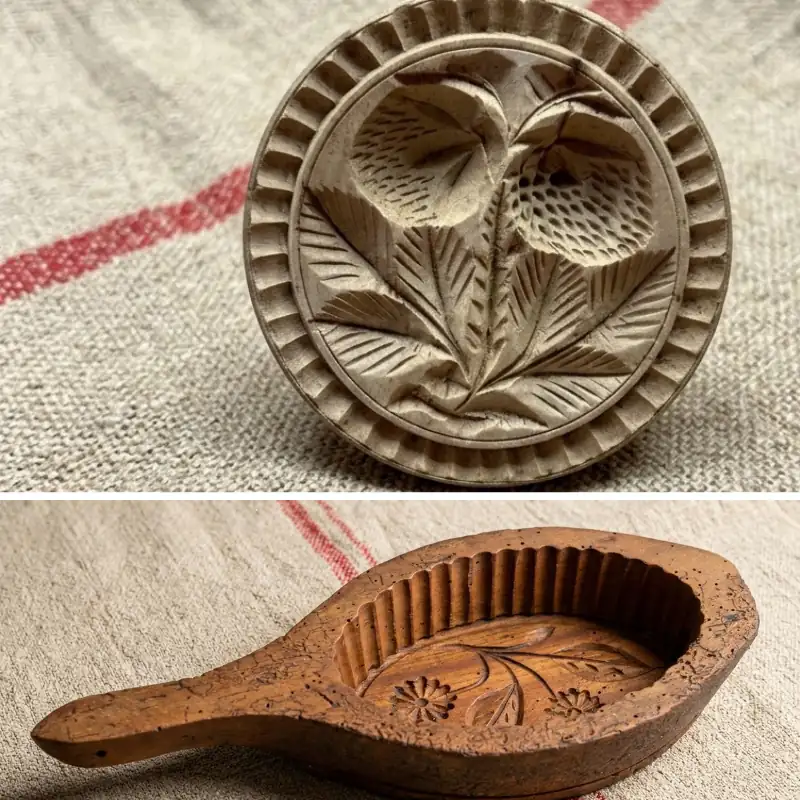
Butter is, first and foremost, churned milk. It is obtained by churning cream, which separates the fat from the whey. It can be sweet, salted, flavored with seaweed, herbs, or spices. Its production is such an ancient art that it requires a specific type of churn—the manaser in Asturias or the baratte in Brittany. Butter made "de baratte" involves churning the cream in a wooden barrel, using carved wooden molds and stamps known in Great Britain as butter prints or butter molds, and a profession—that of the master butter maker—to which Lorenzana Butter has dedicated an ethnological museum.
And the Spanish map, although culturally associated with the triad of the Mediterranean diet – if this is still valid – of wine, wheat and olive oil – has long had good butters, such as the Soria butter, with PDO, made with milk from Castile and León, the Asturian butter or the Leonese butter, famous for being the umbrella under which the most prestigious butter factories in Spain were created.
From rural workshops to urban butter shops
The dairy boom at the beginning of the 20th century led to the establishment of butter factories in the northern part of León, Asturias, and Cantabria. Cow's milk, butter, and cheeses, previously limited to the hard sheep's milk cheeses of the Maestrazgo de Calatrava region, the typical cheeses of La Mancha and Burgos, or the Galician Tetilla cheese, expanded their range to cater to a wealthy public interested in Swiss, French, and Dutch cheeses.
In this context, Marcelino Rubio, from Villager de Laciana, a student of Professors Juan and Ventura Alvarado y Albó, founders of the Sierra Pambley School of Dairy Industries, had inherited the trade and the dairy farm from his father, and a significant quantity of butter from his father-in-law. This allowed him to establish a butter factory using milk from the local farmers in the surrounding regions. His product was of such high quality that Rubio opened a shop in Madrid called La Laceaniega. Later, he moved to Alcalá Street under the name "Mantequerías Leonesas" (Leonese Butter Shops). In these elegant shops, which sprang up in the Eixample district of Barcelona or the Salamanca neighborhood, the new and wealthy social class shopped, and they, in turn, taught the rest of Spain what beurre blanc or a good viennoiserie was.
Butter today: between myth, trend and rediscovery.
Whether fleeting or not, gastronomic trends should serve to discover, or in this case rediscover, a fat that a little over twenty years ago, when this writer was a student at a hospitality school, nobody appreciated, and was even detested for being associated with the excess calories of creams and everything that had a taste of French classicism.
But, in the same way that the use of café de Paris butters, beurre blanc or beurre rouge sauces in the hospitality industry was abandoned in favor of improvements in the production of lighter and more aromatic olive oils, Spanish butters, whether from cows or any other dairy animal, could experience a new moment of splendor if the same quality parameters are taken into account as for any other dairy product - name of the producer, type of farm, breed and feed of the animal, territory, PDO, etc. - when it reaches the table.
In fact, some chefs like Paco Morales rediscovered sheep's milk butter (from the La Caraveruela cheese factory) in their Andalusian menus, good pastry chefs abandoned the industrial margarines of yesteryear to round out puff pastries and croissants that are crispy but silky, and, in short, the gourmet once again realized that there are few things as delicious as good bread spread with creamy butter and a few crystals of Guérande salt... or from any local saltworks, of course, because there are some very good ones.