Vintners urged to rethink wine clubs as consumer behavior shifts
Clif Family Winery & Farm in St.
“With more opportunities to skip and pause, we are evaluating their lifetime spend and taking a look at where else within our business they are transacting,”
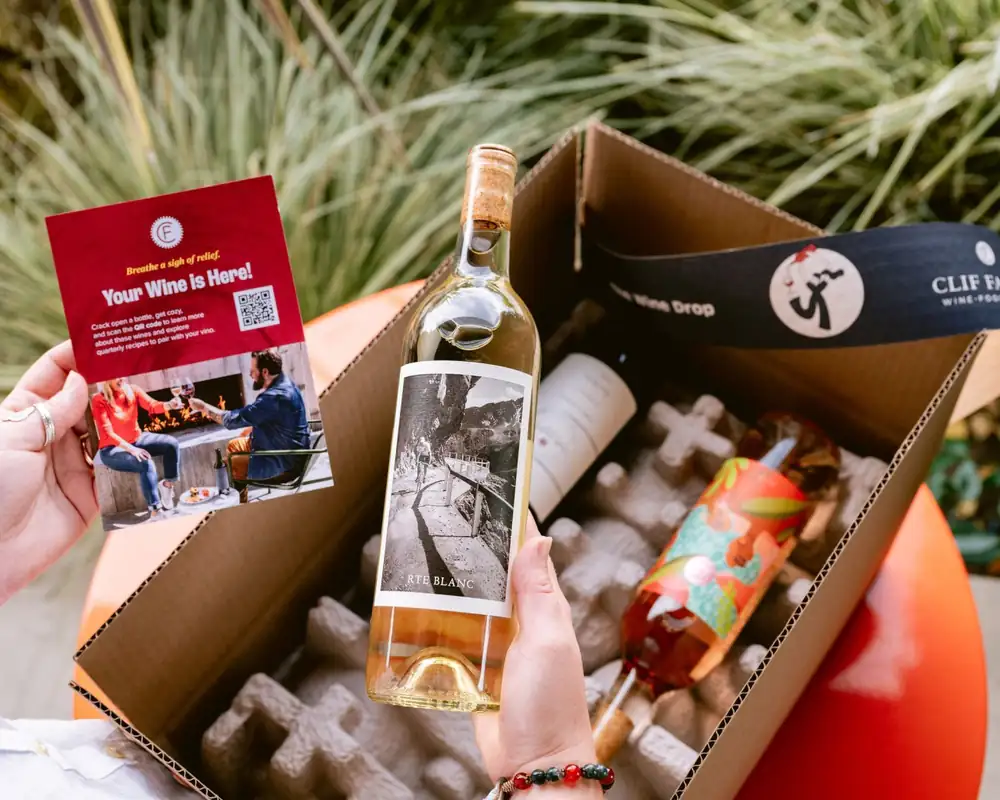
Clif Family Winery & Farm in St. Helena started experimenting with a wine subscription in 2024 after noticing that a growing number of club members wanted to choose what arrived in their shipments.
The Napa Valley winery’s The Wine Drop subscription proved successful enough that Clif expanded it from a digital-only offering to one its hospitality team could sell alongside traditional memberships. Membership grew 16% from 2024 to 2025. At the end of last year the winery took the bigger step, moving all its traditional wine club members to the subscription model and added the Cabernet Sauvignon–focused The Cab Drop.
“We identified a few years ago that a large percentage of our members were asking to customize their shipments,” said Meg Barkley, Clif Family’s vice president of marketing and membership.
Clif Family’s shift is part of an industrywide conversation over what the wine club of the future should look like — a question that was a focus of VinSuite’s virtual Wine Club Symposium on Tuesday and Wednesday.
The stakes are particularly high for wineries in the North Coast, mainly Napa, Sonoma, Mendocino and Lake counties, where premium wine dominates the business. Direct-to-consumer sales, including wine clubs, allow wineries to retain the customer relationship and are particularly important for higher-priced bottles, which have been the most resilient part of a struggling wine market.
The latest SipSource data from the Wine & Spirits Wholesalers of America showed U.S. wine volume down 6.8% and revenue down 4.2% in the latest three months through July. But performance improved significantly at prices of $16 and above, and revenue for wines priced at $50 or more increased 0.9% over the last 12 months.
Wine clubs also are taking a bigger piece of winery revenue.
Silicon Valley Bank data from its latest Direct-to-Consumer Wine Report showed club and allocation revenue growing from 36% of the typical winery’s sales mix in 2016 to nearly 45%, largely at the expense of tasting-room sales. The average winery in that report’s survey of roughly 450 wineries now gets about three-fourths of its revenue directly from consumers, primarily through clubs and tasting rooms, but visitation has been suffering since the pandemic.
That makes the erosion of traditional tasting-room recruitment increasingly important. Paul Dugoni, senior credit analyst with First Citizens Bank division Silicon Valley Bank, told symposium attendees that club conversion rates have been cut roughly in half across wine regions between 2015 and 2025, while acquisition and attrition have moved close to equilibrium in many regions. Napa was among markets where attrition slightly exceeded acquisition.
At the same time, annual spending by club members has increased, particularly in premium regions. Dugoni said average annual spending per member in Napa increased from roughly $1,000 to $1,500, although growth in lifetime value has flattened in recent years.
Those trends are pushing wineries to reconsider what a club membership requires.
Megan Currie, owner of direct-to-consumer sales consultancy The Wine Lass and head of the Wine Club Professional Network, told symposium attendees that much of the traditional wine club business was designed around baby boomers, while Gen X, millennials and Gen Z tend to place greater value on flexibility and control.
Traditional clubs generally bill members together on fixed schedules and give wineries more control over shipment size, wine selection and revenue timing. Subscription models can let individual customers customize wines, choose frequency, skip shipments or pause membership.
Currie cited WineGlass Marketing’s 2024 Wine Consumer Usage and Attitude Survey, which found that discounts appealed more strongly to baby boomers while flexibility and variety were more important to Gen X and millennial customers.
She warned wineries, however, against responding by creating a separate club for every demographic.
“Don’t alienate your existing members,” Currie said. “Let’s do everything that we do with the assumption that they will find out about the changes that you’re making and the new clubs that you’re offering.”
Clif Family instead moved entirely to subscriptions.
Barkley said new membership now is about evenly divided among baby boomers, Gen Xers and millennials. The winery also is seeing increased Gen Z visitation begin to translate into membership.
“With more opportunities to skip and pause, we are evaluating their lifetime spend and taking a look at where else within our business they are transacting,” Barkley said.
Clif’s acquisition and attrition rates are steady, she said, while member spending has been flat to slightly higher.
Other symposium speakers focused on how wineries can find those members without relying on tasting-room traffic.
Erica Walter, founder and CEO of Email Mavens, said about 84% of new wine club members were reported to have been acquired through tasting rooms in 2024. With visitation declining, she said wineries should make reservation confirmations, receipts, shipping notices and other existing communications work harder to recruit customers.
“Your transactional emails are some of the most opened and referenced communications that your winery will ever send,” Walter said. “Why are we treating them like administrative paperwork?”
At Clif Family, staff members call customers before each reservation and introduce membership during the conversation. The winery also has a post-purchase nurture campaign for customers whose online purchases or tasting-room visits do not initially result in membership.
Subscriptions vs. clubs
Traditional wine clubs and newer subscription programs both create recurring sales for wineries, but they differ in how much control the winery and customer have.
Club: Members typically receive fixed shipments on a winery-set schedule, often several times a year. The winery generally controls when members are billed, which wines are included and the shipment price. Clubs often pair those shipments with discounts, complimentary tastings, events or other benefits.
For wineries, traditional clubs make inventory planning and revenue timing more predictable. Subscriptions can make those forecasts more complicated because customers have greater control over what and when they buy.
The trade-off is flexibility. Speakers at VinSuite’s Wine Club Symposium said that customization, lower commitment and greater control can appeal to customers who may not want a conventional fixed-shipment club, particularly younger or remote buyers.
The two models also can require different ways of measuring retention. A skipped subscription shipment, for example, may not mean a customer is disengaging if that person recently bought wine separately online or at the winery.
Some wineries operate both models or a hybrid of them.
Another challenge is getting discovered in the first place.
Pamela Snyder, CEO and founder of DigiVino, told symposium attendees that artificial-intelligence tools increasingly act as “answer engines” for consumers looking for wineries and clubs. She urged wineries to make basic information consistent across their own websites, Google listings, directories and other sources that AI systems consult.
“If you’re not included in that answer, you are (virtually invisible), and this is not a small or passing trend,” Snyder said.
Clif Family is already conducting AI visibility audits, Barkley said, while regularly reviewing how customers find its website and book visits. Referrals come from a mix of social media, Google, AI, digital and local partners and traditional word of mouth.
Retention presents its own challenges once customers join.
Karin Strykowski, director of client training at Napa-based logistics and fulfillment provider Wineshipping, urged wineries at the symposium to mine the information generated by every club release — including address corrections, failed deliveries, weather holds and customer feedback — and use it in planning the next shipment.
“The goal of a post-release review is not to assign blame,” Strykowski said. “It’s truly to understand what really caused the issue, so we can make better decisions next time.”
The winery is expanding events at its Napa Valley property while considering pop-up gatherings at wine shops, restaurants and music festivals in markets where its members live. That is designed to reach both customers who visit the winery frequently and those who may never make it to Napa Valley.
“We want to offer value to our members outside of delicious organically farmed wines with preferred pricing and reduced shipping costs,” Barkley said.
Jeff Quackenbush joined North Bay Business Journal in May 1999.